|
 |
 |
|
|
|
|
 |
|
 Воронина Татьяна Львовна ведущий аналитик Международного центра истории и социологии Второй мировой войны и ее последствий НИУ ВШЭ |
 |
|
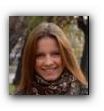 Махалова Ирина Андреевна стажер-исследователь Международного центра истории и социологии Второй мировой войны и ее последствий НИУ ВШЭ, магистрант Университета им. братьев Гумбольдт (Берлин) |
 |
|

 Russian
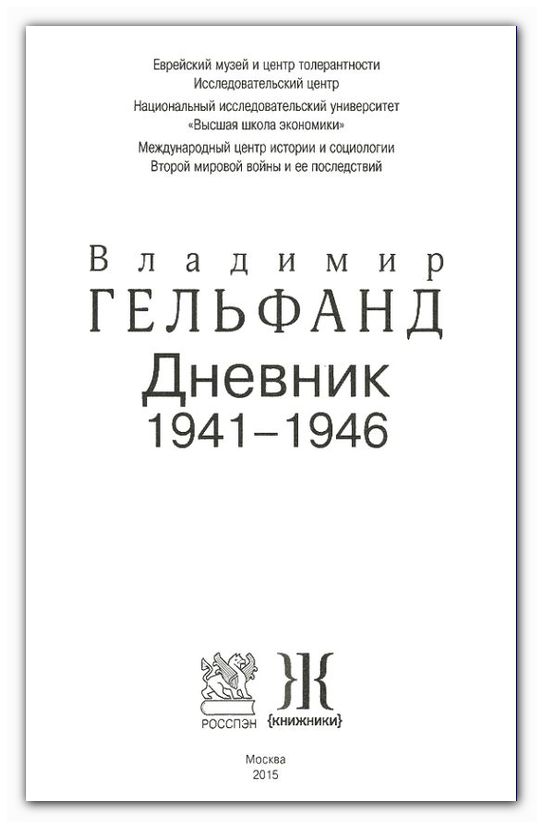
Publisher: ROSSPEN / KNIZHNIKI
Year: 2015
Author: Vladimir Gelfand
Responsible editor: Oleg Budnitsky
Language: Russian
Format: 145 x 215 / 3.5 (60 x 90 1/16)
Pages: 751, illustrated
Weight: 920 g
ISBN, Political Encyclopedia: 978-5-8243-1983-5
ISBN, Knizhniki: 978-5-9953-0395-4
Price: EUR 69.90 / RUB 612.00
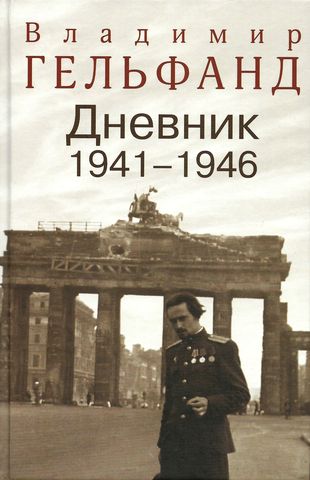
War diaries are a unique phenomenon. The diary of Vladimir Gelfand - first a sergeant and later a lieutenant - is unique twice over, because of its chronology, geography, scale and frankness. The first entries date from May 1941; the last from October 1946, when the author returned home from Germany.
V. N. Gelfand reached the front during the Red Army's severe defeats in the summer of 1942 and its panicked retreat after the Kharkov disaster. He took part in the Battle of Stalingrad, helped liberate Ukraine and Poland, and ended the war in Germany. First an ordinary mortar soldier and later commander of a mortar platoon, he tried to write every day, under any conditions, even in a trench under fire.
The diary contains an unvarnished record of everyday wartime life, customs and behaviour both in the rear and at the front. At the same time it is a kind of Bildungsroman: the story of a naive idealist growing up, of a boy becoming a man.
Of particular interest are Gelfand's entries from his service in Germany in 1945-1946: his impressions of German culture, daily life and customs, and of his relations with German women. The German section of the diary was published in German and Swedish translation. This edition, however, is the first publication of Vladimir Gelfand's diary in full, without omissions or abridgements.
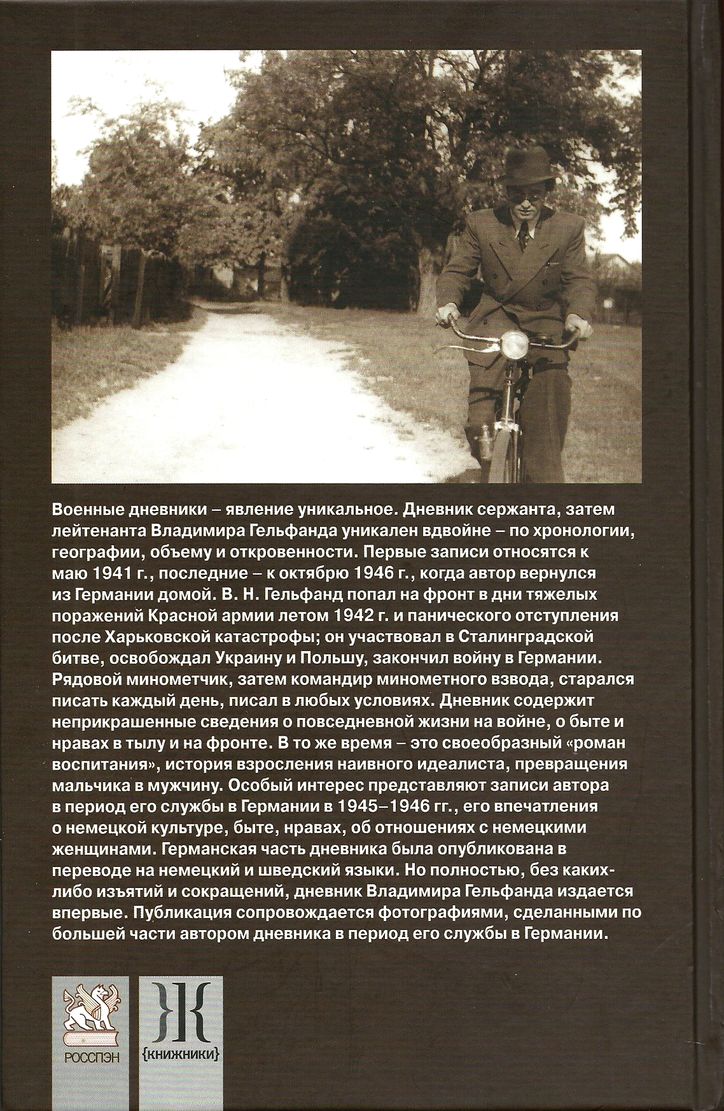
The publication is accompanied by photographs, most of them taken by the diarist himself during his service in Germany.
Oleg Vitalyevich Budnitsky is a Doctor of Historical Sciences, professor at the School of History of the National Research University Higher School of Economics (HSE), and director of the HSE International Center for the History and Sociology of World War II and Its Consequences.
He is the author of more than 250 scholarly works, including the monographs Terrorism in the Russian Liberation Movement: Ideology, Ethics, Psychology (2000), Russian Jews Between the Reds and the Whites (1917-1920) (2005), The Money of the Russian Emigration: Kolchak's Gold, 1918-1957 (2008), and Russian-Jewish Berlin (1920-1941) (2013, with A. Polyan). He also compiled and edited books including It Happened. The Germans Have Come! Ideological Collaborationism in the USSR during the Great Patriotic War (2012), Odessa: Life under Occupation, 1941-1944 (2013), and The USSR in the Second World War: Occupation. Holocaust. Stalinism. (2014, with L. G. Novikova).
Tatiana Lvovna Voronina is a senior analyst at the HSE International Center for the History and Sociology of World War II and Its Consequences.
Irina Andreyevna Makhalova is a research trainee at the HSE International Center for the History and Sociology of World War II and Its Consequences and a master's student at Humboldt University in Berlin.
Copyright: Knizhniki; Russian Political Encyclopedia.