


 |
||
| العنف ضد المرأة خلال الحرب العالمية الثانية | ||
| |
||
| العنف ضد المرأة.. المسكوت عنه في الحرب العالمية الثانية | ||
|
منشور
السبت 10 ديسمبر 2016
|
||
| في فترة
مظلمة من
التاريخ، ولكنها ليست بعيدة جدًا عن عصرنا الحالي، حاولت عدة دول فرض
سيطرتها على العالم في الحرب العالمية الثانية. شهد العالم في هذه الحرب
اضطهاد منظم تجاه العديد من البشر، سواء على أساس الدين، مثل
استهداف
اليهود، أو على أساس العرق، مثل استهداف الغجر والأفارقة ومحاولات إبادتهم
جماعيًا، ولكن ما كانت تشترك فيه جميع الأطراف، وما كانت تتساوى
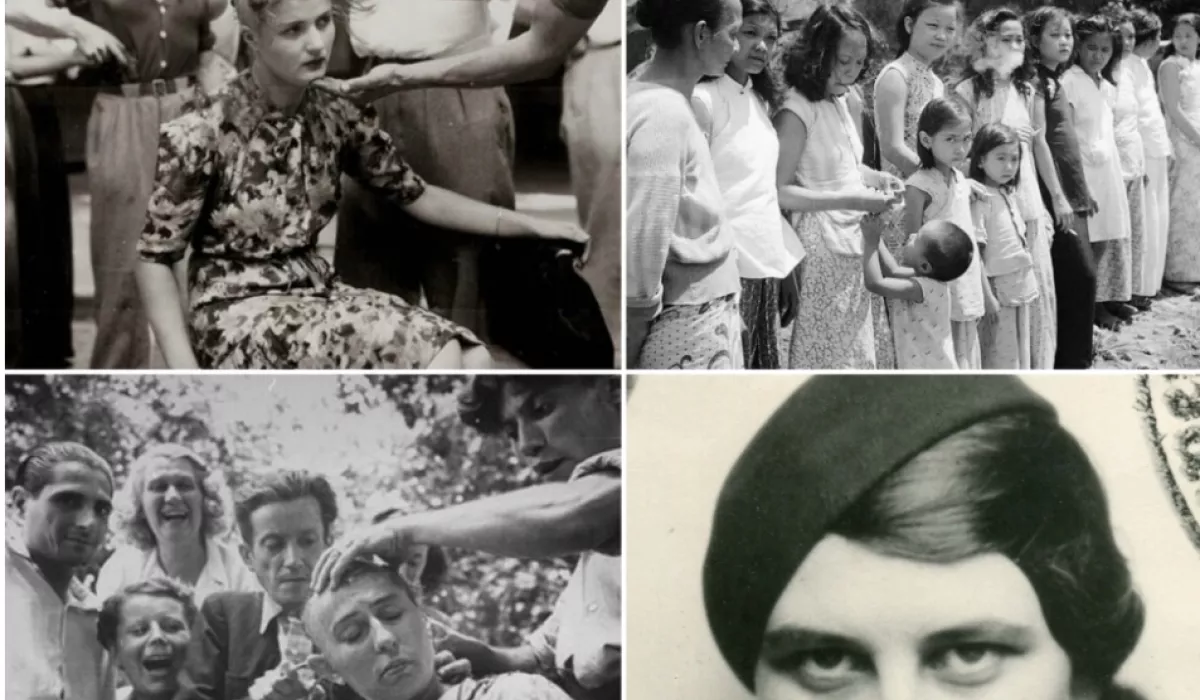
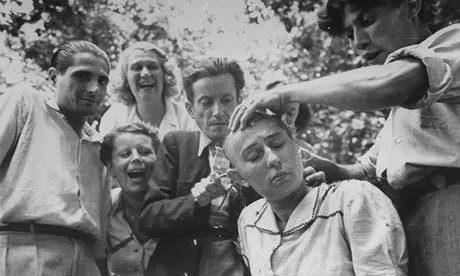
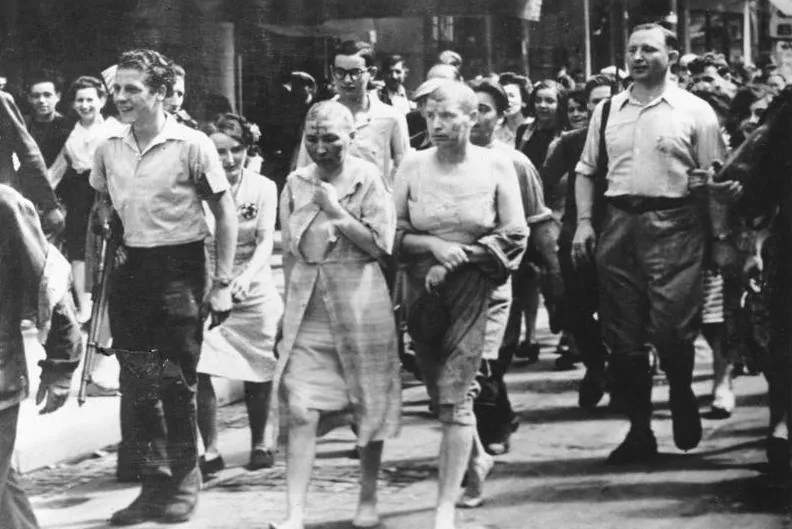
فيه جيوش الحلفاء والمحور هو العنف ضد المرأة. كثيرًا ما تتجاهل الدراسات المكتوبة عن الحرب هذا الجانب، ورغم مرور السنوات لم تتم تحقيقات كافية عن مظاهر العنف ضد المرأة، كثيرًا ما يعود هذا التجاهل إلى الخجل من ذكر تلك الحوادث. اليوم، وبينما تجري فعاليات حملة "16 يوم ضد العنف على أساس النوع"، نكتب عن ثلاث قصص مخجلة عن مظاهر العنف ضد المرأة في الحرب العالمية الثانية، لأننا لا يمكن أن نعالج مظاهر العنف الحالية ونمنعها من الحدوث في المستقبل إلا بدراسة الحوادث البشعة الماضية. 1. المتعاونات مع النازي (النوم مع العدو) البداية من فرنسا، حيث عاد فيها نشاط يعود إلى القرون الوسطى في أوروبا، وهو حلق شعر النساء تمامًا، وإجبارهن على المشي عرايا في الشوارع وقذفهم بالطوب، وذلك عقابًا لهن على التعاون مع العدو الألماني. في فترة الاحتلال الألماني النازي لفرنسا بين عامي 1940 و1944، قامت العديد من النساء الفرنسيات، وغيرهن من دول أوروبا المحتلة آنذاك، بالتعاون مع جنود الاحتلال، وذلك بممارسة الجنس معهم، سواء استسلامًا لقوتهم وسيطرتهم وخوفًا من التنكيل بهن، أو مقابل المال إذ شحًت مصادر أموالهن بعد موت أزواجهن في الحرب، وأدت هذه العلاقات إلى ولادة الآلاف من الأطفال الفرنسيين الألمانيين. تمت معاقبة أكثر من 20 ألف امرأة، وإن رجحت المصادر ارتفاع أعدادهن نظرًا لعدد المواليد. |
||
 |
||
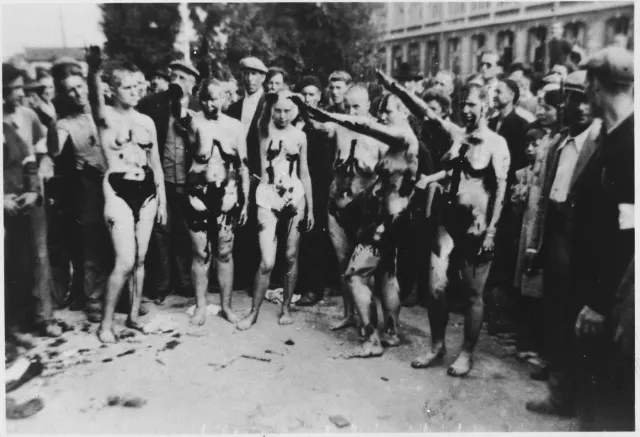
| نساء بلجيكيات يتعرضن للعقاب ويجبرن على أداء التحية النازية | ||
 |
||
 |
||
 |
||
| عوقبت
النساء في
محاكمات غير رسمية، وبدون النظر إلى دفاعاتهن، رغم تأكيد بعض النساء أن
العلاقة الجنسية تم بالإجبار، وفي بعض المناطق تم قتل العاهرات اللواتي
وافقن على التعامل مع النازي. وامتد ذلك العقاب في البلاد الأخرى التي
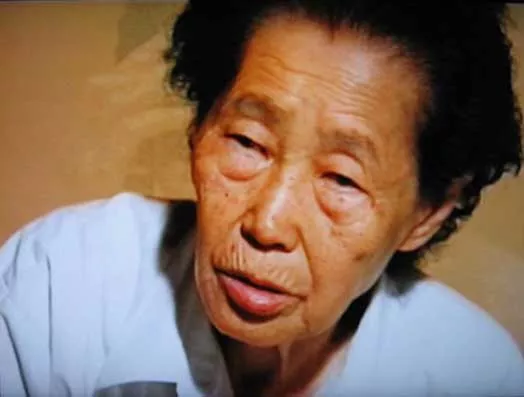
احتلها الألمان، مثل بلجيكا. بالإضافة إلى هذا التعاون المنفرد الذي تقوم بها بعض النساء مع الاحتلال الألماني، اعتمد الجيش الألماني بشكل رسمي على بيوت الدعارة الفرنسية ليقضي الجنود متعتهم الجنسية. ويؤكد المؤرخ الألماني فريتز زيلدر أن النساء الأجنبيات اللواتي عملن في هذه البيوت، سواء فرنسيات أو غيرهن، جاءوا للعمل بإرادتهن، ولكن في دراسة أخرى لأستاذة علم الاجتماع بجامعة ريزنبورج للعلوم التطبيقية روث زيفرت، تم تأكيد أن بعض هؤلاء الفتيات أجبرن على العمل في هذه البيوت، وذلك وفقًا للاتهامات الموجهة للضباط النازيين في محاكمات نورنبيرج بعد الحرب. من الجدير بالذكر أن القيادة العليا للجيوش الألمانية كانت تمنح للجنود كروت زيارة لهذه البيوت، وصدر قرار منهم بمنع الممارسات الجنسية مع النساء الفرنسيات غير العاملات بهذه البيوت. بالعودة إلى عقاب النساء الفرنسيات الذي تلا تحرير فرنسا، فلم تجر تحقيقات كافية عن تلك الحوادث حتى الآن، على الرغم من أنها صارت وصمة عار في تاريخ فرنسا. في عام 2008 قال وزير الخارجية الفرنسي ساعتها برنارد كوشنار إن الجروح بين ألمانيا وفرنسا لم تندمل بعد، وأكد أن الأطفال الناتجين عن الحرب ما زالوا حتى الآن يطالبون بتحديد هويتهم. وفي عام 2009 سمحت وزارة الخارجية الألمانية لمن يقدم مستندات تثبت جنسية والده الألمانية وقت الحرب أن يحصل على الجنسية الألمانية. وبناءً على ذلك حصلت الفرنسية "دانييل روكسويل" على الجنسية الألمانية، لتكون أول طفلة حرب تحصل عليها. 2. نساء لمتعة الجيش الياباني "كانوا يصرخن أثناء الليل في نداء متصل لأمهاتهن" هكذا تختم الكورية "كاميكو كانيدا" قصة اختطافها من القوات اليابانية للعمل بالقوة في معسكرات المتعة، حيث واجهت عدة مشاكل حينما كانت ترفض الممارسات الجنسية، وتعرضت نتيجة لذلك لطعنة بصدرها، وكسر بيدها، فيما بعد شاهدت كاميكو مراهقات يجبرن أيضًا على العمل كنساء متعة، ولكن لعدم نمو أعضائهن التناسلية بشكل كاف تعرضن إلى الجروح والأمراض المختلفة وقضوا الليل يصرخن. |
||
 |
||
| كاميكو كانيدا | ||
| تعود هذه التفاصيل إلى الجانب الثاني من العالم، وبينما حدثت قضية النساء المتعاونات في فرنسا، فمثلما خصصت ألمانيا بيوت دعارة لجنودها في فرنسا، حاولت اليابان حل مشكلة التوتر الجنسي لجنودها، ونتج عن ذلك حركة كبيرة تم فيها تجنيد العديد من النساء الذين أطلق عليهن "نساء المتعة" أو "إيانفو"، من الدول التي قام الجيش الإمبراطوري الياباني والذي يبلغ عدد جنوده أكثر من مليون رجل باحتلالها، مثل الصين، كوريا، الفلبين، بورما، وغيرها من الدول والمناطق، ووصل عدد النساء الذين تم تجنيدهن في هذه المعسكرات حسب عدة تقديرات من 20 ألف إمرأة حتى 300 ألف إمرأة، ويوضح التباين في الأرقام عدم التحقيق الكافي في هذه المسألة، وحسبما أكد أستاذ التاريخ الياباني المعاصر بجامعة طوكيو يوشياكي يوشيمي، اعتمادًا على عدة وثائق تعود لفترة الحرب، وجدها في التسعينات، قام الجيش الياباني بإنشاء عدة معسكرات ومحطات للمتعة من أجل الجنود، وذلك خوفًا من تفشي الأمراض بينهم، أو حدوث احتجاجات بسبب احتياجاتهم الجنسية، وانقطاعهم عن أسرهم لفترة طويلة. | ||
 |
||
| نساء متعة من كوريا الجنوبية | ||
 |
||
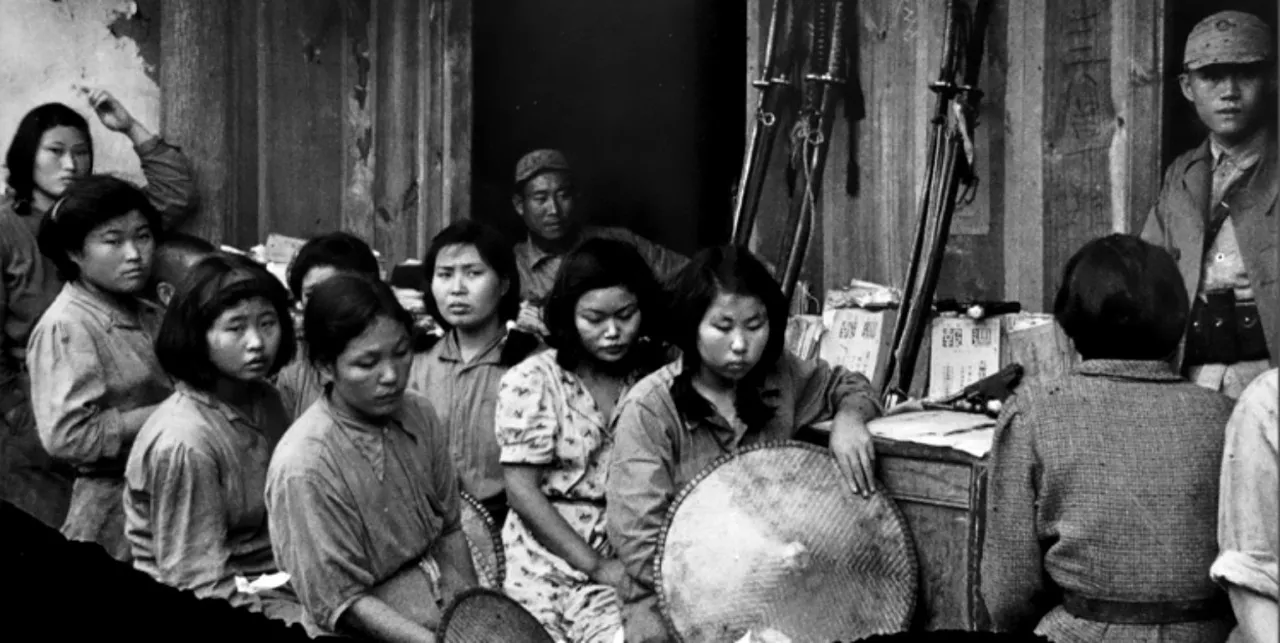
| نساء من الصين والملايو يتم أخذهن بالقوة للعمل في معسكرات المتعة | ||
| تعود بداية إنشاء "معسكرات المتعة" إلى عام 1932، في شانجهاي بالصين، حيث قام الجنود اليابانيين باغتصاب 233 إمرأة، فحاول الجنرال أوكامورا يوساجي حل المشكلة، وطلب من الجيش إرسال نساء متعة إلى جنوده في الصين حتى يتوقف الاغتصاب، في البداية كان النساء من البغايا اليابانيات اللواتي تطوعن لأداء خدمتهن الوطنية تجاه الجنود، ولكن بعد ذلك احتاج الجيش إلى عدد أكبر من النساء، فقام بالإعلان عن عدة وظائف وهمية، فتقول مثلا الكورية "باك" ( اسم مستعار ) إنها كانت في السابعة عشر من عمرها، عندما قامت مكاتب كورية بأوامر يابانية بتوظيف عدة كوريات للعمل في عدة مصانع، كان على أحد من عائلة "باك" أن يذهب، فذهبت هي وعدد من النساء الأخريات، وتم تسليمهن إلى اليابان، حيث قام اليابانيون بترحيلهن إلى الصين للعمل في معسكرات المتعة. | ||
 |
||
| نساء صينيات مع الحراس اليابانيين | ||
| في 4
أغسطس/آب عام
1993، وبعد رفع عدة نساء كوريات دعوى قضائية ضد الحكومة اليابانية، قام
أمين مجلس الوزراء الياباني حينذاك يوشي كونو، بتقديم بيان، عرف فيما بعد
باسم "بيان
كونو"،
اعترفت فيه اليابان للمرة الأولى منذ الحرب العالمية الثانية، باستخدام
نساء المتعة وإنشاء معسكرات لذلك تم فيها إجبار النساء على ممارسة الجنس
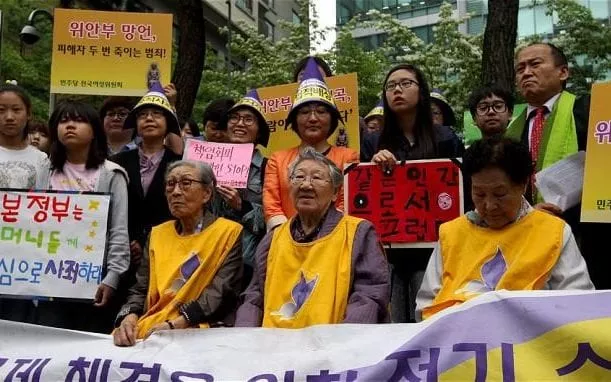
مع الجنود، مما يعد جرحًا كبيرًا لشرفهن وكرامتهن. اُعتبِر البيان اعتذار من اليابان تجاه نساء المتعة اللواتي أجبرن على ذلك، ولكن في عام 2007 قام رئيس الوزراء الياباني شينزو آبي بإنكار أن يكون الجيش الياباني قام بإجبار النساء على ممارسة الجنس، ثم قال: "كان هناك إجبار في إطار المفهوم الواسع (الإجبار على أساس العقد مع مؤسسات الدعارة) ولكنه لم يكن هناك إجبار في إطار المفهوم الضيق (الإجبار من قبل الجيش)". فيما بعد وفي عام 2014، قررت اليابان تشكيل فريق لمراجعة الخطوات التي أدت إلى إصدار بيان "كونو" بعدما قال أحد واضعي البيان إن إفادات النساء لم تُراجع بشكل كاف. مازالت القضية مثيرة للجدل حتى الآن، وتنطلق المظاهرات دائمًا للمطالبة باعتذار رسمي من الحكومة اليابانية، وتقديم التعويضات المالية اللازمة، وتشارك في هذه المظاهرات بعض النساء اللاتي تعرضن وأجبرن على ممارسة الجنس في الحرب العالمية الثانية، في إطار معسكرات المتعة، وذلك في بلاد مثل كوريا الجنوبية والفلبين وتايوان. |
||
 |
||
| نساء من كوريا الجنوبية يتظاهرن للمطالبة بالاعتذار عن إجبارهن على العمل في معسكرات المتعة | ||
| 3. اغتصاب
برلين الكبير بينما تنفس العالم الصعداء في منتصف عام 1945، بعد انتهاء كابوس الحرب العالمية الثانية، وانتحار هتلر ومعاونيه، وانتهاء قوة دول المحور فعليًا في معظم بقاع الأرض، وبينما كان العالم يأمل في حلول السلام، بدون اضطهاد لفئات معينة من البشر، كان الوضع مختلفًا في برلين، فبعد أن قام الحلفاء بتدمير المدينة، حدثت جريمة بشعة في عاصمة ألمانيا، ولكن هذه المرة فالطرف المُدان ليس النازيون، ولكن قوات الحلفاء، التي دخلت ألمانيا أخيرًا بعد حرب ضارية استمرت لخمس سنوات. كان ضحايا الجريمة كالعادة هم النساء، إذ قامت القوات السوفيتية والأمريكية باغتصاب عدد كبير من النساء الألمانيات، إذ وصل عدد الضحايا إلى 2 مليون إمرأة، فيما عُرف بـ "اغتصاب برلين". |
||
 |
||
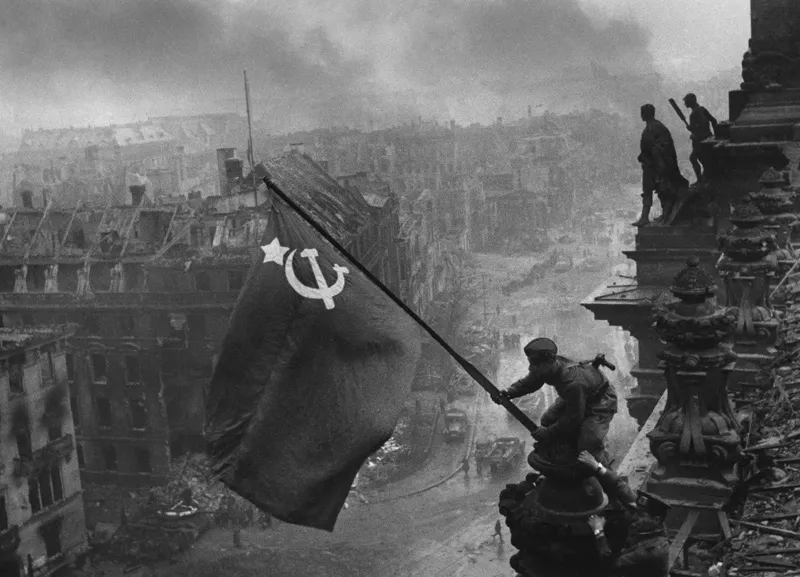
| العريف كانتاريا يرفع العلم السوفييتي على مبنى الرايخستاغ بعد الاستيلاء عليه | ||
 |
||
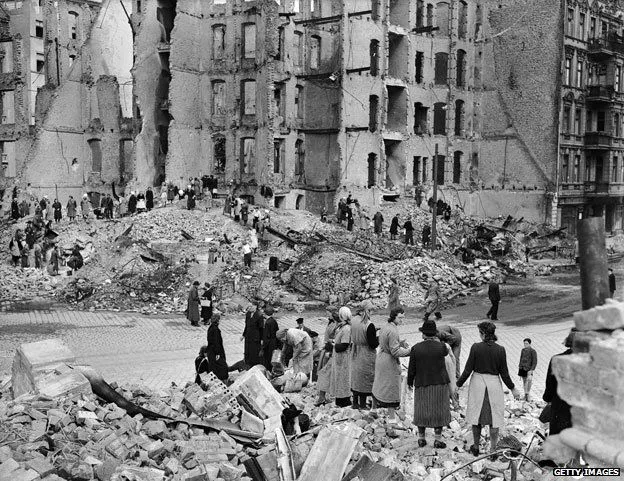
| ألمانيات يقفن بجانب عدة مباني في حطام برلين | ||
| مثل معظم الأحداث
المذكورة في
التقرير، هناك اختلافات كبرى حول عدد الضحايا، بين المؤرخين، سواء من
السوفييت، أبرز المتهمين، الذين اعتبروا الأرقام مبالغ فيها، أو
غيرهم، خاصة أن هذه الأحداث ليست مثل الأحداث الأخرى التي تم توثيقها
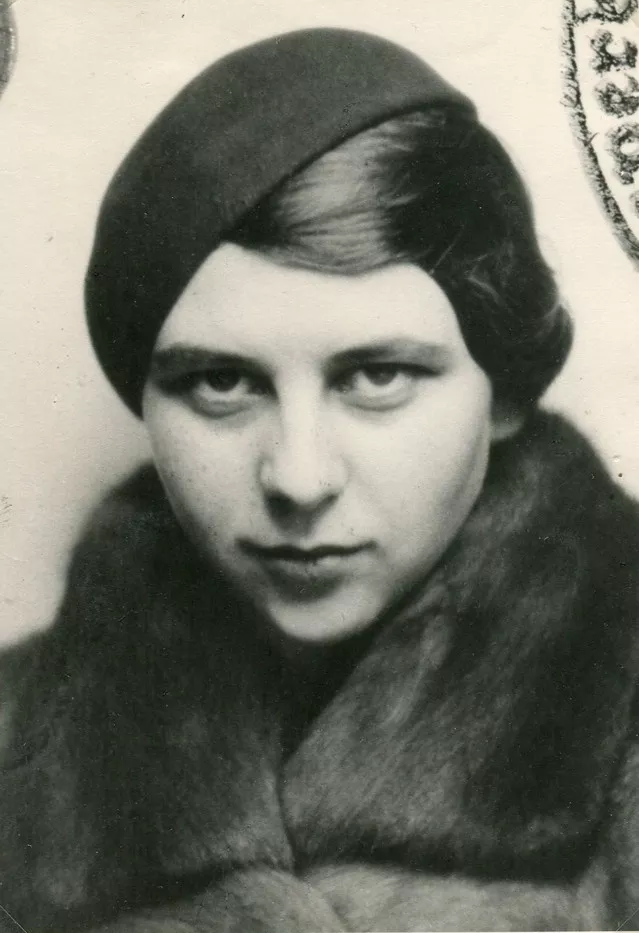
بالصور، ولكن هناك عدة دلائل تشير إلى تفاصيل هذه الاغتصابات. يؤكد المؤرخ العسكري البريطاني أنتوني بيفر في كتابه "سقوط برلين"، وحسب شهادات عدد من الجنود السوفييت وشهادات بعض الألمانيات اللواتي تعرضن للاغتصاب، أن حوادث الاغتصاب "وقعت لنساء من سن 8 سنوات حتى 80 سنة". وذكر أن الضباط السوفييت كانوا مقتنعين بأن تلك الممارسات تمت برضا الألمانيات لسعادتهن أخيرًا بتحريرهن من النازي. يحكي أيضًا الجندي السوفييتي فلاديمير جيلفاند، في مذكراته عن دخوله إلى برلين، عن حالة الغضب التي انتابته من زملائه في الجيش، إذ كانوا يسعون إلى معاقبة النساء الألمانيات على ما قام به الجيش الألماني من قبل، حتى وصلت رغباتهمم إلى طعن النساء في أعضاءهن التناسلية. وفي محاولة بسيطة لتوثيق هذه الأحداث، تم نشر مذكرات تحت عنوان "امرأة في برلين: 8 أسابيع في مدينة محتلة" عام 1959، تحكي فيه الكاتبة مجهولة الأسم ذكرياتها في برلين أثناء سقوط المدينة في يد الحلفاء، وتعرضها للاغتصاب الجماعي بواسطة عدد من الجنود السوفييت، ثم قرارها الحصول على الحماية عبر الدخول في علاقة عاطفية مع ضابط سوفييتي، كما فعلت ذلك العديد من الألمانيات أيضًا. تم اعتبار الكتاب "تلويث لسمعة المرأة الألمانية"، وعلى إثر ذلك قررت الكاتبة المجهولة، عدم نشر الكتاب مرة أخرى في حياتها، حسبما قال الكاتب الألماني هانس إنتزنسبيرغر، الذي قرر نشر الكتاب عام 2003 مرة أخرى بدون نشر اسم الكاتبة، ولكن بعد ذلك قام المحرر جينس بيسكي بالكشف عن اسم الكاتبة، وهي الصحفية الألمانية مارتا هيلرز، والتي توفيت عام 2001. |
||
 |
||
| مارتا هيلرز | ||
| تصدر الكتاب قائمة
الأكثر مبيعًا
لمدة 19 أسبوعًا في طبعته الثانية، كما اختارته مجلة نيويورك تايمز
كاختيار المحررين، وتم تصوير فيلم ألماني يقتبس قصة الكتاب تحت عنوان "سقوط
برلين: مجهولة" وحقق أرباح وصلت إلى 219 مليون دولار. كما ذكرت الصحفية والكاتبة البيلاروسية سفيتلانا أليكسيفيتش، الحاصلة على جائزة نوبل للأدب في كتاب "وجه الحرب غير النسائي"، شهادة ضابط سابق بالجيش الأحمر، قال فيها: "كنا صغارًا، أقوياء، وعشنا لمدة 4 سنوات بدون نساء، لذلك كنا نحاول اصطياد النساء الألمانيات. 10 رجال اغتصبوا امرأة واحدة. لم تكن هناك نساء بالقدر الكافي، جميع السكان هربوا من الجيش السوفييتي، لذلك أخذنا فتاة صغيرة، بين سن الثانية عشر والثالثة عشر، ولو بكت كنا نضع شيء في فمها. كنا نعتقد إن هذا مضحك. الآن لا أفهم كيف قمت بهذا، لقد نشأت في عائلة طيبة، ولكن هذا ما كنته أثناء الحرب". في شهادة أخرى من نفس الكتاب تروي عاملة تليفونات من الجيش السوفييتي شهادتها وتقول: "عند احتلالنا لأي مدينة، كان هناك ثلاثة أيام للنهب والاغتصاب. لم يكن هذا رسميًا بالطبع، ولكن بعد الأيام الثلاثة فمن يفعل ذلك يمكن أن يتعرض لمحاكمة عسكرية... أتذكر امرأة ألمانية تم اغتصابها، تجلس عارية، وتضع يديها بين قدميها، الآن أشعر بالخجل من ذلك، ولكن ساعتها لم أشعر بالخجل على الإطلاق. هل تعتقدين أنه كان من السهل علينا مسامحة الألمان؟ لقد كرهنا رؤية منازلهم بيضاء ومزينة بالورود وغير مدمرة. أردت أن أراهم يعانون، أردت رؤية دموعهم، عشر سنوات كان عليها أن تمر لأبدأ بالشعور بالشفقة نحوهم". وفي محاولة أخرى لتوثيق الأحداث نشر المؤرخان الألمانيان رينر جريس وزيلكة زاتكو، كتابهما "اللقطاء.. أطفال احتلال ألمانيا بعد 1945"، الذي حاولا فيه توثيق شهادات الأطفال الألمان الذين ولدوا بعد سقوط ألمانيا، الذي وصل عددهم، بحسب تقدير الكاتبين إلى 300 ألف طفل. وصل سن معظم هؤلاء الأطفال الآن إلى 70 عامًا، ولكنهم ما زالوا يبحثون عن آبائهم وهويتهم الضائعة. ورغم أن أصابع الاتهام توجه بشكل أكبر إلى الجيش السوفيتي، يذكر أستاذ علم النفس والجريمة بجامعة كنتاكي الشمالية جيمس ليلى في كتابه "ما أخُذ بالقوة"، أن القوات الأمريكية قامت أيضًا بعمليات اغتصاب متعددة للنساء في فرنسا وألمانيا وبريطانيا، ووفقًا للوثائق التي ذكرها وصل عدد الضحايا من النساء إلى 14 ألف إمرأة. |
||
© المنصة
|
||
| Насилие
в отношении женщин во время Второй мировой войны |
||
| |
||
| Насилие над женщинами... Невысказанная тема Второй мировой войны | ||
|
Опубликовано
10 декабря 2016 г.
|
||
|
В тёмный период истории, но не столь далёкий от нашего времени, несколько стран пытались установить контроль над миром во время Второй мировой войны. В этой войне мир стал свидетелем систематических преследований многих людей — будь то по религиозному признаку, например, преследование евреев, или по расовому, как преследование цыган и африканцев с попытками их коллективного истребления. У сторон была общая черта: как армии союзников, так и страны Оси отличались жестоким насилием над женщинами. Письменные исследования войны часто игнорируют этот аспект, и несмотря на прошедшие годы, адекватных исследований по насилию в отношении женщин проведено не было. Сегодня, в рамках кампании «16 дней против гендерного насилия», мы рассказываем о трёх постыдных историях насилия над женщинами во Второй мировой войне, потому что бороться с нынешними проявлениями насилия и предотвращать их в будущем можно лишь через изучение ужасающих событий прошлого.
Начало этому явлению берёт корни во Франции, где в Европу вернулась средневековая практика — женщин полностью обрили наголо, заставляли ходить обнажёнными по улицам и бросали в них кирпичи в качестве наказания за сотрудничество с немецким оккупантом. В период оккупации Франции нацистской Германией с 1940 по 1944 год многие француженки и женщины из других оккупированных европейских стран вступали в сексуальные отношения с солдатами-оккупантами, подчиняясь их власти и контролю либо из страха. После гибели мужей на войне такие отношения привели к рождению тысяч франко-немецких детей. Более 20 000 женщин были наказаны, хотя по оценкам количество могло быть и выше, учитывая число рожденных детей. |
||
|
||
| Бельгийских женщин наказывают и заставляют отдавать нацистское приветствие | ||
|
||
|
||
|
||
|
Женщин наказывали в ходе неофициальных судебных процессов независимо от их защиты, хотя некоторые утверждали, что сексуальные отношения были принудительными. В отдельных районах проституток, согласившихся сотрудничать с нацистами, казнили. Подобные наказания распространялись и на другие страны, оккупированные немцами, например на Бельгию. Помимо отдельного сотрудничества некоторых женщин с немецкой оккупацией, немецкая армия официально использовала французские бордели, где солдаты могли удовлетворять свои сексуальные потребности. Немецкий историк Фриц Зельдер подтверждает, что иностранки, работавшие в этих домах — француженки или женщины других национальностей — пришли туда добровольно. Однако в другом исследовании профессора социологии Рут Зиферт из Университета прикладных наук Рейзенбурга было доказано, что некоторых девушек принуждали к работе в таких заведениях. Об этом свидетельствуют обвинения, выдвинутые против нацистских офицеров на Нюрнбергском процессе. Примечательно, что Верховное командование немецких войск раздавало солдатам визитки борделей, а также было издано постановление, запрещающее солдатам иметь сексуальные отношения с француженками, не работающими в этих домах. Что касается наказаний французских женщин после освобождения Франции, стоит отметить, что эти инциденты до сих пор не были должным образом расследованы, хотя они и остаются позором французской истории. В 2008 году тогдашний министр иностранных дел Франции Бернар Кушнер заявил, что раны между Германией и Францией еще не зажили, подчеркнув, что дети, рожденные в результате войны, все еще ищут свою идентичность. В 2009 году Министерство иностранных дел Германии позволило получить немецкое гражданство тем, кто предъявит документы, подтверждающие немецкое гражданство отца во время войны. Француженка Даниэль Роксвелл стала первым ребенком войны, получившим немецкое гражданство по этой причине.
«Они кричали по ночам и постоянно взывали к своим матерям», — так кореянка Камико Канеда завершает рассказ о своем похищении японскими войсками для принудительной работы в так называемых «лагерях удовольствий». Там она столкнулась с рядом испытаний, когда отказалась вступать в сексуальные контакты. В результате ей нанесли ножевое ранение в грудь и сломали руку. Позже она видела, как подростков из своего окружения также заставляли работать «женщинами для утех». Из-за недоразвитости их репродуктивных органов они подвергались жестоким издевательствам, пыткам и ночным крикам. |
||
|
||
| Камико Канеда | ||
|
Эти события происходили на другом конце света. Если во Франции возникла проблема сотрудничества женщин с оккупантами, то Япония пыталась решить проблему сексуального напряжения среди своих солдат иначе. Германия выделяла бордели для своих солдат во Франции, а Япония создала масштабное движение по вербовке женщин, известных как «женщины для утех» или «комфортеры». В Корее, на Филиппинах, в Бирме и других странах и регионах число женщин, принудительно завербованных в эти лагеря, по разным оценкам варьируется от 20 000 до 300 000, что свидетельствует об отсутствии достаточного расследования и точных данных. По словам Ёсиаки Ёсими, профессора современной японской истории Токийского университета, который опирался на несколько документов периода войны, найденных им в 1990-х годах, японская армия создала множество лагерей и станций для «развлечения» солдат. Это делалось из страха перед распространением болезней среди военнослужащих, а также из опасения возможных протестов из-за неудовлетворенных сексуальных потребностей, ведь солдаты надолго были отрезаны от своих семей. |
||
|
||
| Дом удовольствий для женщин из Южной Кореи | ||
|
||
| Женщин из Китая и Малайзии насильно забирают на работу в "лагеря отдыха" | ||
|
Начало создания «лагерей комфорта» относится к 1932 году в китайском Шанхае, где японские солдаты изнасиловали 233 женщины. Генерал Окамура Усаги попытался решить проблему и обратился к армии с просьбой направлять женщин для утешения солдат в Китай, чтобы прекратить изнасилования. Изначально набранные женщины были проститутками или добровольными японками, вызвавшимися нести национальную службу в сексуальном плане. Однако вскоре армии потребовалось больше женщин, и были объявлены несколько фиктивных вакансий. Так, кореянка по имени «Пак» (псевдоним) рассказывает, что ей было семнадцать лет, когда корейские власти издали приказ, и японка наняла нескольких кореянок для работы в различных увеселительных заведениях. Пак пришлось уйти: она и несколько других женщин отказались участвовать, и их экстрадировали в Японию, откуда японцы депортировали их в Китай для работы в лагерях удовольствий. |
||
|
||
| Китайские женщины с японскими охранниками | ||
|
4 августа 1993 года, после того как несколько корейских женщин подали иск против японского правительства, тогдашний секретарь кабинета министров Японии Ёси Коно выступил с заявлением, позже известным как «Заявление Коно», в котором Япония впервые после Второй мировой войны признала использование женщин для утех и создание лагерей, где женщин принуждали к сексу с солдатами, что наносило значительный ущерб их чести и достоинству. Это заявление было воспринято как извинение Японии за принуждение женщин к сексуальной эксплуатации. Однако в 2007 году премьер-министр Японии Синдзо Абэ отрицал, что японские военные принуждали женщин к сексу, заявив: «Существовало принуждение в рамках широкой концепции (на основе контрактов с заведениями проституции), но узко понятого принуждения со стороны армии не было». Позже, в 2014 году, Япония решила создать комиссию для пересмотра обстоятельств, приведших к публикации Заявления Коно, после того как один из его авторов заявил, что показания женщин не были должным образом проверены. Этот вопрос остаётся спорным и по сей день, и в таких странах, как Южная Корея, Филиппины и Тайвань, регулярно проходят демонстрации с требованием официальных извинений от японского правительства и предоставления финансовой компенсации женщинам, побывавшим в лагерях для утех. |
||
|
||
| Южнокорейские женщины протестуют, требуя извинений за принуждение их работать в "лагерях комфорта" | ||
В то время как мир вздохнул с облегчением в середине 1945 года после окончания кошмара Второй мировой войны, самоубийства Гитлера и его соратников, а также фактического падения власти держав Оси в большинстве частей мира, и хотя мир надеялся на новую эпоху без преследований определённых групп людей, ситуация в Берлине сложилась иначе. После разрушения города союзниками в конце Второй мировой войны в немецкой столице произошло ужасное преступление. Но на этот раз виновниками были не нацисты, а войска союзников, которые, завершив пять лет ожесточённой войны, вошли в Германию. Жертвами преступления, как это часто случается в войнах, стали женщины. Советские и американские войска изнасиловали огромное количество немецких женщин — по оценкам, до 2 миллионов женщин и девочек — в том, что вошло в историю как «Изнасилование Берлина». |
||
|
||
| Младший сержант Кантария поднимает советский флаг над зданием Рейхстага после его захвата | ||
|
||
| Немецкие женщины заняты разборкой завалов зданий на руинах Берлина | ||
|
Как и в случае с большинством упомянутых событий, существуют значительные расхождения в оценках количества жертв среди историков, как советских, так и западных. Наиболее яркими критиками были сами советские солдаты, которые считали приведённые цифры преувеличенными, особенно потому, что данные события не сравнимы с другими, хорошо задокументированными фотографиями и протоколами. Тем не менее, есть некоторые свидетельства, раскрывающие детали этих изнасилований. Британский военный историк Энтони Бивер в своей книге «Падение Берлина» на основании показаний ряда советских солдат и некоторых немецких женщин, ставших жертвами насилия, подтверждает, что изнасилования происходили с женщинами в возрасте от 8 до 80 лет. Он отметил, что советские офицеры были убеждены, что сексуальные действия происходили с согласия немецких женщин, поскольку те были рады наконец освободиться от нацистов. Советский солдат Владимир Гельфанд в своих воспоминаниях о вступлении в Берлин также рассказывает о своём гневе по отношению к товарищам по армии, когда они пытались мстить немецким женщинам за преступления немецкой армии на его родине, доходя порой до нанесения ножевых ранений женщинам в интимные места. В попытке документировать эти события в 1959 году были опубликованы мемуары под названием «Женщина в Берлине: 8 недель в оккупированном городе», где анонимная авторша описала свои переживания в Берлине во время падения города. Она решила защитить себя, вступив в романтические отношения с советским офицером, как это сделали многие другие немецкие женщины. Книга была воспринята как «позорящая немецких женщин», и поэтому анонимная авторша решила при жизни не публиковать её повторно. По словам немецкого писателя Ганса Энценсбергера, он решил в 2003 году переиздать книгу, не раскрывая имени автора, однако редактор Йенс Пеше раскрыл, что автором была немецкая журналистка Марта Хеллерс, которая умерла в 2001 году. |
||
|
||
| Марта Хеллерс | ||
| Книга возглавляла список бестселлеров в течение 19
недель
во втором издании и была выбрана журналом New York Times в качестве
выбора редактора. Немецкая экранизация истории книги была снята под
названием «Падение Берлина: неизвестная» и добилась
прибыли
в размере 219 миллионов долларов. Белорусская журналистка и писательница Светлана Алексиевич, лауреат Нобелевской премии по литературе, автор книги «Неженское лицо войны», приводит свидетельство бывшего офицера Красной Армии, в котором он рассказал: "Мы были молоды, сильны и жили 4 года без женщин, поэтому пытались выследить и заманить немецких женщин. 10 мужчин насиловали одну женщину. Женщин не хватало, все население сбежало от советской армии, поэтому мы брали маленькую девочку в возрасте от 12 до 13 лет и насиловали, если она плакала, мы клали ей что-нибудь в рот. Мы думали, что это смешно. Теперь я не понимаю, как я мог это делать. Я вырос в хорошей семье, но именно таким я был во время войны». В другом свидетельстве из той же книги телефонистка из Советской армии приводит свои показания и говорит: "Когда мы оккупировали любой немецкий город, было три дня для грабежей и изнасилований. Это не было, конечно, официально, но через три дня тот, кто это делал, мог быть подвергнут военному суду... Я помню немку, которую изнасиловали. Она сидела голая, зажав руки между ног. Теперь я это чувствую... Мне теперь стыдно за это, а тогда мне совсем не было стыдно. Вы думаете, легко нам было прощать немцев? Мы ненавидели их, не могли не видеть: их дома были белыми, украшенными цветами и не разрушенными. Я хотела видеть, как они страдают, я хотела видеть их слезы. Должно было пройти десятки лет, чтобы я начала испытывать жалость к ним". Немецкие историки Райнер Грайсс и Зильке Затко в очередной попытке документально зафиксировать события опубликовали книгу «Подкидыши... Дети немецкой оккупации после 1945 года», в которой собрали свидетельства немецких детей, родившихся после позорного падения Германии. По оценкам авторов, их число достигало 300 000. Большинству из этих детей сейчас около 70 лет, но они всё ещё ищут своих родителей и утраченную идентичность. Хотя основная вина возлагается на Советскую армию, профессор психологии и криминологии Университета Северного Кентукки Джеймс Лилли в своей книге «Что было взято силой» отмечает, что американские войска также совершили многочисленные изнасилования женщин во Франции, Германии и Великобритании. Согласно документам, на которые он ссылается, число жертв достигло 14 000 женщин. |
 Arabic
Society
Farouk Adel
Published Saturday, 10 December 2016
In a dark period of history, though one not very far removed from our own time, several countries tried to impose their control on the world during the Second World War. The world witnessed systematic persecution of many people, whether on religious grounds, such as the targeting of Jews, or on racial grounds, such as the targeting of Roma and Africans and attempts to exterminate them en masse. Yet one thing all sides had in common, and in which the Allied and Axis armies were alike, was violence against women.
Studies written about the war often overlook this aspect. Despite the passing of the years, there have not been sufficient investigations of violence against women, and this neglect is often due to embarrassment about mentioning such incidents.
Today, while the "16 Days of Activism against Gender-Based Violence" campaign is under way, we write about three shameful stories of violence against women in the Second World War, because we cannot address present-day violence and prevent it from happening in the future without studying the horrific incidents of the past.
We begin in France, where a practice dating back to medieval Europe returned: women's hair was completely shaved off, they were forced to walk naked through the streets and were pelted with bricks as punishment for collaborating with the German enemy.
During the Nazi German occupation of France between 1940 and 1944, many French women, and women in other European countries occupied at the time, collaborated with occupation soldiers by having sexual relations with them. This could be submission to their power and control and fear of abuse, or it could be in return for money at a time when women's sources of income had become scarce after their husbands died in the war. These relationships led to the birth of thousands of French-German children. More than 20,000 women were punished, although sources suggest that the number may have been higher given the number of births.
Belgian women being punished and forced to give the Nazi salute.
The women were punished in informal trials, without consideration of their defense, even though some women insisted that the sexual relations had been forced. In some areas prostitutes who agreed to deal with the Nazis were killed. Such punishment also spread to other countries occupied by the Germans, such as Belgium.
In addition to individual collaboration by some women with the German occupation, the German army officially relied on French brothels for the sexual gratification of soldiers. The German historian Fritz Zilder states that foreign women who worked in these houses, French or otherwise, came to work of their own free will. In another study, however, Ruth Seifert, professor of sociology at Regensburg University of Applied Sciences, confirmed that some of these girls were forced to work in the brothels, according to accusations made against Nazi officers at the postwar Nuremberg trials. It is worth noting that the German army high command issued soldiers with cards for visits to these houses and ordered that sexual relations with French women who did not work in them were forbidden.
As for the punishment of French women that followed the liberation of France, insufficient investigation of those incidents has been carried out even today, although they have become a stain on French history.
In 2008, the then French foreign minister Bernard Kouchner said that the wounds between Germany and France had still not healed, and stressed that children born as a result of the war were still demanding that their identity be established. In 2009, the German Foreign Office allowed anyone who could provide documents proving that his or her father had been a German citizen during the war to obtain German citizenship. On that basis, the Frenchwoman Danielle Rouxel obtained German citizenship, becoming the first war child to receive it.
"They screamed at night, continually calling for their mothers." This is how the Korean woman "Kamiko Kaneda" concludes the story of her abduction by Japanese forces and her forced work in comfort stations. She faced many problems when she refused sexual acts and, as a result, was stabbed in the chest and suffered a broken hand. Later, Kamiko saw teenage girls also forced to work as comfort women; because their sexual organs were not sufficiently developed, they suffered wounds and various illnesses and spent the night screaming.
Kamiko Kaneda.
These details take us to the other side of the world. While the case of collaborating women took place in France, and just as Germany assigned brothels to its soldiers in France, Japan tried to solve the problem of sexual tension among its troops. This resulted in a large system in which many women, called "comfort women" or "ianfu," were recruited from countries occupied by the Imperial Japanese Army, which numbered more than a million men, including China, Korea, the Philippines, Burma and other countries and regions. Estimates of the number of women recruited into these camps range from 20,000 to 300,000; the wide discrepancy demonstrates the lack of sufficient investigation of the issue. Yoshiaki Yoshimi, professor of modern Japanese history at the University of Tokyo, drawing on wartime documents he found in the 1990s, confirmed that the Japanese army established a number of camps and comfort stations for soldiers out of fear of disease spreading among them, or of protests caused by their sexual needs and their long separation from their families.
Comfort women from South Korea.
Women from China and Malaya being taken by force to work in comfort camps.
The creation of "comfort camps" began in 1932 in Shanghai, China, where Japanese soldiers raped 233 women. General Okamura Yasuji tried to solve the problem and asked the army to send comfort women to his soldiers in China so that the rapes would stop. At first the women were Japanese prostitutes who volunteered to perform what was presented as national service for the soldiers. Later the army needed more women and advertised various fictitious jobs. For example, a Korean woman called "Pak" (a pseudonym) said that she was seventeen when Korean offices, acting on Japanese orders, recruited Korean women to work in a number of factories. Someone from Pak's family had to go, so she went with a number of other women. They were handed over to Japan, and the Japanese transported them to China to work in comfort camps.
Chinese women with Japanese guards.
On 4 August 1993, after a number of Korean women brought a lawsuit against the Japanese government, the then Chief Cabinet Secretary Yohei Kono issued a statement that later became known as the "Kono Statement." In it Japan acknowledged for the first time since the Second World War the use of comfort women and the establishment of camps in which women were forced to have sex with soldiers, inflicting a grave wound on their honor and dignity.
The statement was considered an apology by Japan to the comfort women who had been forced into this system. In 2007, however, Japanese prime minister Shinzo Abe denied that the Japanese army had forced women to have sex and then said: "There was coercion in the broad sense of the term (coercion on the basis of contracts with prostitution institutions), but there was no coercion in the narrow sense (coercion by the army)."
Later, in 2014, Japan decided to form a team to review the steps that had led to the Kono Statement, after one of those who had drafted the statement said that the women's testimony had not been sufficiently reviewed.
The issue remains controversial to this day. Demonstrations are repeatedly held to demand an official apology from the Japanese government and the necessary financial compensation. Some of the women who were subjected to and forced into sexual relations during the Second World War within the framework of the comfort camps take part in these demonstrations in countries such as South Korea, the Philippines and Taiwan.
Women in South Korea demonstrate to demand an apology for having been forced to work in comfort camps.
While the world breathed a sigh of relief in the middle of 1945 after the nightmare of the Second World War had ended, Hitler and his aides had committed suicide, and the power of the Axis states had effectively ended in most parts of the world, and while the world hoped for peace without the persecution of particular groups of people, the situation in Berlin was different. After the Allies destroyed the city, a horrific crime took place in the German capital. This time, however, the accused were not the Nazis but the Allied forces, which had finally entered Germany after a fierce war lasting five years. As usual, the victims were women. Soviet and American troops raped large numbers of German women; the number of victims reached two million women in what became known as the "rape of Berlin."
Corporal Kantaria raises the Soviet flag over the Reichstag after its capture.
German women stand beside buildings amid the ruins of Berlin.
As with most of the events mentioned in this report, there are major disagreements among historians over the number of victims. Soviet historians, representing the side most prominently accused, considered the figures exaggerated, as did others. These events were unlike other events documented in photographs, but there is a range of evidence pointing to details of the rapes.
The British military historian Antony Beevor, in his book The Fall of Berlin, and on the basis of testimony from a number of Soviet soldiers and from German women who were raped, confirms that rape incidents "occurred to women from the age of 8 to 80." He wrote that Soviet officers were convinced that the acts took place with the consent of German women because they were supposedly happy finally to have been liberated from the Nazis.
The Soviet soldier Vladimir Gelfand also recounts in his memoirs of entering Berlin the anger he felt toward his fellow soldiers, who sought to punish German women for what the German army had done before; their desires went so far as wanting to stab women in their genitals.
In a modest attempt to document these events, memoirs entitled A Woman in Berlin: Eight Weeks in a Conquered City were published in 1959. The anonymous author recounts her memories of Berlin as the city fell to the Allies, her gang rape by a number of Soviet soldiers, and then her decision to obtain protection by entering into an intimate relationship with a Soviet officer, as many German women also did.
The book was regarded as "sullying the reputation of German women." As a result, the anonymous author decided that it should not be published again during her lifetime, according to the German writer Hans Enzensberger, who republished it in 2003 without naming the author. Later, however, the editor Jens Bisky revealed the author's identity as the German journalist Marta Hillers, who died in 2001.
Marta Hillers.
The book topped the bestseller list for 19 weeks in its second edition. It was also selected by The New York Times as an Editors' Choice, and a German film based on the book's story, entitled The Fall of Berlin: Anonymous, was made and earned 219 million dollars.
The Belarusian journalist and writer Svetlana Alexievich, winner of the Nobel Prize in Literature, also cited in her book The Unwomanly Face of War the testimony of a former Red Army officer, who said:
"We were young, strong, and had lived for four years without women, so we tried to hunt German women. Ten men raped one woman. There were not enough women; the entire population fled from the Soviet army, so we took a little girl, between twelve and thirteen years old, and if she cried we put something in her mouth. We thought it was funny. Now I do not understand how I did this. I grew up in a good family, but that is what I was like during the war."
In another testimony from the same book, a female telephone operator in the Soviet army recounts:
"When we occupied any city, there were three days for looting and rape. This was not official, of course, but after the three days anyone who did it could face a military trial... I remember a German woman who had been raped, sitting naked with her hands between her legs. Now I feel ashamed of it, but at the time I was not ashamed at all. Do you think it was easy for us to forgive the Germans? We hated seeing their houses white, decorated with flowers and undestroyed. I wanted to see them suffer; I wanted to see their tears. Ten years had to pass before I began to feel pity for them."
In another attempt to document the events, the German historians Rainer Gries and Silke Satjukow published their book Occupation Children: The Children of Occupied Germany after 1945, in which they tried to document the testimony of German children born after the fall of Germany. According to the authors' estimate, their number reached 300,000. Most of these children are now around 70 years old, but they are still searching for their parents and their lost identity.
Although the accusations are directed more heavily at the Soviet army, James Lilly, professor of psychology and criminology at Northern Kentucky University, states in his book Taken by Force that American troops also committed numerous rapes of women in France, Germany and Britain. According to the documents he cites, the number of female victims reached 14,000.
© Al-Manassa