• Полит.Ру "Возможна ли научная история Великой Отечественной войны?"

  •    


    11 марта 2016    


    Возможна ли научная история Великой Отечественной войны?


    Олег Будницкий   
    Олег Будницкий

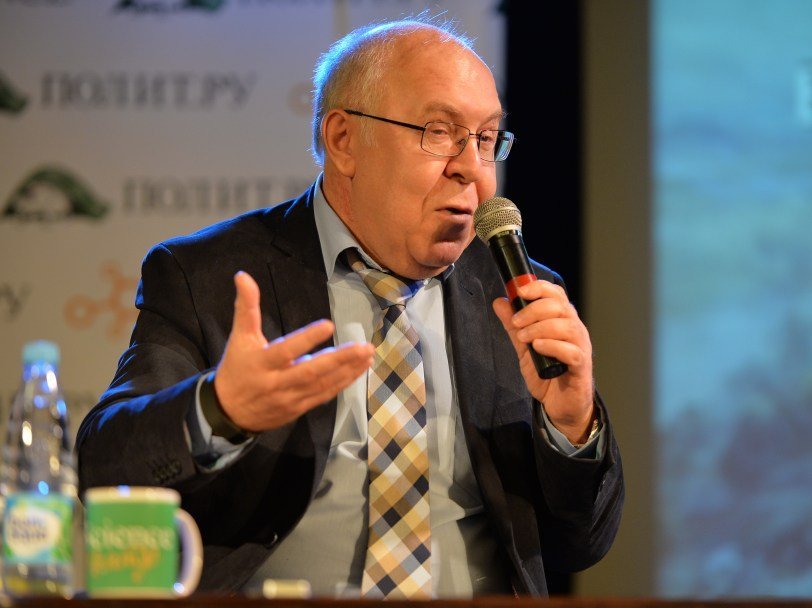
    Фото: Владимир Голиков


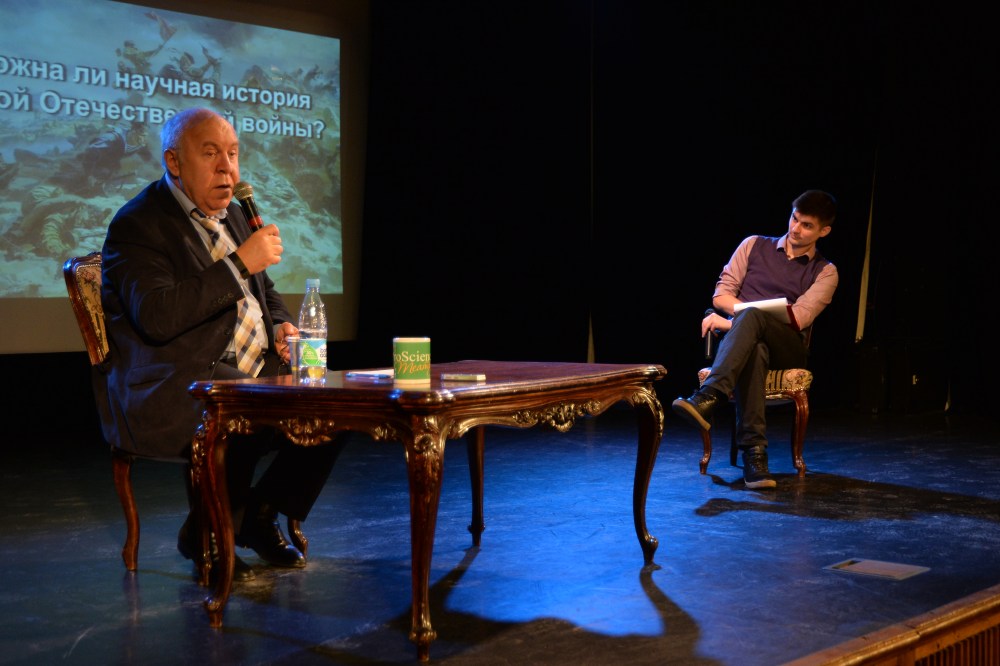
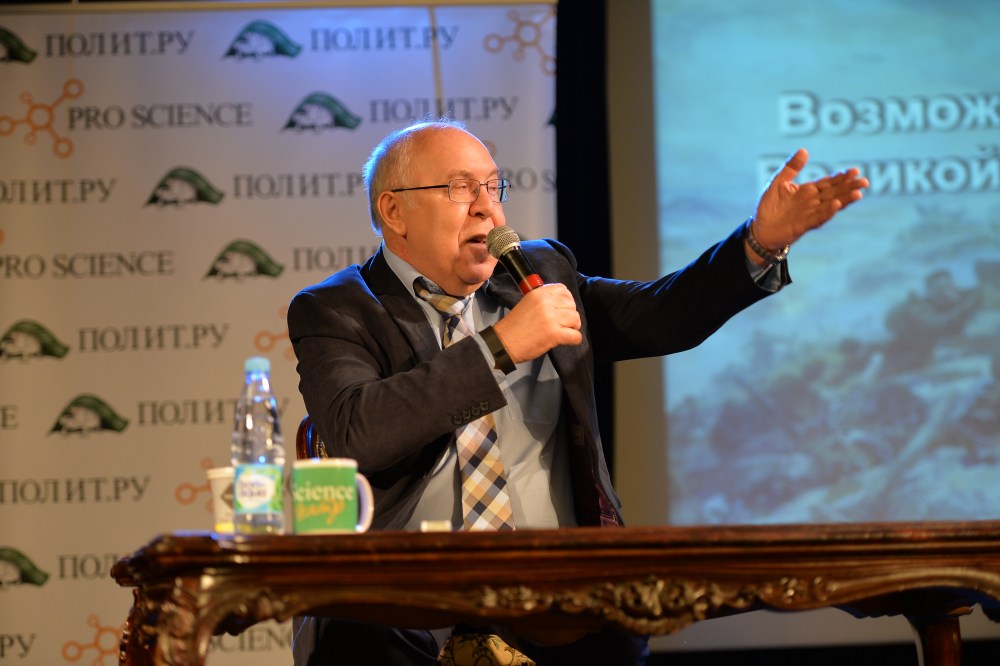
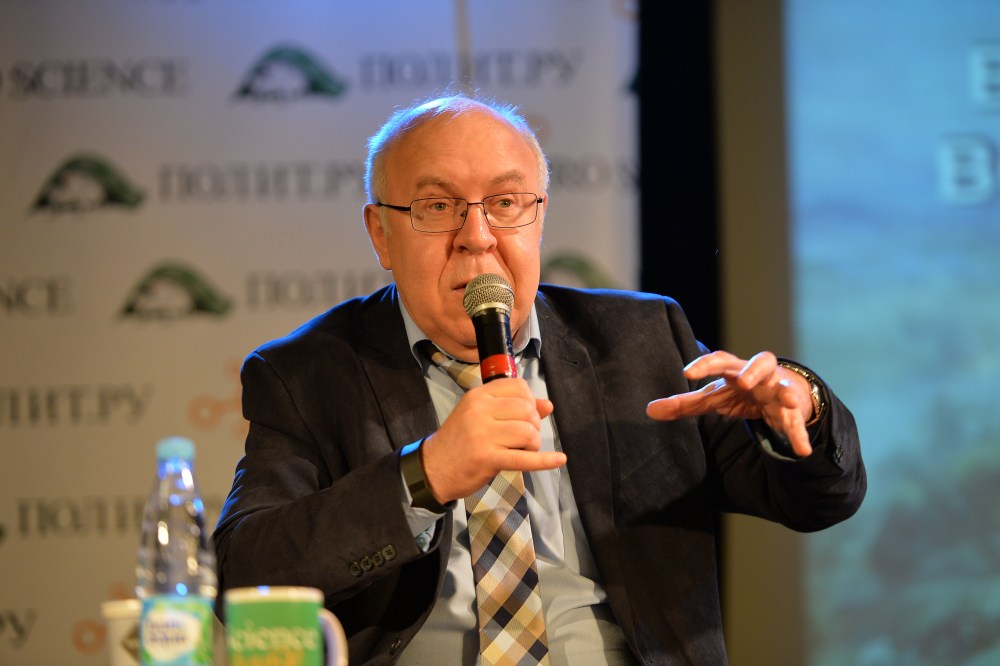
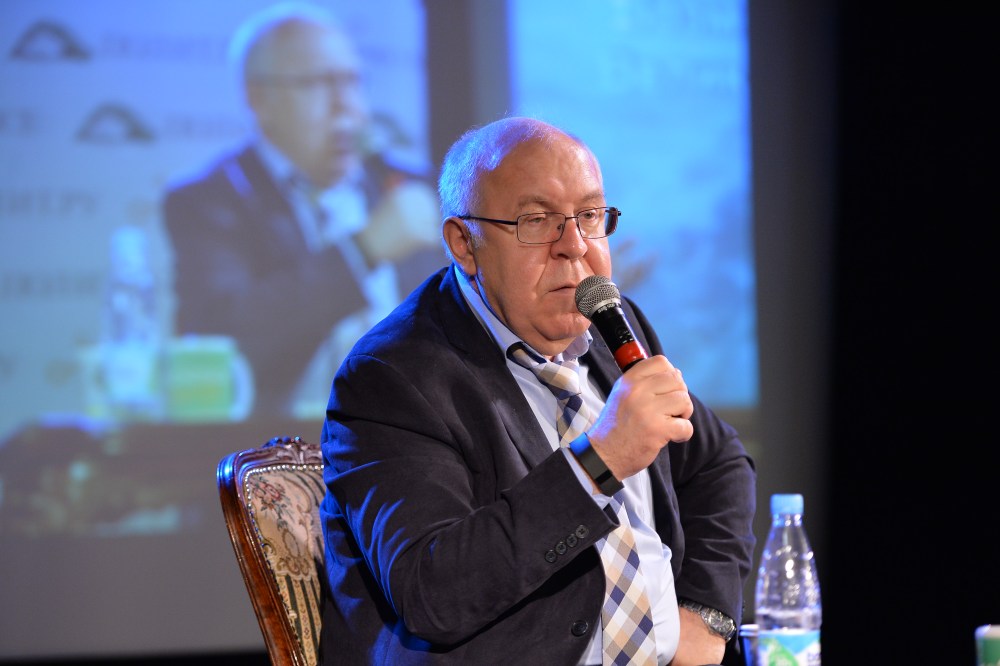
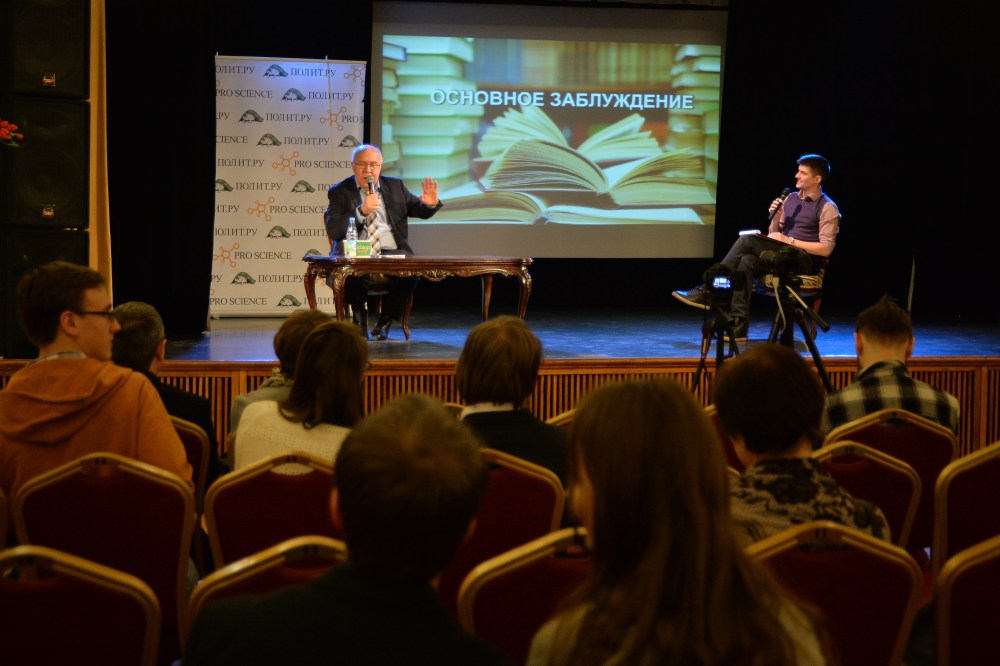
    Мы публикуем стенограмму очередной постановки ProScience Театра, которая прошла 15 февраля в Центральном Доме журналиста. С темой «Возможна ли научная история Великой Отечественной войны?» выступил доктор исторических наук, профессор, специализирующийся на российской истории XIX — начала XX веков Олег Будницкий. Вечер вел журналист Никита Белоголовцев.


    Никита Белоголовцев:

    – Меня зовут Никита Белоголовцев, я буду ведущим нашего сегодняшнего представления в ProScience Театре. Мы привыкли говорить, что то, что вы видите на этой сцене – это чуть больше, чем просто научные лекции. А сегодня у нас еще и предмет чуть больше, чем просто наука. Мы будем говорить о том, что стало абсолютно массовым феноменом в последнее время. Будем говорить об истории Второй мировой и Отечественной войны как части Второй мировой. И я прошу вас поприветствовать героя нашего сегодняшнего вечера: Олег Будницкий – российский историк, доктор исторических наук, профессор НИУ ВШЭ. Под ваши аплодисменты Олег Витальевич поднимается на нашу сцену. Олег Витальевич, здравствуйте, эти аплодисменты вам, присаживайтесь. Пожалуйста, занимайте место на вашем комфортном стуле, и я попрошу для начала еще несколько фактов о нашем сегодняшнем герое, чуть более развернутое досье, чем я огласил только что. Прошу вас.

    Наталья Харламова:

    – Олег Витальевич Будницкий — российский историк, доктор исторических наук, профессор Национального исследовательского университета Высшая школа экономики, директор Международного центра истории и социологии Второй мировой войны и ее последствий, в 2012 году был избран членом  Европейской академии. На настоящий момент Олег Будницкий — единственный российский историк, который был избран по разряду «история и археология» в Европейскую академию. 


    Олег Витальевич — автор научных и популярных трудов, более 250 статей. Он выступает как публицист и популяризатор, активно участвует в телепередачах и радиопрограммах и ведет их. На основе своей докторской диссертации в 2000 году издал книгу «Терроризм в российском освободительном движении: идеология, этика, психология (вторая половина XIX – начало XX в.)». Это первая в России книга, в которой была предпринята попытка понять причины появления терроризма и показать генезис терроризма, развитие его идеологии. В 2005 году он издал одну из важнейших своих книг «Российские евреи между красными и белыми (1917-1920)».


    Олег Будницкий также издал уже несколько томов переписки Василия Маклакова, написал такие книги, как «Деньги русской эмиграции: Колчаковское золото. 1918-1957», «Русско-еврейский Берлин (1920-1941)» и другие. Ряд книг историк посвятил Великой Отечественной войне, но не истории военных операций, а ее социальной истории, что называется «человеческому измерению войны». Это сборники «Свершилось. Пришли немцы!» Идейный коллаборационизм в СССР в период Великой Отечественной войны» и «СССР во Второй мировой войне: Оккупация. Холокост. Сталинизм», книга «Одесса: жизнь в оккупации. 1941–1944».

    Никита Белоголовцев:

    – Все верно, Олег Витальевич? Ну, мы старались.

    Давайте сейчас буквально в нескольких словах, тезисах, возможно, вопросах, обрисуем круг проблем, о которых будем сегодня говорить. Чтобы последние сомнения у тех, кто к нам сегодня пришел, развеялись, и они поняли, что точно пришли не зря сегодня.

    Олег Будницкий:

    – Я думаю что тех, кто проявил массовый героизми пришел сегодня вот сюда слушать разговоры о войне и об истории, их убеждать не нужно, их нужно поблагодарить за то, что пришли. И за то, что у части нашего общества существует интерес к истории вообще и к истории войны в частности. Это первое, что я хотел сказать.


    Мы будем говорить о тех сложностях, с которыми мы сталкиваемся как при изучении истории вообще,так и при изучении истории Великой Отечественной войны в частности. Здесь, есть некоторый нюанс. В нашем сознании, в нашем обществе существуют как бы две отдельные войны. Это Вторая мировая – это где-то, и это Великая Отечественная война, которая у нас. Хотя понятно, что Великая Отечественная война, или как ее называют в остальном мире – «Война на Восточном фронте», – часть Второй мировой войны. Понятно, что Вторая мировая для нашей страны началась совсем не 22 июня 1941 года, а несколько, раньше. Я имею в виду сентябрь 1939 года. Это первая проблема, которая бросается в глаза, в самом названии, в терминологии. И есть много других аспектов в изучении войны, сложностей в изучении войны, с которыми сталкиваются историки. И которые, с одной стороны, затрудняют изучение истории войны, а с другой стороны, делают это изучение увлекательным занятием. Да. Если бы все у нас было под руками, тогда чем бы мы вообще занимались.

    Никита Белоголовцев:

    – Можно я задам сразу вопрос, который так или иначе висит в воздухе? И, чтобы воздуху стало полегче, сразу его озвучу. «Культ войны», «культ победы», о котором много говорят в последнее время, который несомненно есть, вашу работу делает проще – сложнее – интереснее? Любят ли большие открытия, как большие деньги, тишину, или наоборот, приятнее и удобнее стало работать?

    Олег Будницкий:

    – Знаете, на мою работу это не влияет никак. Потому что надо различать и спользование истории для решения каких-то воспитательных, политических и других задач и профессиональную работу историка. Конечно, как говорил еще кто-то из классиков марксизма-ленинизма – «Жить в обществе и быть свободным от общества нельзя». Это понятно. Но для историка профессионального это не имеет значения, не должно иметь значения, я бы так сказал. Если историк применяется к тому, какая погода на дворе, то это уже не историк, у него другая профессия.

    Никита Белоголовцев:

    – А можно просто на бытовом уровне: доступ к документам больше – меньше, гранты, доступ куда угодно, или все как было?

    Олег Будницкий:

    – Это бывает по-разному. С одной стороны, я всегда говорю, что открыто столько документов, что ныне живущее поколение историков не в состоянии просто их все просмотреть, не то что освоить. Это огромный массив документов. И тут большое поле для деятельности. А с другой стороны, конечно, есть ряд ограничений, которые не способствуют работе историков. Например, очень сложно получать доступ к материалам архива ФСБ. Между прочим, эта организация, которая называлась несколько иначе, занималась подготовкой сводок о настроениях в обществе, что довольно важно для историка, который занимается не тем, что понимается под сугубо военной историей, military history, то есть историей военных операций, а историей общества во время войны.

    Другой момент. Вот есть в Центральном архиве Министерства обороны,фонд Главного политического управления. Это тоже структура, которая занималась воспитанием и морально-политическим состоянием армии, то есть вот этими самыми людьми на войне. Этот фонд практически тоже закрыт. Есть также ряд ограничений, которые существуют во всем мире. Это доступ к личным документам, документам личного происхождения. И это создает определенные сложности. Есть такие аспекты.


    Кроме того, в наших архивах есть немножко технические сложности. Они долгое время находились в ведении Министерства внутренних дел. С одной стороны, это создало замечательную систему описи и учета архивных материалов. Наверное, еще только в Великобритании в некоторых архивах можно это встретить. То есть когда мы ссылаемся на архивный документ, мы ссылаемся на фонд – опись – дело – лист. И это замечательно. Но при этом есть какие-то ограничения, которые существуют с незапамятных времен. У нас выдают не более 5 дел в день, к тому же через день. То есть если вам пришло 5 папочек, и вдруг в этих папочках, не всегда по названию можно определить, оказалось не то, что вам нужно, это сильно затрудняет работу. В зарубежных архивах выдают материалы коробками, по несколько коробок в день. Практически неограниченное количество.

    И подача материалов. Меня в Бахметевском архиве в Нью-Йорке в ужасе спросили: «А правда, что в Гуверовском архиве подают материалы через два часа?» Потому что у них через 15 минут или через 5, если это под боком. Вот я занимался много историей эмиграции. И несколько недель или месяцев, проведенных в заграничном архиве, равны годам, если не десятилетиям, если бы с аналогичными материалами я проработал здесь. Такие бывают парадоксы. Я уже не говорю о копировании материалов. Но я начал на сугубо профессиональные темы говорить, узкие. Например, сейчас практически во всем цивилизованном мире можно фотографировать в архивах документы. Это колоссально ускоряет работу историка. У насчисто техническое ограничение, просто не хватает множительной техники, очереди. Но плюс это довольно дорогое удовольствие. 100 рублей стоит ксерокопия за лист один. Если листов много, получаются не такие маленькие суммы. Но это сугубо технические моменты, главное, конечно, не в этом.

    Никита Белоголовцев:

    – Давайте перед тем, как мы перейдем к первому лекционному фрагменту, попробуем установить баланс профессионального и личного, потому что вы же герой нашего сегодняшнего вечера. Обычно когда читаешь историю какого-нибудь историка, простите за тавтологию, там есть какая-то яркая история из детства. «Я прочитал вот этот эпизод и понял, что отныне вся моя жизнь…» и так далее. Был ли у вас романтический эпизод в детстве, после которого ваше существование как историка было предопределено?

    Олег Будницкий:

    – Я боюсь, что я вас разочарую. Я вообще не собирался быть историком.

    Никита Белоголовцев:

    – Жаль.

    Олег Будницкий:

    – Я хотел быть журналистом и даже в школе я делал какие-то репортажи на местном радио. Я жил в городе Шахты Ростовской области. Героический эпизод моей биографии был, когда я сделал репортаж из женского общежития строителей. Это было сильное впечатление для десятиклассника. Я могу долго об этом рассказывать. Были какие-то заметки в местной газете о конкурсе «Алло, мы ищем таланты», о том, как наша команда по баскетболу обыграла-таки команду второй школы, до этого непобедимую, и так далее. Но потом мне как-то объяснили, что поступление на факультет журналистики в Ростовский университет очень сомнительно, мягко говоря. Над тобой же армия. Посоветовали поступать в пединститут. Тем более что там открылся новый факультет недавно – историко-английский. Там вас будут готовить! Нас, конечно, готовили, но не для дипломатических пассажей, а для того, чтобы послать в деревню и убить двух зайцев – один человек преподавал бы историю и английский язык, да еще и обществоведение. Так что вот так. Мне родители, видя во мне, с их точки зрения, некоторое безумие, говорили: посмотри на журналистов приличных, никто же из них не заканчивал журфак. Они же там были историки, юристы, еще кто-то там. Их не учили журналистике, научить писать нельзя. Я думаю, вот это было правильно. Если сам себя не научишь или нет какой-то искорки, тогда это дело бесполезное. Но вот так олучилось. И мы быстро поняли, в чем сокровенный смысл этого историко-английского факультета. У нас был такой предмет countrystuding, страна изучаемого языка, изучали план Лондона, отчетливо зная, что мы никогда в Лондоне не будем. И вообще никогда не будем, большинство из нас, за пределами Советского Союза. Когда я впервые оказался в Лондоне, то я понял, что я изучал один правильный предмет, я знал, куда идти от Трафальгарской площади. Но центр Лондона оказался очень маленьким, мы больше его изучали, можно было его обойти в пределах часа.


    Никита Белоголовцев:

    – Я учил английский по старым учебникам, и у меня было первое желание спросить «Где здесь телеграф?». Оказавшись в англоязычной среде, я прямо давил в себе это желание.

    Я бы хотел предложить вам перейти к нашему первому лекционному фрагменту, раз уж мы пропустили эпическую историю о том репортаже и о заметке о шахтинских баскетбольных командах. Что же такое история войны как предмет, как отдельная область знания? Прошу вас.

    Олег Будницкий:

    – Я еще раз повторю, что я не военный историк в том смысле, как это обычно понимается. То есть когда люди изучают историю военных операций, историю военной техники, военной промышленности и так далее. Меня интересуют люди на войне, что с ними происходит, как они меняются. Какое воздействие оказала война на советское и не совсем советское общество. Не будем забывать, что прошло каких-то 20 лет после того, как установилась советская власть. Это было общество, еще в существенной степени состоящее из тех людей, которые помнили, что было до революции, тех людей, которые прошли через коллективизацию и через многое другое. И вот отчасти мой интерес к социальной истории войны объяснялся тем, что я хотел понять: ну хорошо, вот я читаю в книжках, что общество как один встало на защиту родины, советской власти и прочее, и вот, как Станиславскому, мне хотелось сказать «не верю». Так не бывает, чтобы за 10 лет до начала войны каких-то людей ограбили, а потом они идут с чистым сердцем и чистыми мыслями защищать ту власть, которая это сделала. Понятно, что общество было гораздо сложнее, чем это представлялось. Но это не я собственно открыл, разумеется. При изучении этого общества предвоенного эти сложности стали очевидны, многое стало понятно из того, что происходило. Скажу еще одно: понимаете, большинство из нас ведь имеет очень смутные представления о том обществе, которое в войну вошло. Что мы знаем и откуда об истории войны, если брать какие-то человеческие документы, воспоминания и еще что-то? Кто эти воспоминания писал, кто эти истории рассказывал? Это рассказывали или писали городские образованные люди. А сколько этих образованных и городских было в стране в то время? Накануне войны наша страна – это крестьянская страна. 2/3 населения страны живет в деревне, в сельской местности. У нас есть перепись 1939 года, довольно точная, там разница 1–2%, демографы считают, что приписали немножко населения. Потому что Сталин сказал на одном из съездов, что у нас население прирастает на целую Финляндию каждый год. А перепись 1937 года показала, что почему-то не прирастает. Смертельный голод, репрессии и так далее, тяготы жизни, высокий уровень смертности. Тогда что сделали с теми, кто проводил предыдущую перепись? Нетрудно догадаться. Поэтому те, кто проводил следующую, учли ошибки и постарались как-то немножечко народу прибавить, но не очень уж много прибавили.

    Итак, 2/3 населения в деревне. Потом вот мы слышали словосочетание «культурная революция». И действительно, по сравнению с тем, что было раньше, был рывок, прорыв и так далее. Но тем не менее. Пятая часть населения страны была неграмотна. Критерий грамотности был довольно своеобразным: грамотными считались те, кто умеет читать по слогам, совершать действия с простыми числами и подписаться любым доступным способом. Если мы посмотрим на формальное образование, то на 1000 человек среднее образование было, если я не ошибаюсь, у 77 человек, а высшее – у 6,4. Понимаете, что не бывает четыре десятых человека, это статистические данные. Но это вот такой уровень. Это вот такое общество. А кто нам рассказывал о войне? А вот эта самая небольшая часть, которая была по советским понятиям необыкновенно образованной и которая жила в городе. А как же остальная масса? Кто о них расскажет, кто передаст их чувства, ощущения, то,что они пережили? Вот это настоящий вызов для историка. Где найти источники, чтобы понять, как люди все это переживали, как они сделали все, что они сделали, в конечном счете выиграли войну?

    Никита Белоголовцев:

    – Хорошо. Я хотел бы предложить нам сейчас обратиться к еще одной особенности нашего формата, те, кто ходят на представления ProScience Театра, о ней знают, это так называемый «вопрос скептика». Но чтобы нашу с вами обстоятельную дружескую беседу не разрушать необходимостью задавать вам каверзные вопросы, мы приготовили для этого специально обученного человека.


    Олег Будницкий:

    – То есть есть добрый следователь и злой следователь.

    Никита Белоголовцев:

    – Конечно. Единственный плюс нашего злого следователя, что он просто задаст вопрос, он не будет, например, вам направлять прожектор в лицо. Что, согласитесь, говорит о нашем безграничном гуманизме

    Олег Будницкий:

    – Это хорошая новость.

    Никита Белоголовцев:

    – Прошу вас.

    Скептик:

    – У нас на самом деле все еще более просто. У нас умный следователь, который на сцене, и глупый следователь, который в зале. И глупый следователь, который совсем даже не следователь, спрашивает вот что. Глупый вопрос, который заключается в очень краткой формулировке. Великую Отечественную войну удалось выиграть благодаря чему?

    Олег Будницкий:

    – Благодаря тому, что материальные, демографические и всякие прочие ресурсы СССР и его союзников в войне существенно превосходили ресурсы Германии и ее союзников. Я бы хотел сказать так, что попытка Германии – на самом деле главный драйвер Германия, а остальные пристяжные, – справиться с СССР, с США и Британской империей была опрометчива. Поэтому, продолжая мысль, я считаю, что решающее событие войны на Восточном фронте – это Московская битва. Почему именно Московская, а не Сталинград и Курск, где, собственно говоря,  были нанесены сокрушительные удары по немецкой армии? Потому что был сорван план «Барбаросса», был сорван блицкриг, и война приняла затяжной характер. А затяжную войну Германия выиграть не могла.Я вам приведу один пример. В мирное время Германии нужно было где-то 5 млн тонн нефти, а для ведения войны нужно было 12 млн тонн. Она могла эти ресурсы получать только за счет Румынии. И это был предельный ресурс. Кто в это время был крупнейшим производителем и экспортером нефти в мире? США. И так далее.


    Мы привыкли смотреть на войну как на героическую сагу. Мы изучаем подвиги, один, другой, третий, массовый героизм – и мы выиграли войну. Какими бы ни были героическими солдаты и офицеры, если нет соответствующей военной техники, это бессмысленно. И по производству всего этого вместе взятого противники Германии существенно ее превосходили. И после того, как сорвался блицкриг, Германия была обречена. По большому счету, была обречена тогда, когда война приобрела мировой характер. Еще одно маленькое замечание: Германия не собиралась затевать мировую войну. У Гитлера были конкретные планы, он надеялся принудить Англию к миру на выгодных для него условиях и так далее. И как-то постепенно-постепенно война оказалась мировой. Это так очень часто бывает в истории. Как в Первую мировую войну: думали, что она продлится несколько недель или месяцев максимум, а она продолжалась 4 года. Так и в данном случае, события пошли не по тому сценарию, на который рассчитывали политики. Прошу прощения, что долго отвечал на этот вопрос. Это вопрос очень правильный, один из ключевых в нашем понимании истории войны. Потому, что одно из традиционных ошибочных представлений массового сознания – когда люди рассматривают войну, которую вел Советский Союз, как бы отдельно от контекста Второй мировой. Это совершенно антинаучно и дает нам неверное представление о том, что происходило.

    Никита Белоголовцев:

    – Олег Витальевич, задам еще один личный вопрос, потому что мне показалось очень интересным, как довольно в проброс вы упомянули о том, что не верили в традиционную точку зрения о том, что «страна в едином порыве…» и так далее. И я вот задумался: это сомнение и этот критический склад мышления по отношению к войне сейчас выглядит логичным, понятным и обоснованным. Но вот в моей системе координат это не очень логичный взгляд на войну для юноши, который только что писал в шахтинскую газету, хотел стать журналистом в советской прессе и так далее. Где переломный момент случился, когда вы засомневались?

    Олег Будницкий:

    – Первое, я не занимался историей войны изначально. Я занялся этим в некоторой степени случайно. И я бы сказал, у меня есть некоторая черта, которая отличает меня от многих коллег по цеху: я занимался разными темами в своей жизни. И меня в разное время интересовали разные сюжеты. Первое – это был терроризм. Тогда, когда это было табу. Был терроризм на западе, «Красные бригады». А в России, даже в истории России, терроризм – это отдельные ошибки отдельных революционных групп, которые были осуждены и разоблачены и так далее. А когда я поступил в аспирантуру заочную в Институт истории СССР, у меня была в голове тема, я собирался писать о терроризме в системе борьбы «Народной воли». И я об этом сказал моему научному руководителю Борису Самуиловичу Итенбергу, которому 5 дней назад исполнилось 95 лет –ветеран войны, закончивший войну в Восточной Пруссии, замечательный человек. Он когда это все послушал, так на меня посмотрел… Я цитирую с его разрешения, я даже это написал в предисловии ко второму изданию своей книжки, которая выйдет через месяц, о терроризме. Он  сказал, отчетливо артикулируя слова: «Молодой человек, вам кандидатскую диссертацию защищать надо. Какой терроризм, вы что, с ума сошли?». Сейчас это даже представить себе трудно. Это было совершенно оправданно, это была непроходимая тема. Сейчас же, когда я вернулся к старому сюжету, готовил второе издание своей книжки, я решил написать там главу. Книга вышла в 2000 году, она довольно цитируемая. Я решил издавать ее в том виде, в котором она была, но все-таки добавить главу о том, что писали о терроризме за последние полтора десятилетия, тем более, когда я книжку сдавал в печать, это было накануне взрывов в Москве, потом случилось через полтора года 11 сентября и терроризм стал самой востребованной темой в мире.Так вот, я с некоторой оторопью увидел, что в мире каждые 6 часов выходит книга о терроризме. Но по счастью, львиная доля – это, конечно, о терроризме современном, уж не знаю, о чем они там пишут с такой интенсивностью. В 2007 году были сводные данные: только в основных научных журналах вышло 2300 статей. Тогда это было нереально.

    Мы как-то договорились, что я буду писать об истории изучения «Народной воли», и уже потом, когда стало понятно, что терроризм существует, и даже у нас, оказывается, возник, вторую диссертацию я защитил уже как раз о терроризме, преимущественно об идеологии терроризма. То есть пытался понять, почему и как эта идеология возникла, эта идея, что свободы можно добиться путем политических убийств. Ведь люди же хотели как лучше. И по дороге убили некоторое количество людей. Совсем не обязательно каких-то официальных лиц. Это первый был сюжет.

    Потом я получил грант американский, с тем, чтобы заниматься историей терроризма. Гуверовский архив – это лучшее место на земле, надеюсь, меня не обвинят в антипатриотизме. Стэнфордский университет – это Северная Калифорния, это лучшее место на земле во всех отношениях, там уникальный климат, действительно там какой-то такой уголок, еще в двух местах на земле есть что-то подобное, там практически не бывает зимы, но дождик бывает, и там есть Гуверовский архив, основанный в 1919 году. Полное название Гуверовский институт войны, революции и мира. Его основал Герберт Гувер, потом он был президентом США. Такой человек был не бедный. В этом архиве собирались документы разного рода, чего там только нет. Там собирались документы по российской истории XIX, XX веков. И там, например, был архив заграничной агентуры департамента полиции, можете себе представить. 216 коробок документов. Но и много чего другого. Замечательные коллекции. Я просто как коршун на них набросился. Тем более что там можно в день получать до 10 коробок документов.

    В чем прелесть. Вот я говорю, что у нас все очень удобно описано. Там ты получаешь коробку, и ты знаешь, там что-то такое есть на эту тему, но что конкретно, неизвестно, может оказаться все что угодно. Например, смотрел там одну коробочку, был такой Николай Базили, дипломат, он был представитель МИДа при царской ставке во время Первой мировой войны. Открываю коробку, оттуда сыпятся ордена, физически. Потом какая-то такая маленькая штучка выпадает, бархотка. Смотрю, это меню последнего царского обеда перед отречением. Базили хранил это как сувенир. Он потом, дипломат есть дипломат, удачно женился на дочери вице-президента Ситибанка, ответственного за Европу. Был человек не бедный, собрал прекрасную коллекцию картин. Там в Гувере есть комната Базили, там Боровиковский, Рокотов, работы XVIII век. Меню, там ничего такого особенного, но что меня поразило, там персики, в день, когда Николай II подписал отречение. Война войной, но персики все-таки были 2 марта.


    Никита Белоголовцев:

    – Персики по расписанию.


    Олег Будницкий:

     – И вот в этом Гуверовском архиве я стал смотреть эмигрантские материалы. И в частности архив Василия Маклакова. И просто, понял, что жизнь моя прошла напрасно. Что я занимался какими-то этими террористами революционерами убийцами, у которых мысли были на полторы извилины. Если сравнивать, не хочу обидеть революционеров. И это было такое пиршество интеллекта и такой блистательный язык. Большинство сейчас пишет по электронке или смски шлют. Там люди сидели и писали письма. Василий Маклаков – это был знаменитый адвокат, лучший русский оратор начала века, депутат трех Дум, член партии кадетов, посол в Париже, друг Льва Толстого. В Париже он остался и прожил там еще 40 лет. Несмотря на колоссальную разницу в возрасте, Толстой его как-то привечал и, гулял с ним по Москве, когда жил в Хамовниках. Разница в 40 лет. Маклаков замечательные мемуары написал о Толстом. Я могу об этом долго говорить. Я понимаю, что у вас сценарий.

    Никита Белоголовцев:

    – Я уже отложил

    Олег Будницкий:

    – Там 26 коробок его личного архива. 14 коробок – это переписка. В том числе с Марком Алдановым. Только что вышла. Самая толстая книжка, которую я издал, 1143 страницы.

    Никита Белоголовцев:

    – Олег Витальевич, поясните, пожалуйста, я сейчас поймал себя на мысли, что, возможно, каждый из здесь присутствующих по разному представляет себе коробку. У кого-то это маленькая аккуратная коробка из IKEA, у кого-то это картонная из-под телевизора. Я представлял что-то размером с мою папочку.

    Олег Будницкий:

     – Таких папочек там много.

    Письма были интересны еще и тем, что в них люди были более откровенны. Маклаков опубликовал четыре книги мемуаров. Последнюю книгу мемуаров он издал, когда ему было 85 лет. Голова у человека была потрясающая, память, и он сохранил ораторский дар до последних лет жизни. Он был особенный оратор, без пафоса, как будто он с вами беседует, это высший класс. Он умел заставить себя слушать противников в Думе. Нашим парламентариям надо учиться у некоторых людей, которые выполняли такие функции в дореволюционной России.

    Вот я этим увлекся. Это была вторая тема, которой я занялся. И о войне пока еще речи не шло, как вы видите.

    Потом я занимался очень увлеченно историей российского еврейства. Не думал писать книгу. Потом один доклад, другой, получилась книжка. 550 страниц. Пользовалась некоторым успехом. Она вышла на русском языке, на нее были рецензии на самых разных языках. Не только в журналах научных, но и в газетах. Во «Франкфуртер Альгемайне Цайтунг» в том числе. Мечта любого немецкого историка, как у нас газета «Правда» в прежние времена. Там была рецензия на полосу, что вообще почти невероятно, правда, половину полосы занимал портрет Троцкого.Точнее, карикатура на Троцкого. Эту книжку перевели потом на английский.


    Рецензия вышла после презентации книги во Франкфурте-на-Майне в 2006 году. Мы с моим коллегой американским, который выступал на презентации, с Майклом Дэвид-Фоксом, пили пиво, а что еще делать в Германии. Он говорит: я организую конференцию «Россия – Германия: переплетенные истории», не хочешь ли ты принять участие? Но я как-то специально не занимался. Но я писал очерк о своем научном руководителе, я упоминал его уже сегодня, лейтенанте Красной армии, он был командиром зенитного взвода на бронепоезде и на нем въехал в Германию. Бронепоезда, хотя они у нас сейчас ассоциируются с Гражданской войной, прикрывали мосты и прочее.Он там был командиром, это называлось огневой взвод. И я писал о нем очерк, для сборника такого традиционного. Я работал тогда уже в Институте историиРАН. «Ученые института - ветераны Великой Отечественной войны». Я говорю: «Борис Самуилович, что мне рассказывать какие-то официальные вещи, может быть, у вас какие-то документы остались?» – «Письма, говорит, остались, и глупые» – «Так это же самое интересное». Он мне дал письма к жене и родителям. Фантастические письма просто, из Германии. Цитирую по памяти. «Наконец я увидел Германию, эту проклятую страну. И увидел я жизнь неслыханно хорошую. Как эти сволочи жили. Какие дома, мебель, библиотеки». Это уже город, где прошла Красная армия. Немцы убежали, там не осталось почти ничего. Он говорит, что была даже не мебель, а скелеты мебели. То есть красноармейцы срезали кожу с кресел и диванов и посылали домой.Они не понимали, что эту кожу нельзя использовать для обуви. Там не было почти ничего, но все равно то, что осталось, его потрясло. И он пишет: «Что этим сволочам было надо, зачем они к нам пришли?» Короче говоря, я зацепился, там были многие другие вещи. И я стал смотреть, как Германию воспринимали те люди, которые туда пришли.  И совершенно неожиданно оказалось, что опубликованы работы известных людей, например, Борис Слуцкий в написанных в 1945 году «Записках о войне» описал свой опыт заграничного похода. У него была Румыния, он не был в Германии, он был в Австрии. Как его не посадили – это загадка природы, потому что он этот свой текст читал публично, друзьям, знакомым и так далее. Там ничего похожего на официальный канон войны и близко не было. Или Давид Самойлов. Тот самый, который «Сороковые, роковые». Есть его дневники, которые читают не историки, их читают историки литературы, литературоведы. Но ведь он же прошел всю войну и был в Германии. И там интереснейшие записи. Он осторожно пишет. Он, например, пишет: «Геббельсовская пропаганда говорила, что придут большевики и такое устроят, но наши солдаты ничего не предпринимают, чтобы разубедить в этом немцев». Такие любопытные вещи. Я сделал доклад, написал статью, это была моя, наверное, первая публикация о войне. И пошло-поехало дальше. И потом увлекся. Видите, что из этого получилось.

    Никита Белоголовцев:

    –Из этого получилась как минимум наша сегодняшняя лекция. Смотрите, я здесь подумал, что мы в общем ответили на вопрос«Почему мы изучаем войну?» Отчасти ответили и продолжаем отвечать на вопрос «как?», но пока нет ответа на вопрос «зачем?» Причем есть ощущение, что в последнее время в этом вопросе все сильнее расходятся парламентарии и историки. Вот этот ответ на вопрос «зачем мы изучаем сейчас историю войны», ону разных людей очень разный. Зачем мы изучаем ее с вашей точки зрения?

    Олег Будницкий:

    – Первое и главное – чтобы удовлетворить свое любопытство. Если у вас нет интереса, то вам не надо заниматься историей и да и чем-либо другим. Если бы мне было неинтересно, если бы это была работа, которой нужно было бы заниматься с 8 до 17, то, наверное, я бы занимался чем-то другим. Это просто интересно. И это уже является оправданием истории с моей точки зрения. И если люди читают, приходят, лекцией я бы это не решился назвать,на встречу, беседу, то, наверное, в этом есть какой-то смысл. Вообще считается, что люди изучают историю для того, чтобы как-то понять себя, предвидеть будущее. Но предвидеть будущее, я вам сразу скажу, невозможно. Мы и прошлое предсказываем иногда хорошо, иногда плохо. Знаете, есть такая поговорка, что Россия страна с непредсказуемым прошлым. Но это в существенной степени можно отнести к большинству стран, я бы сказал. Без истории, по большому счету, если вдаваться в философию, мы не знаем, кто мы. Если мы не знаем прошлого, то мы и не знаем, кто мы такие. И без историков это сделать нельзя.

    Вопрос такой комплексный, не об истории профессиональной, а о том, как она используется в тех или иных целях. Есть такая теория, что у каждой нации есть миф основания, на который она опирается. В США, допустим, это американская революция, война за независимость и все с этим связанное. Вот оттуда пошла Америка. Там есть еще несколько опорных точек, но это главное. Во Франции, понятно, это Великая французская революция, идеи свободы, равенства, братства, откуда пошла современная Европа. Что у нас было мифом основания? В императорской России, вероятно, это была история с воцарением Романовых. Россия возродилась после Смутного времени и так далее. И так пышно в 1913 году отмечалось 300-летие дома Романовых – никто не мог подумать, что четыре года осталось этому дому существовать. Что было мифом основания при Советской власти? Революция, конечно. Великая Октябрьская социалистическая революция, которая великое событие XX века. Со времен революции прошло 40 лет, 50 лет, ну а где счастье, которое было обещано? Вот я сейчас заметил, что молодое поколение плохо себе представляет, что такое был Советский Союз. Я могу сказать: я счастлив, что значительная часть моей жизни прошла после Советского Союза. Возникла проблема идеологическая. Что делать с программой партии, принятой в 61 году на 20-м съезде – «нынешнее поколение советских людей будет жить при коммунизме»? И мы довольно четко видим, с какого момента начинается обращение к войне  как к точке опоры. Это 20 лет после победы, 65 год, когда восстановили День Победы как выходной, до этого он не был выходным. И было такое, что у нас колбасы нет в магазине, но зато мы выиграли войну. Вот это была опора при советской власти. Потом после очередной русской революции 1991 года как-то немножко это отошло на какое-то время. Но потом начались поиски этой точки опоры в прошлом – что нас объединяет как нацию. Нас объединяет то, что у нас есть одна общая бесспорная ценность – это победа в войне. Кроме всего прочего, для большинства населения это семейная история.

    Кстати, я на счет войны был не совсем искренен – мой отец чрезвычайно увлекался историей войны, у нас книжный шкаф был забит военными мемуарами, он был инженер, но он это знал лучше любого историка профессионального. Но это было его детство, он на фронт убегал, в 14 лет его мой дед забрал на фронт, потому что он уже несколько раз бегал, его несколько раз ловили. Он его взял с собой, был хороший педагог – «конечно, ты будешь в разведке, но сначала тут при медсанбате помоги». Это была Ясско-Кишиневская операция, и моему папе пришлось выносить в ведре отрезанные руки и ноги. После этого желание повоевать у него немного снизилось. Но невозможно было его вернуть обратно, и он там в Кишиневе зимовал. Для многих то, что касается войны, до сих пор семейная история. 


    Вот это и стало как будто объединяющей силой. Но если вас интересует мое к этому отношение, то оно смешанное. В том плане, что я считаю, что нельзя стремиться к будущемуи при этом едучи в поезде все время смотреть назад и видеть свой идеалв том, что прошло и что сделано не нами.

    Никита Белоголовцев:

    –Позвольте я уточню, раз у нас возникла пауза. Вы сказали, на мой взгляд, очень важное слово – «миф». Но ведь действительно это должен быть миф, если мы на него опираемся. В мифе же плохое должно быть очень дозировано, только для сюжета и не больше. И здесь в общем получается некоторое противоречие с идеалом. И вы – не вы лично, а вы, историки – здесь не только не полезны, а даже и вредны местами. Потому что у нас здесь светлый миф о «великом народе-победителе», а вы тут со своим материальным – больше ресурсов, а не массовый героизм, коллаборационизм, а не всей страной на фронт, и так далее.

    Олег Будницкий:

    – Вы тут мне не приписывайте, пожалуйста.

    Я уже говорил об этом, меня как историка все-таки эти вещи не должны касаться. Я исхожу из того, что историки, во-первых, удовлетворяют собственное любопытство. Во-вторых, история все же неизбежно адресована обществу, читателю. Я исхожу из того, что общество заинтересовано в получении научного продукта, как мне кажется. Были опросы социологические, лет 10 назад. Очень интересные. По поводу войны был какой-то очередной юбилей. Ну у нас обострение происходит к юбилейным датам. Люди отвечали, что Великая Отечественная война – это самое важное событие в истории нашей страны XX столетия. Подавляющее большинство ответило, что они гордятся этим. И подавляющее же большинство ответило, что они не знают всей правды о ВОВ. Это те же самые люди. Однажды меня совершенно поразило, когда улетал куда-то, в duty free все девушки были с георгиевскими ленточками. Это вообще зрелище. Я говорю: «Ну что, указание такое вышло?» – «Нет, мы сами». Понимаете, когда говорят о правде, это очень высокое и ответственное слово, и под этим в разное время понимается разное. И тем не менее, я исхожу из того, что общество все-таки желает знать, «как оно было на самом деле». Это фраза немецкого историка Леопольда фон Ранке, первая половина XIX века. Он говорил, что задача истории – рассказать, как оно было в действительности, как оно было на самом деле. Но я вас разочарую, если вы не в курсе. Никакой историк не может рассказать, как это было на самом деле. Чем отличается история от химии или физики? Давайте я задам аудитории вопрос.

    Реплика из зала:

    – Ничем

    Никита Белоголовцев:

    – Доказательностью, рискну я предположить.

    Олег Будницкий:

    – Совершенно верно. В физике или химии можно поставить эксперимент. И в любом случае тело будет падать с тем же самым ускорением. В истории мы не можем провести эксперимент. Это не компьютерная игра. Мы не можем переиграть то, что случилось. У нас нет машины времени, мы не можем туда перенестись. И мы реконструируем прошлое по разного рода источникам. А представьте себе, если эти источники не сохранились. Значит, мы ничего не узнаем о событии, которое произошло. Просто ничего и никогда.

    Или другой вариант. У нас такое количество источников, что мы не в состоянии их физически освоить, почитать, оценить и прочее. Мы решаем выбрать какие-то, которые нам кажутся наиболее репрезентативными. А если мы ошиблись? То есть в истории есть вот такие нюансы. Но наша задача в том, чтобы пытаться в этой сложной ситуации, в которую изначально историк поставлен, все-таки руководствоваться научными методами. И пытаться пробиться к тому, чтобы понять две простые вещи. Что было и почему было. Вот и все. Ну вот и стараемся.

    Никита Белоголовцев:

    – Хорошо. Я хотел бы перейти к следующему фрагменту. Мы стараемся со всеми вашими коллегами, в том числе в других областях знания, там, где есть воспроизводимый эксперимент и все остальное, говорить о заблуждениях. Понятно, здесь ваш предмет – это какой-то кладезь заблуждений, о Великой Отечественной, о Второй мировой войне можно говорить бесконечно. У дилетантов существует суждение о том, что мы много не знаем о войне просто потому, что какие-то источники информации закрыты. Закрыты архивы, не снята секретность. И что вот, мол, когда оно все откроется, вот там-то мы все раз – и узнаем. Все цифры, все факты, все мотивации и так далее. Насколько это близко к реальности или насколько это стопроцентное заблуждение?

    Олег Будницкий:

    – Это тот случай, когда нет однозначного ответа. Во-первых, мы не знаем очень многого, но и очень много документов не только доступно, но и опубликовано. Например, несколько томов сейчас вышли, сейчас из Президентского архива, это бывший архив Политбюро. Очень большой объем документов, реально интересных, показывающих и механизм принятия решений, и разные любопытные обстоятельства. Как я уже сказал в начале, есть некоторые архивы и некоторые материалы, которые бы очень хотелось посмотреть, но они до сих пор недоступны и не очень понятно, когда станут доступны. Но я не думаю, что это радикально изменит ситуацию. Более того, понимаете, представление о том, что в архивах есть ответы на все вопросы, – это сильное преувеличение. Без архивов историку работать нельзя, это понятно. Приведу пример. Вот советская эпоха. Брежневское время. Представим себе, если бы мы изучали эту эпоху только по архивным документам. Было бы тотальное искажение действительности. Потому что то, что сохранялось, ее совершенно не отражало. Были анекдоты, которые рассказывали на кухне. Песни. Настроения людей. И если бы мы основывались только на официальных архивных документах, мы бы вряд ли что-то поняли. Я думаю, что это относится к любой эпохе, на самом деле. Что касается войны, то моя версия – понять, что там и как происходило, можно по тому, что мы называем источниками личного происхождения. То есть это прежде всего дневники и письма того времени. Дневники – это большая редкость. Но даже несколько дневников дают для понимания того, что происходило, больше, чем тонны воспоминаний, написанных через 50 лет. Человек еще не знает, что с ним произойдет, он не знает, доживет ли до конца войны, нет никакого канона истории войны еще, не сложилось. И он пишет здесь и сейчас о том, что видит. Какой-то фрагмент, кусочек действительности. Но этот фрагмент позволяет нам понять и многое другое. И вот мы очень много говорим, что народная война была. А народная история войны до сих пор не написана, с моей точки зрения. В том числе и потому, что мы не обращались к такого рода источникам.


    Когда-то у Константина Симонова была идея создать вот такой народный архив при центральном архиве Министерства обороны. Он говорит, что в журналы поступает очень много воспоминаний, текстов, написанных ветеранами. Большинство из них нельзя печатать. Не только потому, что иногда они там пишут такое, что не вписывается в официальный канон, но и потому, что просто не литературно, ужасно коряво. Но там сведения, говорит Симонов. Давайте мы это будем все собирать и побуждать людей писать это, чтобы эта память не исчезла, и они свой опыт зафиксируют, и потом в будущем историки, писатели будут этим пользоваться. Он был кандидатом в члены ЦК, между прочим, и он это написал кому-то из секретарей ЦК. Те послали на заключение в  Генеральный штаб. И там было заключение за подписью тогдашнего начальника Генштаба маршала Огаркова и начальника Главного политического управления Епишева. Они пишут, что не надо этого делать. И так у нас существует разнобой в оценке истории войны, пишут они. И так есть безобразники. Маршал Еременко написал не ту книгу, книга генерала Горбатова была вообще изъята. По современным понятиям то, что они там писали – детский лепет. И вот на основании заключения военно-политического руководства было решено не заводить такой архив.

    И вот ушли из жизни миллионы участников войны. Это именно миллионы – в Красной армии служило за годы войны, включая довоенную армию, 34,5 млн человек. От них мало что осталось записанное, но кое-что осталось. И я каждый раз, когда выступаю по радио или телевидению, призываю присылать, если что-то у кого-то есть. И всегда присылают. Иногда через несколько месяцев. Вдруг мне женщина пишет из Новосибирска. «По адресу ли, вот у меня отец служил в авиационной части, он там записывал всякие бытовые мелочи, настроен был как-то скептически, не знаю, интересует ли». Ну конечно, интересует. «Но это все такое ветхое. Я вам готова послать оригинал, с другой стороны, жалко». Сфотографируйте, говорю. И тишина, пропала. Через два  месяца присылает и фотографии, и то, что она сумела расшифровать. Потрясающий дневник. Человек из деревни, немного подучившийся, записывает то, что реальный деревенский обычный человек думает, ощущает и переживает в 41–42 годах. Отдельные заметки. Это живая жизнь. Таких было немало. И я обращаюсь к вам, если вдруг у кого-то что-то такое есть или у знакомых или еще где-нибудь, то мой электронный адрес и служебный телефон можно найти на сайте ВШЭ, присылайте. Потрясающие были вещи, которые присылали, вот осваиваем до настоящего времени.

    Никита Белоголовцев:

    – Олег Витальевич, уточню по поводу верификации и содержательной достоверности этих источников. Ведь мы же с вами говорили, что мы говорим о стране специфической, не до конца свободной. В стране, в которой, простите за невольную и может быть не до конца точную цитату, автор сам себя одергивает в какой-то момент. Поэтому насколько этому можно доверять? И приходится ли искать в таких документах первый и второй пласт и понимать, где автор в письме честен, а где вот он уже честен, но не до конца?

    Олег Будницкий:

    –Во-первых, все очень по-разному, конечно. Разные есть тексты по степени откровенности. Но понимаете, что самое важное для меня: человек записывает какие-то вещи, о которых не принято было говорить в последующие годы, и в мемуарах люди предпочитали о чем-то не писать. Вот записывает и не боится, почему? Потому что это настоящий советский человек. Он записывает то, что ему не нравится, с чем нужно бороться, что нужно преодолевать. Я совершенно серьезно говорю. Вот лежит раненый сержант, комсомолец Борис Комский, я опубликовал его дневник, и пишет: как так можно обходится с советскими солдатами, мы лежим четвертый день на соломе в грязи, и нас никто не смотрит, не перевязывает, и прочее. Первое, куда он попал, –  это Курская битва. Он был в училище, тоже любопытно. Там им несколько дней не хватило до выпуска, всех отправили на фронт, потому что людей не хватает. Один из мифов, что страна с неограниченными людскими ресурсами. То, что ресурсы ограничены, было ясно уже весной 42-го  года. И то, что не считались с потерями, это мифология абсолютная. Конечно, считались.

    Или я издал только что знаменитый дневник сержанта, а потом лейтенанта Гельфанда, огромный кирпич, 750 страниц, там комментарии, конечно, есть, довольно большой объем занимают. Вот человек писал каждый день, он графоман настоящий. Это редкий случай. Дневники обычно вели, люди, которые не на передовой, например, переводчики. А это минометчик, хуже только пехота. И вот он, бывали такие эпизоды, пишет вообще в окопе. Причем обстрел, упал снаряд, убило кого-то, жалко, и продолжает писать. Что-то такое невероятное. И это вот такой советский человек, который все время борется с недостатками, всех учит политграмоте и прочее. Всякие вещи записывает немыслимые. Не боится. Он-то знает, что он советский человек. При случае ему бы объяснили, кто он на самом деле

    Или воспоминания Николая Никулина. Да, они были написаны после войны. Они написаны как реакция на юбилейную болтовню. И несмотря на то, что это записано через 30 лет после окончания войны, я очень доверяю этому источнику. Потому что здесь есть два аспекта. Первое – человек писал текст, зная, что он никогда не будет опубликован. В конце концов он был опубликован, он не дожил до этого немножко. Когда такие воспоминания пишутся в советское время и не для печати, там могут содержаться любопытные вещи. А второе – он был, конечно, интеллектуал. Хотя он окончил девять или десять классов, он с детства ходил в Эрмитаж и в итоге стал хранителем части живописи Эрмитажа. И эта способность осмысливать и помнить – качество тоже не часто встречающееся. Поэтому я воспоминаниям Никулина доверяю и даже взял оттуда такую фразу, что основные темы солдатских разговоров – смерть, жратва и секс. Совершенно нормально, как и у солдат во всех армиях мира. Я служил в советской армии, но не в военное уже, конечно, время. Но хочу сказать, что разговоры ничем не отличаются, о смерти только не думали. А если почитать некоторые тексты, там родина, партия и прочее.


    Никита Белоголовцев:

    – Хорошая ремарка, потому что у многих создалось впечатление, что историко-английский факультет уберег вас от Советской армии

    Олег Будницкий:

     –У нас же пединститут, у нас же не было даже военной кафедры. У нас прекрасная часть человечества преобладала. И поэтому для нас жалких 10–12 особей мужского пола военную кафедру не заводили. И я ушел добровольцем в советскую армию. Можно было не служить, можно было учителем работать в сельской местности, учителей не призывали.

    Никита Белоголовцев:

    – Вы решили, что меньшая из зол советская армия.

    Олег Будницкий:

    –Но я был молодой, мне было 22 года, я думал, что я буду 5 лет учительствовать, у меня девушка в Ленинграде. Думаю, дай-ка я схожу в армию быстренько. Если бы я имел реальное представление о том, что такое советская армия,я бы еще хорошо подумал. Но я тем не менее совершил решительный поступок и отслужил свой год. Ну, были интересные впечатления.

    Никита Белоголовцев:

    –Друзья, я уточню, что возможность задать вопросы будет. Будет прямо совсем скоро. Олег Витальевич, на самом деле, хотел задать вам полтора финальных вопроса от себя, перед тем как отдать все управление в руки зала. Сначала вопрос совсем короткий и такой смысловой. Когда мы говорим о государстве, о государственном отношении к войне, звучит самое страшное из опасений с человеческой точки зрения: сейчас не станет последних ветеранов, сейчас не станет последних людей, которые видели войну, и что же дальше, мы потеряем живую память, и поэтому давайте срочно собирать, разговаривать с ветеранами, записывать их на видео и делать все, что можно сделать. Простите, если это звучит цинично, с человеческой и профессиональной точки зрения для вас что-то изменится в этой ситуации? Когда действительно не станет людей, видевших и помнящих прошедшую войну.

    Олег Будницкий:

    –Дай бог им всем здоровья. Долгих и долгих лет жизни. Я боюсь, что поезд уже ушел. Во-первых, человеческая память – довольно хрупкая вещь. Второй момент. Знаете, была целая индустрия, когда у ветеранов брали интервью. Есть сайты, на которых размещены, наверное, тысячи интервью ветеранов. Этим надо пользоваться очень осторожно. Некоторые люди считают, что они должны говорить то, что надо говорить. Это видно обычно. Некоторые люди уже столько видели и  читали, что у них бывает, что одно замещает другое. Я это говорю не обо всех, но обратил внимание, что бывают такие случаи. Ветеран, например, явно пересказывает фильм «Враг у ворот». И он думает, что это было с ним. Тем не менее, в любых таких интервью можно найти какую-то информацию. Есть такой простой принцип: надо обращать внимание не на то, что хочет сообщить тот, кто рассказывает, а на то, чему он не придает значения. То, что он рассказывает по ходу дела. Как правило, это более достоверно. То есть если человек рассказывает, что он убил 50 немцев, можно подумать, так ли оно на самом деле было. А если он рассказывает, какие у него были проблемы с пуговицей, и какая эта пуговица была, я думаю, что это все так и было. Я привожу в этих случаях в пример такое замечательное интервью о Тоцких лагерях. В них готовили людей к боевым действиям, но было страшно голодно. В стране была тяжелейшая ситуация с продовольствием. Солдатики, которых там готовили, голодали. И это красной нитью проходит везде. Но один говорит: нет, все было нормально. Бывший партийный работник. Все замечательно, но молодой был организм, понятно, что хотелось есть. И вот, что его ни спросят в интервью, воспроизводит учебник истории СССР. И вдруг он потерял бдительность: «Мы приходим с учений, и только сели есть, вдруг опять команда продолжать какие-то учения, а я только подошел, ну я взял кашу и в карман, и потом мне говорят: ух, как ты догадался». И вот он эту кашу потом из кармана ел. Вы можете себе представить, как должен человек хотеть есть, чтобы кашу засунуть в карман. И вот эта каша в кармане – условно – проявляется во многих интервью. В том или ином контексте. Человек что-то такое рассказывает, не придает значения, и из этих вот черточек можно какую-то выстроить достоверную картину военного быта. Я не хочу сказать, что ни в каком интервью нет важной информации, когда человек просто рассказывает то, что происходило. Люди разные. И иногда информацию можно верифицировать через рассказы других людей, через какие-то другие документы и так далее, и с этим работать. Но с моей точки зрения, интервью, взятые десятилетия спустя после войны, – это не слишком надежные источники. Я бы на них не особенно опирался.

    Никита Белоголовцев:

    – Всех ваших коллег, особенно тех, кто занимается науками естественными, мы, конечно же, спрашиваем о Нобелевской премии. О чем-то, что задает для всех стандарт, ориентир, о чем-то главном. Понятно, что историка спрашивать о Нобелевской премии несколько странно, потому что такой премии нет и в общем даже и нет какого-то понятного аналога в мире истории. Поэтому я задам первый вопрос, нужно ли это с вашей точки зрения? Вообще сообществу – какая-то премия, отметка, медаль. И если да, то кому бы или хотя бы по какому принципу вы бы ее выдавали?

    Олег Будницкий:

    –Ну, я бы не возражал, чтобы для историков была Нобелевская премия. Почему бы и нет. И историки дважды Нобелевскую премию получали. Не по истории - по литературе. Одну получил немецкий историк Теодор Моммзен за пятитомную историю Рима в 1902 году. Другую получил Уинстон Черчилль за историю Второй мировой войны. Правда, я ни Моммзена, ни Черчилля не вижу вокруг, так что пока Нобелевская премия может отдыхать. Но есть другие премии. Есть премия «Просветитель», учрежденная уже не существующим фондом «Династия». Вот в первом ряду у нас сидит мой коллега Олег Витальевич Хлевнюк, который получил премию «Просветитель» за книгу «Сталин. Жизнь одного вождя». Есть и другие премии такого рода, правда, у нас я их не припомню. А вот у американцев есть масса премий за книги. Есть Американская ассоциация славистики, она называется как-то по другому сейчас, ежегодно проводит конгрессы, и там присуждаются премии по множеству номинаций.

    У нас сейчас целых три исторических ассоциации. Российское историческое общество, председателем которого является, председатель Государственной думы господин Нарышкин. У нас есть Военно-историческое общество, председателем которого является министр культуры господин Мединский, автор знаменитых книг под названием «Война», и плакаты вдоль дорог висели с рекламой этого «замечательного» произведения. И у нас есть Вольное историческое общество. Не знаю, есть ли у него председатель.

    Никита Белоголовцев:

    – Судя по названию, не должно быть

    Олег Будницкий:

     –Но, по-моему, ни одна из этих ассоциаций, в разной степени уважаемых, не подумала о том, чтобы завести какие-то премии. Но я хочу сказать еще вот о чем. Недавно получила Нобелевскую премию по литературе Светлана Алексиевич. И совершенно очевидно, что эта премия не вполне за литературу, я бы сказал – при всем уважении Светлану Алексиевич великой писательницей назвать трудно, – а за некое направление. Я имею в виду то, что называется non fiction, литература факта. И она себе сделала имя как раз книгой о женщинах на войне «У войны не женское лицо». Книга, которую ни в коей степени нельзя счесть историческим источником, с моей точки зрении. Там слышен один голос – голос Светланы Алексиевич. Но вот это некий знак, что мир ценит литературу факта. И в этом плане это хороший сигнал для историков. Были интересные дебаты среди историков, журнал брал интервью на эту тему. Историки сразу стали возмущаться, «теперь всем нам конец, то, что творит Алексиевич – это же не настоящая история, а вот теперь все будут принимать за настоящую, и вот горе нам». Но я сказал, что надо радоваться. Потому что это привлекло внимание. Как-нибудь разберемся. Так что есть такой любопытный момент.

    Никита Белоголовцев:

    –  Самый последний мой вопрос. Я уже безбожно краду время у зала, но, простите, отказать себе в любопытстве не могу. Если можно, ответ тезисный, да-нет, одно предложение. А в принципе, в современном мире, в мире, в котором мы знаем столько, сколько мы знаем, возможно ли хотя бы в теории высказывание, аналогичное по силе тем, что сделали Моммзен и Черчилль? Или мы уже настолько в деталях копаемся, что такие фундаментальные истории очень сложно хотя бы представить?

    Олег Будницкий:

    –Я надеюсь, что возможно. И есть книги, которые вызывают большой общественный, не только сугубо исторический интерес. Но как правило, историки относятся к этим книгам довольно скептически. «Кровавые земли» Тимоти Снайдера. Спекулятивная книга, но пользовалась большим успехом. Еще там есть ряд работ аналогичного формата. Есть историки, особенно это характерно для Англии, специализирующиеся на том, что я называю «историей для бедных» в том плане, что она популяризирована. С одной стороны, с претензией, что это научная работа. А с другой стороны, написана на публику. Но в целом не вредные книги, если говорить о популяризации истории.Хастингс в Англии. Орландо Файджес, автор в отношении некоторых исторических работ сомнительный. Но это читабельные книги. В конечном счете это способствует популяризации нашего ремесла, я думаю, это не вредно.


    Никита Белоголовцев:

    – Ну что же, друзья, мы дошли до того момента, когда у вас есть возможность задать вопросы.

    Вопрос:

    –Скажите, пожалуйста, скажут ли когда-нибудь правду о Финской войне?

    Олег Будницкий:

     –Во-первых, я опасаюсь употреблять такие слова как «правда». Скажем так, если у нас квалифицированные работы о Финской войне? Да, есть. Что касается Финской войны, с моей точки зрения, она изучена вполне неплохо. Существует немало документальных публикаций и исследований. Навскидку не могу назвать какую-то работу, но было их достаточное количество, писали и российские, и зарубежные историки. Даже издали мемуары маршала Маннергейма. И была совместная книга российских и финских историков, такая толстая, где с обеих сторон были поиски. Так что с Финской войной ситуация обстоит вполне прилично.

    Вопрос:

     – Есть ли архивы по поводу пропавших без вести?

    Олег Будницкий:

    –Вы знаете, это все открыто. Более того, это все доступно в интернете. Есть база Министерства обороны «Мемориал». И там перечислены имена всех погибших и пропавших без вести, в той степени, в какой о них существуют сведения. К великому сожалению, об огромном количестве людей, которые пропали без вести, известно только то, что они пропали. И тут дело не в нежелании или в желании что-то скрыть. Увы, это была такая мясорубка, такая бойня, что об огромном количестве людей мы просто ничего не знаем, как они погибли. Ибо пропал «без вести» – это, как правило, погиб.

    Вопрос:

    – Как вы относитесь к работам Виктора Суворова об истории войны?

    Олег Будницкий:

    –Ну, я никак не отношусь к работам Суворова. Это за пределами научной историографии. Такого рода спекулятивные работы. Первая книга принесла некоторую пользу. Она побудила историков как-то отвечать или солидаризироваться с какими-то идеями Суворова. Возникла большая дискуссия. И это породило довольно большую литературу, среди которой есть и довольно приличные книги. Такое провоцирование научной дискуссии.

    Вопрос:

    – Олег Витальевич, вы как профессиональный историк, чувствуете ли на себе некую скованность или какие-то барьеры, которые ставит государство, вводя всякие законы о сохранении памяти о войне?

    Олег Будницкий:

     –Нет. Я неоднократно высказывался в средствах массовой информации. Когда что-то выходит, не одна, так другая радиостанция позвонит – что я об этом думаю. Я думаю, что эти законы не нужны. Потому что есть законы, которые касаются каких-то оскорбительных и прочих моментов. Специального закона принимать не нужно. На практике ничего из этого не работает. Вы же знаете – Карамзин еще сказал, что в России наличие дурных законов компенсируется дурным их исполнением. Примерно так. Я помню, была какая-то комиссия по фальсификации истории. Не знаю, что имелось в виду, но эта комиссия просуществовала какое-то время и потом распустилась. Непонятно, для чего это делается. По-моему, это просто стремление каких-то политических деятелей о себе заявить. Реального я не вижу в этом ни смысла, ни содержания.

    Вопрос:

    – Я хотел привести такой пример: замечательная газета «Аргументы и факты», где было написано, что по числу самолетов у немцев было абсолютное преимущество. Вопрос в том, почему так пишут.

    Олег Будницкий:

    –Ну, во-первых, есть разные средства массовой информации, которые по-разному освещают те или иные события. Черпать информацию из газетной публикации я не то чтобы не советовал, я бы советовал перепроверять. Журналисты не являются профессиональными историками. Информацию они черпают у тех же историков.

    Никита Белоголовцев:

    – В лучшем случае, скажу как журналист.

    Олег Будницкий:

    –Иногда они считают кого-то историком. Если он выпустил книжку, то это историк. Я надеюсь,  никого не обижу, но когда заходишь в книжный магазин, полки с книгами о войне, пожалуй, самые объемистые. Процентов 90 это мусор просто. Макулатура. Есть целое поголовье «историков» так называемых. Которые пишут что-то такое. По книжке в день примерно выпускают. И вот журналисты иногда черпают оттуда. Иногда ищут информацию самостоятельно и попадают на тексты такого рода. Я бы их не судил строго, с одной стороны. С другой стороны, в СССР, негативно мной поминаемом сегодня, была такая практика – информацию проверяли. Были люди, которые все-таки проверяли фактуру. У меня такое ощущение, что в современных СМИ очень часто эта фактура просто не выверяется. И отсюда всякого рода ляпы.

    С «Аргументами и фактами» я вам расскажу забавную историю. Чтобы не все было так мрачно. Я выпустил книгу. Вы ее сегодня называли. «Деньги русской эмиграции: колчаковское золото». Это вообще о судьбе той части золотого запаса Российской империи, которая попала в руки Колчака и потом стала называться «золото Колчака». Ну, известно, что его ищут – на дне озера, в шахтах заброшенных, еще где-то. Я там показал, куда это все делось: искать нечего, все потратили. И вот мне вдруг ночью звонит журналистка (я был в командировке в Нью-Йорке). Срочно нужен материал. Вот озеро Байкал, Вы говорите, что никакого золота найти нельзя. Конечно, нельзя, потому что его там нет и быть не может. Давайте я у вас возьму интервью. В общем, делаем мы это интервью. Я говорю, понимаете, все документы по золоту и полученным за него деньгам – сохранились, вот в этих посольских архивах. Все, до цента, до сантима. Например, даже сохранился счет, на полтора доллара, по-моему, за травлю «различного рода насекомых» в здании российского торгового представительства в Нью-Йорке. Это 1920 год. За травлю тараканов, понятно. Был посол, увидел тараканов, купили и потравили этих тараканов. Ну, хорошо, рассказал. Присылает она мне текст. Я уже не говорю о шапке – «"АиФ" нашел золото Колчака», а потом заглавие «Золотые тараканы». Я коллегам показаться не смогу на глаза после выхода интервью с таким заглавием. «Ой, а уже редактор смотрел, подписал» – «Я засужу и вас и вашего редактора». Был такой страшно грозный. И видимо как-то напугал. В итоге они как-то изменили название. Это к вопросу об уровне некоторых журналистов. К сожалению, мы живем в этом мире. Находясь в Доме журналиста, могу сказать, что есть журналисты разные. Есть замечательные журналисты. А есть журналисты разные.

    Никита Белоголовцев:

    –Я вам скажу, Олег Витальевич, что сейчас в моде немного другие заголовки. Сейчас бы это интервью называлось «Тараканы, роскошные обеды и еще 15 вещей, на которых потратили золото Колчака». Сейчас мода такая. В завершении нашего разговора хотел бы подарить вам сувенир. Театр, как вы знаете, начинается с вешалки. У нас ProScience Театр, он начинается с ProScience-вешалки. Теперь у вас будет именная, подписанная. Огромное спасибо вам, Олег Витальевич, за то, что вы были сегодня с нами. Огромное спасибо вам, дорогие друзья, что вы пришли.


    И я анонсирую, что следующее представление вProScience Театре состоится чуть меньше чем через месяц, 14 марта. Выступит известный астроном, старший научный сотрудник Государственного астрономического института им. Штернберга, доцент физического факультета МГУ, Владимир Сурдин. Тема «Заблуждения и мифы о вселенной». Приходите, пожалуйста. Расшифровка нашей сегодняшней беседы и вот эти прекрасные фотокарточки доступны на сайте polit.ru.

    Еще раз огромное спасибо, что были с нами, до новых встреч.

    Олег Будницкий:

    – Спасибо. Спасибо всем, кто пришел.



    Russian

    Polit.Ru “Is a Scientific History of the Great Patriotic War Possible?”

    11 March 2016 — ProScience Theater

    Is a Scientific History of the Great Patriotic War Possible?

    Oleg Budnitsky

    Photo: Vladimir Golikov

    We publish the transcript of another ProScience Theater event, held on 15 February at the Central House of Journalists. Oleg Budnitsky, Doctor of Historical Sciences and professor specializing in Russian history of the nineteenth and early twentieth centuries, spoke on the topic “Is a Scientific History of the Great Patriotic War Possible?” The evening was hosted by journalist Nikita Belogolovtsev.

    Nikita Belogolovtsev:

    My name is Nikita Belogolovtsev, and I will be the host of today’s performance at the ProScience Theater. We are accustomed to saying that what you see on this stage is a little more than just a scientific lecture. Today our subject is also a little more than just science. We will be talking about something that has become an absolutely mass phenomenon recently. We will discuss the history of the Second World War and the Great Patriotic War as part of the Second World War. And I ask you to welcome the hero of our evening: Oleg Budnitsky, a Russian historian, Doctor of Historical Sciences and professor at the National Research University Higher School of Economics. To your applause, Oleg Vitalyevich comes up onto our stage. Oleg Vitalyevich, hello; these applause are for you. Please sit down and make yourself comfortable, and to begin I will ask for a few more facts about our guest today, a somewhat fuller dossier than the one I have just announced. Please.

    Natalya Kharlamova:

    Oleg Vitalyevich Budnitsky is a Russian historian, Doctor of Historical Sciences, professor at the National Research University Higher School of Economics, and director of the International Center for the History and Sociology of World War II and Its Consequences. In 2012 he was elected a member of Academia Europaea. At present Oleg Budnitsky is the only Russian historian elected to Academia Europaea in the “History and Archaeology” section.

    Oleg Vitalyevich is the author of scholarly and popular works and more than 250 articles. He also works as a publicist and popularizer, actively participates in television and radio programs, and hosts them. Based on his doctoral dissertation, in 2000 he published the book Terrorism in the Russian Liberation Movement: Ideology, Ethics, Psychology (Second Half of the Nineteenth–Early Twentieth Century). It was the first book in Russia to attempt to understand the reasons for the emergence of terrorism and to show its genesis and the development of its ideology. In 2005 he published one of his most important books, Russian Jews Between the Reds and the Whites (1917–1920).

    Oleg Budnitsky has also published several volumes of Vasily Maklakov’s correspondence and has written such books as The Money of the Russian Emigration: Kolchak’s Gold, 1918–1957, Russian-Jewish Berlin (1920–1941), and others. He devoted a number of books to the Great Patriotic War—not to the history of military operations, but to its social history, to what is called the “human dimension of war.” These include the collections It Has Happened. The Germans Have Come! Ideological Collaborationism in the USSR During the Great Patriotic War and The USSR in World War II: Occupation. Holocaust. Stalinism, as well as the book Odessa: Life Under Occupation, 1941–1944.

    Nikita Belogolovtsev:

    Is all that correct, Oleg Vitalyevich? Well, we did our best.

    Let us now, literally in just a few words, theses, perhaps questions, outline the range of issues we will discuss today, so that any remaining doubts among those who have come here are dispelled and they understand that they definitely did not come in vain.

    Oleg Budnitsky:

    I think that those who displayed mass heroism by coming here today to listen to a conversation about war and history do not need persuading; they need to be thanked for coming. And we should be grateful that part of our society has an interest in history in general and in the history of the war in particular. That is the first thing I wanted to say.

    We will talk about the difficulties we encounter both in studying history in general and in studying the history of the Great Patriotic War in particular. There is a certain nuance here. In our consciousness, in our society, there seem to be two separate wars. The Second World War is something “out there,” while the Great Patriotic War is “ours.” Yet it is obvious that the Great Patriotic War—or, as it is called in the rest of the world, the “war on the Eastern Front”—was part of the Second World War. It is also clear that for our country the Second World War did not begin on 22 June 1941 but somewhat earlier. I mean September 1939. This is the first problem that immediately catches the eye, embedded in the very name and terminology. There are many other aspects of studying the war, many difficulties historians encounter. On the one hand, they complicate the study of the history of the war; on the other hand, they make that study fascinating. Yes. If everything were already at our fingertips, what would we even have left to do?

    Nikita Belogolovtsev:

    May I immediately ask the question that, one way or another, is hanging in the air? To make the air a little lighter, I will voice it right away. The “cult of war,” the “cult of victory,” which people have spoken about so much lately and which undoubtedly exists—does it make your work easier, harder, or more interesting? Do major discoveries, like big money, prefer silence, or on the contrary has it become more pleasant and convenient to work?

    Oleg Budnitsky:

    You know, it does not affect my work at all. One has to distinguish between using history to solve educational, political, or other tasks and the professional work of a historian. Of course, as one of the classics of Marxism-Leninism once said, “One cannot live in society and be free of society.” That is obvious. But for a professional historian it is irrelevant—or it should be irrelevant, I would put it that way. If a historian adjusts himself to whatever the weather is outside, then he is no longer a historian; he has a different profession.

    Nikita Belogolovtsev:

    But just on an everyday practical level: is access to documents greater or smaller, are there grants, access to different places, or is everything as it was?

    Oleg Budnitsky:

    It varies. On the one hand, I always say that so many documents have been opened that the present generation of historians is simply incapable of looking through them all, let alone mastering them. It is an enormous body of material, and there is a huge field for work here. On the other hand, of course, there are a number of restrictions that do not help historians. For example, it is very difficult to gain access to materials in the FSB archive. Incidentally, the organization that used to have another name prepared reports on public moods, which are extremely important for a historian studying not what is understood as strictly military history—the history of military operations—but the history of society during the war.

    Another point. In the Central Archive of the Ministry of Defense there is the collection of the Main Political Directorate. That was also a structure responsible for indoctrination and for the moral and political condition of the army—in other words, for those very people at war. That collection is also practically closed. There are also a number of restrictions that exist everywhere in the world, concerning access to personal documents and private papers. This creates certain difficulties as well. Those are some of the aspects.

    In addition, our archives have some rather technical difficulties. For a long time they were administered by the Ministry of Internal Affairs. On the one hand, this produced a splendid system for describing and registering archival materials. Perhaps only in Britain, in certain archives, can one find something similar. When we cite an archival document, we cite the fond, inventory, file, and sheet. And that is excellent. But at the same time there are restrictions that have existed from time immemorial. We are given no more than five files a day, and moreover only every other day. So if you receive five folders and suddenly those folders—whose contents cannot always be determined from their titles—turn out not to contain what you need, it greatly complicates the work. In foreign archives materials are issued by the box, several boxes a day. The quantity is practically unlimited.

    The speed with which materials are supplied is another matter. At the Bakhmeteff Archive in New York they once asked me in horror: “Is it true that at the Hoover Archive they bring materials only after two hours?” At Bakhmeteff it takes fifteen minutes, or five if the material is nearby. I have worked a great deal on the history of emigration. A few weeks or months spent in a foreign archive can be equivalent to years, if not decades, that I would need to work through comparable materials here. Such paradoxes exist. I am not even talking about copying materials. But I am already getting into narrowly professional matters. For example, nowadays in practically the entire civilized world you can photograph archival documents. That accelerates a historian’s work enormously. Here we have a purely technical limitation: there simply is not enough copying equipment, there are queues. And it is also quite expensive. A photocopy costs one hundred rubles per sheet. If there are many sheets, the total is not small. But these are purely technical points; the main issue, of course, is not that.

    Nikita Belogolovtsev:

    Before we move on to the first lecture segment, let us try to strike a balance between the professional and the personal, because you are the hero of our evening. Usually when one reads the story of some historian—excuse the tautology—there is some vivid childhood episode: “I read this particular passage and realized that from then on my whole life…” and so forth. Was there some romantic episode in your childhood after which your future existence as a historian was predetermined?

    Oleg Budnitsky:

    I am afraid I will disappoint you. I had no intention at all of becoming a historian.

    Nikita Belogolovtsev:

    What a pity.

    Oleg Budnitsky:

    I wanted to be a journalist, and even at school I made a few reports for local radio. I lived in the city of Shakhty in Rostov Region. One heroic episode in my biography was when I made a report from a women construction workers’ dormitory. For a tenth-grader, that made a strong impression. I could talk about it for a long time. There were some notes in the local newspaper about an “Hello, We’re Looking for Talent” competition, about how our basketball team finally beat the previously unbeatable team from School No. 2, and so on. But then someone explained to me that getting into the journalism faculty at Rostov University was, to put it mildly, very doubtful. The army was hanging over you. I was advised to enter a teacher-training institute instead. Moreover, a new faculty had recently opened there—a history-and-English faculty. “They’ll train you there!” They did train us, of course, but not for diplomatic missions. The idea was to send us to a village and kill two birds with one stone: one person would teach history and English, and social studies as well. So that is how it happened. My parents, who thought I was displaying a certain degree of madness, told me: look at respectable journalists—none of them graduated from a journalism faculty. They were historians, lawyers, or something else. Nobody taught them journalism; you cannot teach a person how to write. I think that was right. If you cannot teach yourself, or if there is no spark in you, then it is useless. But that is how it turned out. And we quickly understood the hidden meaning of that history-and-English faculty. We had a subject called “country studies,” the country of the language being studied. We studied the map of London, knowing perfectly well that we would never be in London. Most of us expected never to leave the Soviet Union at all. When I eventually found myself in London for the first time, I realized that I had studied one useful subject: I knew where to go from Trafalgar Square. But central London turned out to be very small. We had studied it more extensively than necessary; you could walk around it in about an hour.

    Nikita Belogolovtsev:

    I learned English from old textbooks, and my first impulse was to ask, “Where is the telegraph office?” Once I found myself in an English-speaking environment, I had to suppress that impulse with all my might.

    I would like to suggest moving on to our first lecture segment, since we have skipped the epic story of that report and the article about Shakhty basketball teams. What is the history of war as a subject, as a distinct field of knowledge? Please.

    Oleg Budnitsky:

    I will repeat once again that I am not a military historian in the usual sense of the term—that is, someone who studies the history of military operations, military technology, the arms industry, and so on. I am interested in people at war: what happens to them and how they change. I am interested in the effect the war had on Soviet, and not entirely Soviet, society. Let us not forget that only about twenty years had passed since Soviet power had been established. Society still consisted to a significant extent of people who remembered what life had been like before the revolution, people who had lived through collectivization and much else besides. My interest in the social history of the war was partly driven by a desire to understand this. I read in books that society rose as one to defend the motherland, Soviet power, and so forth, and, like Stanislavsky, I wanted to say, “I don’t believe it.” It simply does not happen that ten years before a war people are robbed and then go off with pure hearts and pure thoughts to defend the very government that did it. Clearly society was much more complicated than it was presented as being. Of course, I was not the one who discovered this. As the prewar society was studied, these complexities became obvious and much of what happened became understandable. I will add one more thing. Most of us have only the vaguest idea of the society that entered the war. What do we know about the history of the war, and where do we know it from, if we look at human documents, memoirs and the like? Who wrote those memoirs, who told those stories? They were educated urban people. And how many educated urban people were there in the country at that time? On the eve of the war our country was a peasant country. Two thirds of the population lived in villages and rural areas. We have the 1939 census, which is fairly accurate; demographers believe the population was inflated by only one or two percent. Stalin had said at one of the party congresses that our population was increasing by the equivalent of an entire Finland every year. Yet the 1937 census showed that, for some reason, it was not increasing. There had been deadly famine, repression, the hardships of life and a high mortality rate. What happened to those who carried out the previous census? It is not hard to guess. So those who conducted the next one learned from their predecessors’ mistakes and tried to add a little to the population count—but not all that much.

    So, two thirds of the population lived in the countryside. Then there is the phrase “cultural revolution.” And indeed, compared with what had existed earlier, there had been a leap forward, a breakthrough, and so on. Nevertheless, one fifth of the country’s population was illiterate. The criterion for literacy was rather peculiar: a person was considered literate if he or she could read by syllables, perform operations with simple numbers and sign his or her name in any available way. If we look at formal education, then out of every thousand people, if I remember correctly, 77 had a secondary education and 6.4 had a higher education. You understand, of course, that there cannot be four tenths of a person; these are statistical figures. But that was the level. That was the society. And who told us about the war? That small part of the population which, by Soviet standards, was extraordinarily well educated and lived in cities. But what about the rest, the great mass of people? Who will tell their story, convey their feelings, their sensations, what they went through? This is a real challenge for a historian. Where do we find sources that allow us to understand how people experienced all this, how they did everything they did and, in the end, won the war?

    Nikita Belogolovtsev:

    All right. I would now like to turn to another feature of our format. Those who attend ProScience Theater performances know it: the so-called “skeptic’s question.” But so as not to disrupt our detailed and friendly conversation by making me ask you awkward questions, we have prepared a specially trained person for that purpose.

    Oleg Budnitsky:

    In other words, there is a good cop and a bad cop.

    Nikita Belogolovtsev:

    Of course. The only advantage of our bad cop is that he will simply ask you a question; he will not, for example, shine a spotlight in your face. You must admit that this testifies to our boundless humanism.

    Oleg Budnitsky:

    That is good news.

    Nikita Belogolovtsev:

    Please.

    Skeptic:

    Actually, things are even simpler with us. We have the smart interrogator up on the stage and the stupid interrogator in the audience. And the stupid interrogator, who is not really an interrogator at all, asks the following. A stupid question with a very short formulation: What made it possible to win the Great Patriotic War?

    Oleg Budnitsky:

    It was possible because the material, demographic and all other resources of the USSR and its allies in the war substantially exceeded the resources of Germany and its allies. I would put it this way: Germany—the main driving force, with the others essentially harnessed alongside it—was rash to attempt to cope with the USSR, the United States and the British Empire. Continuing that thought, I believe that the decisive event of the war on the Eastern Front was the Battle of Moscow. Why Moscow rather than Stalingrad or Kursk, where devastating blows were in fact inflicted on the German army? Because the Barbarossa plan was thwarted, the blitzkrieg was thwarted, and the war became protracted. Germany could not win a protracted war. Let me give you one example. In peacetime Germany needed around five million tons of oil; to wage war it needed twelve million tons. It could obtain those resources only from Romania, and that was the maximum available. Who at that time was the world’s largest producer and exporter of oil? The United States. And so on.

    We are accustomed to viewing the war as a heroic saga. We study heroic deeds—one, another, a third—mass heroism, and then we say: that is why we won the war. But no matter how heroic soldiers and officers may be, if there is no appropriate military technology, heroism is meaningless. In the combined production of all these things, Germany’s opponents far surpassed it. Once the blitzkrieg failed, Germany was doomed. Broadly speaking, it was doomed as soon as the war acquired a global character. One more small observation: Germany had not intended to start a world war. Hitler had specific plans; he hoped to force Britain to make peace on terms favorable to him, and so on. Gradually, step by step, the war became a world war. This happens very often in history. In the First World War, people thought it would last a few weeks or at most a few months, and it lasted four years. The same happened here: events did not follow the scenario the politicians had expected. Forgive me for answering at such length. It is a very good question, one of the key questions in our understanding of the history of the war. One of the traditional misconceptions in popular consciousness is to view the war waged by the Soviet Union as if it existed separately from the context of the Second World War. That is completely unscientific and gives us a false picture of what happened.

    Nikita Belogolovtsev:

    Oleg Vitalyevich, I will ask one more personal question, because I found it very interesting that you mentioned almost in passing that you did not believe the traditional view that “the whole country rose in a single impulse,” and so on. Today this doubt and this critical mode of thinking about the war seem logical, understandable and well founded. But in my frame of reference it does not seem a very logical view of the war for a young man who had just been writing for a Shakhty newspaper, wanted to become a journalist in the Soviet press, and so forth. Where did the turning point occur? When did you begin to doubt?

    Oleg Budnitsky:

    First, I did not originally work on the history of the war. I came to it to some extent by accident. I would say that I have one characteristic that distinguishes me from many colleagues in the profession: over the course of my life I have worked on different subjects. Different topics interested me at different times. The first was terrorism, at a time when it was taboo. There was terrorism in the West, the Red Brigades and so on. But in Russia, even in the history of Russia, terrorism was presented as isolated mistakes committed by individual revolutionary groups, mistakes that had been condemned and exposed, and so forth. When I enrolled as an external postgraduate student at the Institute of the History of the USSR, I already had a subject in mind. I intended to write about terrorism within the system of struggle of the People’s Will. I told my academic adviser, Boris Samuilovich Itenberg, who turned ninety-five five days ago—a war veteran who finished the war in East Prussia and a wonderful man. When he heard all this, he looked at me... I quote him with his permission; I even included this in the preface to the second edition of my book on terrorism, which will appear in a month. He said, articulating every word very clearly: “Young man, you have to defend a Candidate of Sciences dissertation. What terrorism? Have you gone mad?” Today it is hard even to imagine that. His reaction was entirely justified: it was an impossible topic. Now, when I returned to that old subject while preparing the second edition of my book, I decided to add a chapter. The book came out in 2000 and is fairly often cited. I decided to reissue it as it was, but nevertheless to add a chapter on what has been written about terrorism over the past fifteen years. All the more so because when I submitted the book for publication it was on the eve of the Moscow bombings; a year and a half later 9/11 happened, and terrorism became the most sought-after subject in the world. And so, somewhat stunned, I discovered that somewhere in the world a book about terrorism is published every six hours. Fortunately, the lion’s share is of course about contemporary terrorism; I do not know what they manage to write about with such intensity. There were consolidated figures for 2007: in the main scholarly journals alone, 2,300 articles appeared. Back then such a quantity would have been unimaginable.

    We eventually agreed that I would write about the history of the study of the People’s Will. Later, when it became clear that terrorism did in fact exist—and that, apparently, it had existed here too—I defended my second dissertation precisely on terrorism, mainly on the ideology of terrorism. I tried to understand why and how that ideology arose, how the idea emerged that freedom could be achieved through political murder. After all, those people wanted the best. Along the way they killed a certain number of people—not necessarily officials. That was my first subject.

    Then I received an American grant to study the history of terrorism. The Hoover Archive is the best place on earth; I hope no one accuses me of being unpatriotic. Stanford University is in Northern California, and in every respect it is one of the best places on earth. The climate there is unique; there are perhaps two other places on earth with something similar. There is practically no winter, though it does rain. And there is the Hoover Archive, founded in 1919. Its full name is the Hoover Institution on War, Revolution and Peace. It was founded by Herbert Hoover, who later became president of the United States. He was not a poor man. The archive collected all kinds of documents; it contains an astonishing range of material. Documents on Russian history in the nineteenth and twentieth centuries were collected there. For example, the archive of the Foreign Agency of the Police Department is there—imagine that: 216 boxes of documents. And there is much else besides, remarkable collections. I pounced on them like a hawk, especially since there you can order up to ten boxes of documents a day.

    Here is the attraction. I have said that in our archives everything is very conveniently described. At Hoover you receive a box and you know there is something in it on the relevant subject, but you do not know exactly what; there could be anything. For example, I was looking through one box belonging to Nikolai Basily, a diplomat who represented the Foreign Ministry at the tsar’s headquarters during the First World War. I opened the box and medals literally spilled out of it. Then some little velvet object fell out. I looked at it: it was the menu from the tsar’s last dinner before his abdication. Basily had kept it as a souvenir. He later did what diplomats do: he married well, to the daughter of a Citibank vice-president responsible for Europe. He was not a poor man and assembled a splendid collection of paintings. At Hoover there is a Basily Room, with works by Borovikovsky, Rokotov, eighteenth-century paintings. There was nothing especially extraordinary about the menu itself, but one thing struck me: there were peaches on the day Nicholas II signed his abdication. War is war, but on 2 March there were still peaches.

    Nikita Belogolovtsev:

    Peaches according to schedule.

    Oleg Budnitsky:

    In the Hoover Archive I began looking at émigré materials, including the archive of Vasily Maklakov. And I suddenly realized that my life had been wasted: I had been studying terrorists, revolutionaries, murderers whose thoughts had only about one and a half convolutions—if one compares them, though I do not want to offend revolutionaries. This, by contrast, was a feast of intellect and brilliant language. Today most people write emails or send text messages. Those people sat down and wrote letters. Vasily Maklakov was a famous lawyer, the finest Russian orator of the early twentieth century, a deputy of three State Dumas, a member of the Constitutional Democratic Party, ambassador in Paris, and a friend of Leo Tolstoy. He remained in Paris and lived there for another forty years. Despite the enormous age difference, Tolstoy took a liking to him and walked with him around Moscow when he lived in Khamovniki. The difference between them was forty years. Maklakov wrote remarkable memoirs about Tolstoy. I could speak about this for a long time. I understand that you have a script.

    Nikita Belogolovtsev:

    I have already put it aside.

    Oleg Budnitsky:

    His personal archive consists of twenty-six boxes. Fourteen of them are correspondence, including his correspondence with Mark Aldanov. It has just been published. It is the thickest book I have ever edited: 1,143 pages.

    Nikita Belogolovtsev:

    Oleg Vitalyevich, please clarify something. I just caught myself thinking that perhaps everyone present imagines a “box” differently. For some it is a small neat box from IKEA; for others it is a cardboard television box. I was imagining something about the size of my folder.

    Oleg Budnitsky:

    There are many folders like that inside those boxes.

    The letters were also interesting because people were more candid in them. Maklakov published four books of memoirs. He published the last one when he was eighty-five. His mind was extraordinary, his memory was extraordinary, and he preserved his gift as an orator until the last years of his life. He was a particular kind of orator, without pathos, as though he were simply talking to you—that is the highest level. He knew how to make his opponents in the Duma listen to him. Our parliamentarians could learn from some of the people who performed such functions in pre-revolutionary Russia.

    I became absorbed in that. It was the second subject I worked on. As you see, there was still no question of the war.

    Then I became deeply involved in the history of Russian Jewry. I had not planned to write a book. One paper led to another, and eventually there was a book—550 pages. It enjoyed some success. It was published in Russian and reviewed in many different languages, not only in scholarly journals but in newspapers as well, including the Frankfurter Allgemeine Zeitung. For a German historian, that is something like being reviewed in Pravda in our old days. The review took up a whole newspaper page, which is almost unbelievable, though half the page was occupied by a portrait of Trotsky—or rather, a caricature of Trotsky. The book was later translated into English.

    The review appeared after the book was presented in Frankfurt am Main in 2006. My American colleague Michael David-Fox, who also spoke at the presentation, and I were drinking beer—what else is there to do in Germany? He said: “I’m organizing a conference called ‘Russia–Germany: Entangled Histories.’ Would you like to take part?” I had not specifically worked on that subject. But I had written an essay about my academic adviser, whom I have already mentioned today, a lieutenant in the Red Army. He commanded an anti-aircraft platoon on an armored train and entered Germany on it. Although armored trains now tend to be associated with the Civil War, they were used to protect bridges and so on. He was a commander there; it was called a firing platoon. I was writing an essay about him for one of those traditional collections. By then I was already working at the Institute of History of the Russian Academy of Sciences. The collection was called “Scholars of the Institute—Veterans of the Great Patriotic War.” I said: “Boris Samuilovich, why should I repeat official things? Perhaps you have some documents left?” “Letters,” he said, “and stupid ones.” “But that is the most interesting thing!” He gave me his letters to his wife and parents. They were fantastic letters, especially those from Germany. I quote from memory: “At last I saw Germany, this damned country. And I saw an unbelievably good life. How well these bastards lived. What houses, furniture, libraries.” This was already a city through which the Red Army had passed. The Germans had fled and almost nothing remained. He said there was not even furniture, only the skeletons of furniture. Red Army soldiers cut the leather off armchairs and sofas and sent it home. They did not understand that this leather could not be used to make shoes. Almost nothing remained, yet even what remained amazed him. And he wrote: “What did these bastards need? Why did they come to us?” In short, that caught my attention; there were many other things as well. I began to look at how Germany was perceived by the people who arrived there. Quite unexpectedly it turned out that works by well-known people had been published. Boris Slutsky, for example, in his Notes on the War written in 1945, described his experience of the campaign abroad. He had been in Romania; he had not been in Germany but had been in Austria. How he avoided being imprisoned is one of nature’s mysteries, because he read this text publicly to friends, acquaintances and so on. There was nothing in it even remotely resembling the official canon of the war. Or take David Samoilov, the poet of “The Forties, the Fatal Years.” His diaries exist. Historians do not read them; literary historians and scholars do. Yet he went through the whole war and was in Germany. The entries are extraordinarily interesting. He writes cautiously. For example: “Goebbels’s propaganda said the Bolsheviks would come and do terrible things, but our soldiers are doing nothing to disabuse the Germans of that belief.” Things like that are fascinating. I gave a paper and wrote an article; that was probably my first publication about the war. And from there it went on and on. Then I became absorbed in the subject. You can see what came of it.

    Nikita Belogolovtsev:

    At the very least, what came of it is today’s lecture. You know, I was just thinking that we have more or less answered the question “Why do we study the war?” We have partly answered, and continue answering, the question “How?” But we have not yet answered “What for?” And one gets the impression that lately parliamentarians and historians have been diverging more and more sharply on this question. Different people give very different answers to “Why do we study the history of the war today?” Why do we study it, from your point of view?

    Oleg Budnitsky:

    First and foremost, to satisfy our curiosity. If you are not interested, then you should not study history—or anything else. If I were not interested, if this were simply a job I had to do from eight in the morning until five in the afternoon, I would probably do something else. It is simply interesting. From my point of view, that alone justifies history. And if people read, come to—I would hesitate to call this a lecture—a meeting, a conversation, then presumably there is some meaning in it. People often say that history is studied in order to understand ourselves somehow and to foresee the future. But I will tell you immediately: it is impossible to foresee the future. Sometimes we even predict the past well and sometimes badly. You know the joke that Russia is a country with an unpredictable past. To a considerable extent, I would say, that applies to most countries. Broadly speaking, if we become philosophical about it, without history we do not know who we are. If we do not know the past, we do not know who we are. And without historians that cannot be done.

    The question is complex because it is not only about professional history, but about how history is used for various purposes. There is a theory that every nation has a foundation myth on which it relies. In the United States, for example, it is the American Revolution, the War of Independence, and everything connected with them. That is where America begins. There are several other reference points, but that is the main one. In France it is obviously the Great French Revolution, the ideas of liberty, equality and fraternity, from which modern Europe emerged. What was our foundation myth? In imperial Russia it was probably the story of the accession of the Romanovs: Russia reborn after the Time of Troubles, and so on. That is why the tercentenary of the House of Romanov was celebrated so lavishly in 1913—no one could imagine that the dynasty had only four years left. What was the foundation myth under Soviet power? The Revolution, of course. The Great October Socialist Revolution, the great event of the twentieth century. But forty years, fifty years passed after the Revolution—where was the promised happiness? I have noticed now that the younger generation has a poor idea of what the Soviet Union was. I can say that I am happy a significant part of my life has been lived after the Soviet Union. An ideological problem arose. What was to be done with the Party program adopted in 1961 at the Twentieth Congress: “the present generation of Soviet people will live under communism”? We can see quite clearly the moment when the war began to be used as a point of support. It was twenty years after victory, in 1965, when Victory Day was restored as a public holiday; before that it had not been a day off. The idea was, “We may not have sausage in the shops, but at least we won the war.” That was a support under Soviet power. After the next Russian revolution, in 1991, it receded somewhat for a time. But then people began looking in the past for a point of support again: what unites us as a nation? What unites us is that we have one common, indisputable value—the victory in the war. Besides everything else, for most of the population it is family history.

    Incidentally, I was not being entirely candid about my own relationship to the war. My father was extraordinarily interested in its history; our bookcase was packed with military memoirs. He was an engineer, but he knew the subject better than any professional historian. Yet it was his childhood. He tried to run away to the front. When he was fourteen my grandfather took him to the front because he had already run away several times and been caught several times. My grandfather took him along; he was a good teacher: “Of course you’ll be in reconnaissance, but first help out here at the medical battalion.” It was during the Jassy–Kishinev Offensive, and my father had to carry severed arms and legs away in a bucket. After that his desire to fight diminished somewhat. But it was impossible to send him back, and he spent the winter there in Kishinev. For many people, the war is still family history.

    That is what seemed to become a unifying force. But if you are interested in my attitude to it, my feelings are mixed. I believe that one cannot strive toward the future while riding on a train and constantly looking backward, seeing one’s ideal in what is past and in what was accomplished not by us.

    Nikita Belogolovtsev:

    Let me clarify something, since we have a pause. You used what seems to me a very important word: “myth.” But if we are going to rely on it, then surely it really must be a myth. In a myth, the bad things have to be very carefully rationed—only enough to serve the plot, no more. So there is a certain contradiction here with the ideal. And you—not you personally, but you historians—are not merely useless in this respect; at times you are even harmful. We have our radiant myth of the “great victorious people,” and then you come along with your material factors—more resources rather than mass heroism, collaborationism rather than the entire country going to the front, and so on.

    Oleg Budnitsky:

    Please do not attribute all that to me.

    I have already spoken about this. As a historian, these things really ought not to concern me. I proceed from the assumption that historians, first, satisfy their own curiosity. Second, history is nevertheless inevitably addressed to society, to the reader. I assume society is interested in receiving a scholarly product. There were some very interesting sociological surveys about ten years ago, around yet another anniversary of the war. We tend to experience flare-ups around anniversaries. People answered that the Great Patriotic War was the most important event in the history of our country in the twentieth century. An overwhelming majority said they were proud of it. And an overwhelming majority of the same people said they did not know the whole truth about the Great Patriotic War. Once I was completely astonished when I was flying somewhere and saw that all the girls in the duty-free shop were wearing St. George ribbons. It was quite a sight. I asked, “Was there an instruction to do that?” “No, we did it ourselves.” You see, when people speak of “truth,” it is a very lofty and responsible word, and at different times it means different things. Nevertheless, I proceed from the assumption that society really does want to know “how it actually was.” That phrase comes from the German historian Leopold von Ranke, in the first half of the nineteenth century. He said that the task of history was to tell how things really happened, how they actually were. But I will disappoint you if you do not already know this: no historian can tell you how it actually was. What is the difference between history and chemistry or physics? Let me ask the audience.

    Voice from the audience:

    None.

    Nikita Belogolovtsev:

    The degree of demonstrability, I would venture to guess.

    Oleg Budnitsky:

    Exactly. In physics or chemistry one can conduct an experiment. A body will fall with the same acceleration every time. In history we cannot conduct an experiment. It is not a computer game. We cannot replay what happened. We have no time machine and cannot transport ourselves there. We reconstruct the past from different kinds of sources. But imagine that those sources have not survived. Then we will learn nothing about the event that took place. Nothing at all, ever.

    Or take another case. We have such a quantity of sources that we are physically incapable of mastering them, reading them, assessing them, and so on. We decide to select some that seem most representative. But what if we chose wrongly? History contains such nuances. Our task, though, is to try—in the difficult situation in which the historian is placed from the outset—to be guided by scholarly methods and to work our way toward understanding two simple things: what happened and why it happened. That is all. That is what we try to do.

    Nikita Belogolovtsev:

    All right. I would like to move on to the next segment. With all your colleagues, including those in other fields of knowledge where there are reproducible experiments and all the rest, we try to talk about misconceptions. Clearly your subject is a veritable treasury of misconceptions: one could talk endlessly about the Great Patriotic War and the Second World War. Among non-specialists there is a common assumption that we simply do not know much about the war because certain sources of information are closed: archives are closed, secrecy has not been lifted. And supposedly, when everything finally opens, suddenly we will know it all—all the figures, all the facts, all the motivations, and so on. How close is that to reality, or is it a one-hundred-percent misconception?

    Oleg Budnitsky:

    This is one of those cases where there is no unequivocal answer. First, there is a great deal we do not know, but a very large number of documents are not merely accessible, they have already been published. For example, several volumes have recently appeared from the Presidential Archive, the former Politburo archive. It is a very large body of genuinely interesting documents that show both how decisions were made and various other curious circumstances. As I said at the beginning, there are some archives and materials I would very much like to see that are still inaccessible, and it is not very clear when they will become available. But I do not think their opening would radically change the situation. Moreover, the idea that archives contain answers to every question is a serious exaggeration. Obviously a historian cannot work without archives. Let me give an example: the Soviet era, the Brezhnev period. Imagine if we studied that period only through archival documents. We would get a total distortion of reality, because what was preserved in the archives did not reflect it at all. There were jokes told in kitchens, songs, people’s moods. If we relied only on official archival documents, we would hardly understand anything. I think this is really true of any period. As for the war, my view is that to understand what happened and how, we need what we call sources of personal origin—above all diaries and letters from the period itself. Diaries are very rare. But even a few diaries can tell us more about what was happening than tons of memoirs written fifty years later. A person writing a diary does not yet know what will happen to him, does not know whether he will survive until the end of the war; there is not yet any established canon of the war’s history. He writes here and now about what he sees. It is just a fragment, a small piece of reality, but that fragment allows us to understand a great deal more. We talk a lot about how this was a people’s war. Yet, in my view, a people’s history of the war has still not been written, partly because we have not turned to sources of this kind.

    Konstantin Simonov once had the idea of creating precisely such a people’s archive within the Central Archive of the Ministry of Defense. He said that journals received a great many memoirs and texts written by veterans. Most could not be published—not only because they sometimes contained things that did not fit the official canon, but because they were simply unliterary and terribly awkward. “But they contain information,” Simonov said. “Let us collect all this and encourage people to write it down so that the memory does not disappear, so they record their experience, and then historians and writers in the future will be able to use it.” He was a candidate member of the Central Committee, incidentally, and wrote this proposal to one of the Central Committee secretaries. It was sent to the General Staff for an opinion. The response was signed by the then Chief of the General Staff, Marshal Ogarkov, and the head of the Main Political Directorate, Yepishev. They wrote that it should not be done. “As it is, there is inconsistency in assessments of the history of the war,” they wrote. “As it is, there are troublemakers.” Marshal Yeremenko had written the wrong kind of book, and General Gorbatov’s book had been withdrawn altogether. By today’s standards, what those men had written was childish babble. Nevertheless, on the basis of the military-political leadership’s conclusion, it was decided not to create such an archive.

    Millions of participants in the war have now passed away. Literally millions: 34.5 million people served in the Red Army over the course of the war, including those already serving before the war. Very little written material from them has survived, but some has. Every time I appear on radio or television I call on people to send material if they have anything. And they always do. Sometimes months later. One day a woman suddenly wrote to me from Novosibirsk: “Am I writing to the right person? My father served in an aviation unit; he wrote down various details of everyday life and was somewhat skeptical in his outlook. I don’t know whether it would interest you.” Of course it would. “But it is all so fragile. I am prepared to send you the original, but on the other hand I am afraid to part with it.” “Photograph it,” I told her. Then silence; she disappeared. Two months later she sent both photographs and what she had managed to decipher. An astonishing diary. A man from a village, with a little education, recorded what an ordinary real village person thought, felt and experienced in 1941–42. Separate notes. It is living life. There were many such things. And I appeal to all of you: if any of you, or your acquaintances, or anyone else has something like this, my email address and office telephone can be found on the HSE website—send it. Remarkable things have been sent to us, and we are still working through them.

    Nikita Belogolovtsev:

    Oleg Vitalyevich, I would like to clarify the issue of verification and the factual reliability of such sources. We have already said that we are talking about a rather particular country, one that was not entirely free. A country in which, forgive me for the involuntary and perhaps not entirely exact quotation, the author at some point pulls himself up. So how much can such material be trusted? Do you have to look for a first and second layer in such documents, to understand where the author of a letter is being honest and where he is honest, but not completely?

    Oleg Budnitsky:

    First, of course, it varies enormously. Texts differ in their degree of frankness. But for me the most important thing is this: a person records things that it was not customary to talk about in later years and that people preferred not to include in memoirs. Why does he write them down without fear? Because he is a genuine Soviet person. He records what he dislikes because, in his mind, these are shortcomings that need to be fought and overcome. I am completely serious. Here is a wounded sergeant, Komsomol member Boris Komsky. I published his diary. He writes: how can Soviet soldiers be treated like this? We have been lying for a fourth day on straw in filth and nobody examines us, nobody changes our dressings, and so on. The very first place he ended up was the Battle of Kursk. He had been at a military school, which is interesting in itself. They were just a few days short of graduation, but everyone was sent to the front because there were not enough men. One myth is that the country had unlimited human resources. It was already clear by the spring of 1942 that those resources were limited. And the idea that losses were simply not counted is absolute mythology. Of course they were counted.

    Or take the famous diary I have just published, written by Sergeant and later Lieutenant Gelfand—a huge brick of a book, 750 pages, though the commentary does of course take up a fairly large part. He wrote every day; he was a genuine graphomaniac. That is a rare case. Diaries were usually kept by people who were not right at the front—for example, interpreters. But he was a mortar man; only the infantry had it worse. There were episodes when he literally wrote in a trench. Shelling is going on, a shell falls, somebody is killed—what a pity—and he keeps writing. Something quite incredible. And he is this kind of Soviet person who is constantly fighting shortcomings, teaching everyone political literacy and so on. He records all sorts of unimaginable things without fear. He knows that he is a Soviet person. If the occasion arose, of course, someone might have explained to him who he really was.

    Or consider Nikolai Nikulin’s memoirs. Yes, they were written after the war. They were written as a reaction to anniversary chatter. And despite the fact that they were written thirty years after the end of the war, I trust this source a great deal. There are two reasons. First, the author wrote the text knowing that it would never be published. In the end it was published, but he died shortly before that. When memoirs are written in the Soviet period and not for publication, they can contain very interesting things. Second, he was of course an intellectual. Although he had completed only nine or ten years of school, he had visited the Hermitage since childhood and eventually became curator of part of the Hermitage’s painting collection. That ability to reflect and to remember is also not very common. So I trust Nikulin’s memoirs. I even borrowed from him the phrase that the main themes of soldiers’ conversations were death, food and sex. Completely normal, just as among soldiers in every army in the world. I served in the Soviet army, though not in wartime, of course. I can say that the conversations were no different, except that we did not think about death. But if you read certain published texts, they are all about the motherland, the Party and so on.

    Nikita Belogolovtsev:

    A useful clarification, because many people had the impression that the history-and-English faculty spared you from the Soviet Army.

    Oleg Budnitsky:

    Ours was a pedagogical institute, and we did not even have a military department. The fairer part of humanity predominated there. For the pitiful ten or twelve specimens of the male sex, they were not going to establish a military department. So I volunteered for the Soviet Army. I could have avoided serving by working as a teacher in a rural area; teachers were not drafted.

    Nikita Belogolovtsev:

    You decided the Soviet Army was the lesser of two evils.

    Oleg Budnitsky:

    I was young, twenty-two. I thought: am I really going to spend five years teaching? I had a girlfriend in Leningrad. I thought, I’ll just go off to the army quickly. If I had had a realistic idea of what the Soviet Army was like, I would have thought very carefully. But nevertheless I made the decisive move and served my year. Well, there were some interesting impressions.

    Nikita Belogolovtsev:

    Friends, let me clarify that you will have an opportunity to ask questions. It will come very soon. Oleg Vitalyevich, before I hand full control over to the audience, I actually wanted to ask you one and a half final questions of my own. First, a very short, conceptual question. When we speak about the state and the state’s attitude toward the war, one of the most frightening concerns from a human point of view is often voiced: soon the last veterans will be gone, soon the last people who saw the war will be gone, and then what? We will lose living memory, so we must urgently collect it, talk to veterans, record them on video and do everything we can. Forgive me if this sounds cynical, but from your human and professional point of view, will anything change when there truly are no longer any people alive who saw and remember the past war?

    Oleg Budnitsky:

    God grant them all health and many, many years of life. But I am afraid the train has already left. First, human memory is rather fragile. Second, you know there has been an entire industry of interviewing veterans. There are websites containing probably thousands of veterans’ interviews. They need to be used very cautiously. Some people think they are supposed to say what they are supposed to say, and usually one can see it. Some people have already seen and read so much that one memory sometimes replaces another. I am not saying this about everyone, but I have noticed such cases. A veteran, for example, is clearly retelling the film Enemy at the Gates and thinks it happened to him. Nevertheless, one can find information in any such interview. There is a simple principle: pay attention not to what the narrator wants to tell you, but to what he does not attach importance to, what he mentions incidentally. As a rule, that is more reliable. If someone says he killed fifty Germans, one can wonder whether that really happened. But if he tells you about a problem with a button and exactly what that button was like, I think that probably did happen. In such cases I use a remarkable interview about the Totskoye camps as an example. People were being trained there for combat, but they were terribly hungry. The country was in an extremely difficult food situation. The young soldiers training there were starving; this runs like a red thread through many accounts. But one man says: no, everything was fine. He was a former Party worker. Everything was wonderful; he was young, of course, so naturally he wanted to eat. Whatever he is asked in the interview, he reproduces the Soviet history textbook. And then suddenly he loses his vigilance: “We came back from exercises and had only just sat down to eat when suddenly another order came to continue some training. I had just reached the food, so I took my porridge and put it in my pocket, and afterward the others said, ‘Wow, how did you think of that?’” And then he ate that porridge from his pocket. Imagine how hungry a person must be to put porridge in his pocket. This “porridge in the pocket,” so to speak, appears in many interviews, in one context or another. A person tells you something like that without attaching importance to it, and from such little details one can build a reasonably reliable picture of wartime everyday life. I do not mean that interviews never contain important information when a person simply tells what happened. People differ. Sometimes information can be verified through the accounts of others, through other documents, and so on, and then one can work with it. But in my view interviews conducted decades after the war are not especially reliable sources. I would not rely heavily on them.

    Nikita Belogolovtsev:

    We naturally ask all your colleagues, especially those in the natural sciences, about the Nobel Prize—about something that sets a standard and a benchmark for everyone, something supreme. Clearly it is a little strange to ask a historian about the Nobel Prize because there is no Nobel Prize in history, and really no obvious equivalent in the historical profession. So my first question is: do you think such a thing is needed? Does the community need some prize, mark of distinction, medal? And if so, to whom would you award it—or at least according to what principle?

    Oleg Budnitsky:

    Well, I would not object to there being a Nobel Prize for historians. Why not? Historians have in fact received Nobel Prizes twice—not in history, but in literature. One went to the German historian Theodor Mommsen for his five-volume History of Rome in 1902. Another went to Winston Churchill for his history of the Second World War. True, I do not see either Mommsen or Churchill around us, so for the time being the Nobel Prize can rest. But there are other prizes. There is the Enlightener Prize, established by the now defunct Dynasty Foundation. Sitting in the front row today is my colleague Oleg Vitalyevich Khlevniuk, who received the Enlightener Prize for his book Stalin: The Life of One Leader. There are other prizes of that kind too, though I cannot immediately recall many in Russia. Americans have a great number of prizes for books. There is the American Association for Slavic Studies—it has a somewhat different name now—which holds annual conventions and awards prizes in many categories.

    We now have no fewer than three historical associations. There is the Russian Historical Society, chaired by the chairman of the State Duma, Mr. Naryshkin. There is the Russian Military Historical Society, chaired by the Minister of Culture, Mr. Medinsky, author of the famous books called War, for which advertisements of this “remarkable” work hung along the roads. And there is the Free Historical Society. I do not know whether it has a chairman.

    Nikita Belogolovtsev:

    Judging by the name, it should not.

    Oleg Budnitsky:

    But as far as I know, none of these associations, which command differing degrees of respect, has thought of establishing any prizes. I would like to say something else, though. Svetlana Alexievich recently received the Nobel Prize in Literature. It is quite obvious that this prize was not entirely for literature. With all respect to Svetlana Alexievich, it would be difficult to call her a great writer. Rather, it was for a particular direction: what is called non-fiction, the literature of fact. She made her name precisely with a book about women at war, The Unwomanly Face of War. In my view that book cannot in any sense be regarded as a historical source. One voice is heard throughout it—the voice of Svetlana Alexievich. Nevertheless, this is a sign that the world values the literature of fact. In that sense it is a good signal for historians. There were interesting debates among historians; a journal interviewed people on the subject. Historians immediately became indignant: “Now we are all finished! What Alexievich does is not real history, but now everyone will take it for real history, woe is us.” I said we should be pleased, because it drew attention to the field. We will sort out the distinctions somehow. So there is an interesting aspect to it.

    Nikita Belogolovtsev:

    My very last question. I am shamelessly stealing the audience’s time already, but forgive me, I cannot resist my curiosity. If possible, give a concise answer—yes or no, one sentence. In principle, in the modern world, a world in which we know as much as we now know, is a historical statement or synthesis comparable in scale and force to what Mommsen and Churchill produced even theoretically possible? Or are we already so deeply immersed in details that it is difficult even to imagine such fundamental histories?

    Oleg Budnitsky:

    I hope it is possible. There are books that generate great public interest, not merely specialist historical interest. As a rule, however, historians are rather skeptical of such books. Timothy Snyder’s Bloodlands, for example: a speculative book, but very successful. There are several other works of a similar format. There are historians—this is especially characteristic of Britain—who specialize in what I call “history for the poor,” in the sense that it is popularized history. On the one hand, such books claim to be scholarly works; on the other, they are written for the general public. On the whole, however, they are not harmful if we are talking about popularizing history. Max Hastings in Britain, for example. Orlando Figes, whose reliability as the author of some historical works is questionable. But these are readable books. In the end they help popularize our craft, and I do not think that is harmful.

    Nikita Belogolovtsev:

    Well then, friends, we have reached the point when you have an opportunity to ask questions.

    Question:

    Please tell us, will the truth about the Finnish War ever be told?

    Oleg Budnitsky:

    First of all, I am wary of using words such as “truth.” Let us put it this way: do we have qualified studies of the Finnish War? Yes, we do. As far as the Finnish War is concerned, in my view it has been studied reasonably well. There are quite a few documentary publications and studies. Offhand I cannot name one particular work, but there have been enough of them, by both Russian and foreign historians. Even Marshal Mannerheim’s memoirs have been published. There was also a joint, thick book by Russian and Finnish historians in which both sides carried out research. So the situation with the Finnish War is quite respectable.

    Question:

    Are there archives concerning those missing in action?

    Oleg Budnitsky:

    You know, all that is open. Moreover, it is all available on the Internet. The Ministry of Defense has a database called “Memorial.” It lists the names of all those killed and missing in action to the extent that information about them exists. Unfortunately, for an enormous number of people who disappeared, all that is known is that they disappeared. This is not a matter of someone wanting or not wanting to conceal something. Alas, it was such a meat grinder, such slaughter, that for a huge number of people we simply do not know how they died. “Missing in action” generally means killed.

    Question:

    What is your attitude toward Viktor Suvorov’s works on the history of the war?

    Oleg Budnitsky:

    Well, I have no particular attitude toward Suvorov’s works. They are outside scholarly historiography—speculative works of that kind. The first book did some good. It prompted historians either to respond to or to agree with certain ideas of Suvorov. A major debate arose, and it produced a fairly substantial body of literature, including some quite decent books. In that sense it provoked scholarly discussion.

    Question:

    Oleg Vitalyevich, as a professional historian, do you personally feel any constraint or barriers imposed by the state through various laws on preserving the memory of the war?

    Oleg Budnitsky:

    No. I have spoken about this repeatedly in the media. Whenever something new appears, one radio station or another calls and asks what I think. I think these laws are unnecessary. There are already laws dealing with insults and other such matters. There is no need to adopt a special law. In practice none of it really works. As you know, Karamzin once said that in Russia the existence of bad laws is compensated for by their bad enforcement—something like that. I remember there was some commission on the falsification of history. I do not know what exactly was meant by that, but the commission existed for a while and then dissolved. It is unclear why such things are done. In my view it is simply an attempt by certain political figures to draw attention to themselves. I see neither real sense nor substance in it.

    Question:

    I wanted to give an example. The remarkable newspaper Arguments and Facts wrote that the Germans had an absolute advantage in the number of aircraft. The question is why they write things like that.

    Oleg Budnitsky:

    First, different media outlets cover events differently. I would not exactly advise you never to take information from a newspaper publication, but I would advise checking it. Journalists are not professional historians. They obtain their information from historians as well.

    Nikita Belogolovtsev:

    In the best case, speaking as a journalist.

    Oleg Budnitsky:

    Sometimes they decide that somebody is a historian. If he has published a book, then he must be a historian. I hope I do not offend anyone, but when you enter a bookstore, the shelves of books about the war are probably among the most extensive. About ninety percent is simply rubbish—waste paper. There is an entire population of so-called “historians” who write this sort of thing, practically turning out a book a day. Journalists sometimes take material from them. Sometimes they search for information independently and encounter texts of that kind. On the one hand, I would not judge them too harshly. On the other hand, in the USSR, which I have spoken of negatively today, there was one useful practice: information was checked. There were people who actually verified factual details. I have the impression that in contemporary media the factual basis is very often not checked at all. Hence all sorts of blunders.

    Let me tell you an amusing story involving Arguments and Facts, so that everything is not quite so gloomy. I published a book—you mentioned it today—The Money of the Russian Emigration: Kolchak’s Gold. It is about the fate of the part of the Russian Empire’s gold reserves that fell into Kolchak’s hands and later came to be called “Kolchak’s gold.” As you know, people search for it—at the bottom of lakes, in abandoned mines, in various other places. In the book I showed where it all went: there is nothing to search for; it was all spent. Then, suddenly, a female journalist called me at night while I was on a business trip in New York. She urgently needed material. “Lake Baikal—you say no gold can be found there?” Of course it cannot, because it is not there and never could have been. “Let me interview you.” So we did the interview. I explained that all the documents concerning the gold and the money received for it have survived in those embassy archives—everything, down to the last centime. For example, even a bill for, I think, a dollar and a half has survived for exterminating “various kinds of insects” in the building of the Russian trade mission in New York. This was in 1920. Obviously it meant killing cockroaches. An ambassador saw cockroaches, they bought pesticide and killed them. Fine, I told the story. She then sent me the text. Never mind the headline strap—“AiF Has Found Kolchak’s Gold”—the main title was “Golden Cockroaches.” I said, “I will not be able to show my face to my colleagues after an interview appears under a title like that.” “Oh, but the editor has already looked at it and approved it.” “I will sue both you and your editor.” I was terribly menacing. Apparently I frightened them somehow. In the end they changed the title. This illustrates the level of some journalists. Unfortunately, this is the world we live in. Standing here in the House of Journalists, I can say that journalists differ. There are wonderful journalists. And there are… other journalists.

    Nikita Belogolovtsev:

    Oleg Vitalyevich, I will tell you that slightly different headlines are fashionable now. Today that interview would be called “Cockroaches, Luxurious Dinners, and 15 More Things Kolchak’s Gold Was Spent On.” That is the fashion now. To conclude our conversation I would like to give you a souvenir. As you know, theater begins with the coat rack. Our ProScience Theater begins with a ProScience coat hanger. Now you will have your own personalized, signed one. Thank you very much, Oleg Vitalyevich, for being with us today. And thank you very much, dear friends, for coming.

    I will also announce that the next ProScience Theater performance will take place in a little less than a month, on 14 March. The speaker will be the well-known astronomer Vladimir Surdin, senior research fellow at the Sternberg Astronomical Institute and associate professor at the Faculty of Physics of Moscow State University. The topic is “Misconceptions and Myths About the Universe.” Please come. A transcript of today’s conversation and these wonderful photographs are available on the polit.ru website.

    Once again, thank you very much for being with us. Until we meet again.

    Oleg Budnitsky:

    Thank you. Thank you to everyone who came.

    © Polit.ru

  •     Dr. Elke Scherstjanoi "Ein Rotarmist in Deutschland"
  •     Stern  "Von Siegern und Besiegten"
  •     Märkische Allgemeine  "Hinter den Kulissen"
  •     Das Erste "Kulturreport"
  •     Berliner Zeitung  "Besatzer, Schöngeist, Nervensäge, Liebhaber"
  •     SR 2 KulturRadio  "Deutschland-Tagebuch 1945-1946. Aufzeichnungen eines Rotarmisten"
  •     Die Zeit  "Wodka, Schlendrian, Gewalt"
  •     Jüdische Allgemeine  "Aufzeichnungen im Feindesland"
  •     Mitteldeutsche Zeitung  "Ein rotes Herz in Uniform"
  •     Unveröffentlichte Kritik  "Aufzeichnungen eines Rotarmisten vom Umgang mit den Deutschen"
  •     Bild  "Auf Berlin, das Besiegte, spucke ich!"
  •     Das Buch von Gregor Thum "Traumland Osten. Deutsche Bilder vom östlichen Europa im 20. Jahrhundert"
  •     Flensborg Avis  "Set med en russisk officers øjne"
  •     Ostsee Zeitung  "Das Tagebuch des Rotarmisten"
  •     Leipziger Volkszeitung  "Das Glück lächelt uns also zu!"
  •     Passauer Neue Presse "Erinnerungspolitischer Gezeitenwechsel"
  •     Lübecker Nachrichten  "Das Kriegsende aus Sicht eines Rotarmisten"
  •     Lausitzer Rundschau  "Ich werde es erzählen"
  •     Leipzigs-Neue  "Rotarmisten und Deutsche"
  •     SWR2 Radio ART: Hörspiel "Berlin 45"
  •     Kulturation  "Tagebuchaufzeichnungen eines jungen Sowjetleutnants"
  •     Der Tagesspiegel  "Hier gibt es Mädchen"
  •     NDR  "Bücher Journal"
  •     Kulturportal  "Chronik"
  •     Sächsische Zeitung  "Bitterer Beigeschmack"
  •     Wiesbadener Tagblatt "Reflexionen, Textcollagen und inhaltlicher Zündstoff"
  •     Deutschlandradio Kultur  "Krieg und Kriegsende aus russischer Sicht"
  •     Berliner Zeitung  "Die Deutschen tragen alle weisse Armbinden"
  •     MDR  "Deutschland-Tagebuch eines Rotarmisten"
  •     Jüdisches Berlin  "Das Unvergessliche ist geschehen" / "Личные воспоминания"
  •     Süddeutsche Zeitung  "So dachten die Sieger"
  •     Financial Times Deutschland  "Aufzeichnungen aus den Kellerlöchern"
  •     Badisches Tagblatt  "Ehrliches Interesse oder narzisstische Selbstschau?"
  •     Freie Presse  "Ein Rotarmist in Berlin"
  •     Nordkurier/Usedom Kurier  "Aufzeichnungen eines Rotarmisten ungefiltert"
  •     Nordkurier  "Tagebuch, Briefe und Erinnerungen"
  •     Ostthüringer Zeitung  "An den Rand geschrieben"
  •     Potsdamer Neueste Nachrichten  "Hier gibt es Mädchen"
  •     NDR Info. Forum Zeitgeschichte "Features und Hintergründe"
  •     Deutschlandradio Kultur. Politische Literatur. "Lasse mir eine Dauerwelle machen"
  •     Konkret "Watching the krauts. Emigranten und internationale Beobachter schildern ihre Eindrücke aus Nachkriegsdeutschland"
  •     Cicero "Voodoo Child. Die verhexten Kinder"
  •     Dagens Nyheter  "Det oaendliga kriget"
  •     Utopie-kreativ  "Des jungen Leutnants Deutschland - Tagebuch"
  •     Neues Deutschland  "Berlin, Stunde Null"
  •     Webwecker-bielefeld  "Aufzeichnungen eines Rotarmisten"
  •     Südkurier  "Späte Entschädigung"
  •     Online Rezension  "Das kriegsende aus der Sicht eines Soldaten der Roten Armee"
  •     Saarbrücker Zeitung  "Erstmals: Das Tagebuch eines Rotarmisten"
  •     Neue Osnabrücker Zeitung  "Weder Brutalbesatzer noch ein Held"
  •     Thüringische Landeszeitung  "Vom Alltag im Land der Besiegten"
  •     Das Argument "Wladimir Gelfand: Deutschland-Tagebuch 1945-1946. Aufzeichnungen eines Rotarmisten"
  •     Deutschland Archiv: Zeitschrift für das vereinigte Deutschland  "Betrachtungen eines Aussenseiters"
  •     Neue Gesellschaft/Frankfurter Hefte  "Von Siegern und Besiegten"
  •     Deutsch-Russisches Museum Berlin-Karlshorst "Deutschland-Tagebuch 1945-1946. Aufzeichnungen eines Rotarmisten"
  •     Online Rezensionen. Die Literaturdatenbank
  •     Literaturkritik  "Ein siegreicher Rotarmist"
  •     RBB Kulturradio  "Ein Rotarmist in Berlin"
  •     Українська правда  "Нульовий варiант" для ветеранiв вiйни" / Комсомольская правда "Нулевой вариант" для ветеранов войны"
  •     Dagens Nyheter. "Sovjetsoldatens dagbok. Hoppfull läsning trots krigets grymheter"
  •     Ersatz  "Tysk dagbok 1945-46 av Vladimir Gelfand"
  •     Borås Tidning  "Vittnesmåil från krigets inferno"
  •     Sundsvall (ST)  "Solkig skildring av sovjetisk soldat frеn det besegrade Berlin"
  •     Helsingborgs Dagblad  "Krigsdagbok av privat natur"
  •     2006 Bradfor  "Conference on Contemporary German Literature"
  •     Spring-2005/2006/2016 Foreign Rights, German Diary 1945-1946
  •     Flamman / Ryska Posten "Dagbok kastar tvivel över våldtäktsmyten"
  •     INTERPRES "DAGBOG REJSER TVIVL OM DEN TYSK-REVANCHISTISKE “VOLDTÆGTSMYTE”
  •     Expressen  "Kamratliga kramar"
  •     Expressen Kultur  "Under våldets täckmantel"
  •     Lo Tidningen  "Krigets vardag i röda armén"
  •     Tuffnet Radio  "Är krigets våldtäkter en myt?"
  •     Norrköpings Tidningar  "En blick från andra sidan"
  •     Expressen Kultur  "Den enda vägens historia"
  •     Expressen Kultur  "Det totalitära arvet"
  •     Allehanda  "Rysk soldatdagbok om den grymma slutstriden"
  •     Ryska Posten  "Till försvar för fakta och anständighet"
  •     Hugin & Munin  "En rödarmist i Tyskland"
  •     Theater "Das deutsch-russische Soldatenwörtebuch" / Театр  "Русско-немецкий солдатский разговорник"
  •     SWR2 Radio "Journal am Mittag"
  •     Berliner Zeitung  "Dem Krieg den Krieg erklären"
  •     Die Tageszeitung  "Mach's noch einmal, Iwan!"
  •     The book of Paul Steege: "Black Market, Cold War: Everyday Life in Berlin, 1946-1949"
  •     Телеканал РТР "Культура":  "Русско-немецкий солдатский разговорник"
  •     Аргументы и факты  "Есть ли правда у войны?"
  •     RT "Russian-German soldier's phrase-book on stage in Moscow"
  •     Утро.ru  "Контурная карта великой войны"
  •     Коммерсантъ "Языковой окоп"
  •     Телеканал РТР "Культура"  "Широкий формат с Ириной Лесовой"
  •     Museum Berlin-Karlshorst  "Das Haus in Karlshorst. Geschichte am Ort der Kapitulation"
  •     Das Buch von Roland Thimme: "Rote Fahnen über Potsdam 1933 - 1989: Lebenswege und Tagebücher"
  •     Das Buch von Bernd Vogenbeck, Juliane Tomann, Magda Abraham-Diefenbach: "Terra Transoderana: Zwischen Neumark und Ziemia Lubuska"
  •     Das Buch von Sven Reichardt & Malte Zierenberg: "Damals nach dem Krieg Eine Geschichte Deutschlands - 1945 bis 1949"
  •     Lothar Gall & Barbara Blessing: "Historische Zeitschrift Register zu Band 276 (2003) bis 285 (2007)"
  •     Wyborcza.pl "Kłopotliwy pomnik w mieście z trudną historią"
  •     Kollektives Gedächtnis "Erinnerungen an meine Cousine Dora aus Königsberg"
  •     Das Buch von Ingeborg Jacobs: "Freiwild: Das Schicksal deutscher Frauen 1945"
  •     Wyborcza.pl "Strącona gwiazda wdzięczności"
  •     Закон i Бiзнес "Двічі по двісті - суд честі"
  •     Радио Свобода "Красная армия. Встреча с Европой"
  •     DEP "Stupri sovietici in Germania /1944-45/"
  •     Дніпропетровський національний історичний музей ім. Яворницького "Музей і відвідувач: методичні розробки, сценарії, концепції. Листи з 43-го"
  •     Explorations in Russian and Eurasian History "The Intelligentsia Meets the Enemy: Educated Soviet Officers in Defeated Germany, 1945"
  •     DAMALS "Deutschland-Tagebuch 1945-1946. Gedankenwelt des Siegers"
  •     Das Buch von Pauline de Bok: "Blankow oder Das Verlangen nach Heimat"
  •     Das Buch von Ingo von Münch: "Frau, komm!": die Massenvergewaltigungen deutscher Frauen und Mädchen 1944/45"
  •     Das Buch von Roland Thimme: "Schwarzmondnacht: Authentische Tagebücher berichten (1933-1953). Nazidiktatur - Sowjetische Besatzerwillkür"
  •     История государства  "Миф о миллионах изнасилованных немок"
  •     Das Buch Alexander Häusser, Gordian Maugg: "Hungerwinter: Deutschlands humanitäre Katastrophe 1946/47"
  •     Heinz Schilling: "Jahresberichte für deutsche Geschichte: Neue Folge. 60. Jahrgang 2008"
  •     Jan M. Piskorski "WYGNAŃCY: Migracje przymusowe i uchodźcy w dwudziestowiecznej Europie"
  •     Wayne State "The Cultural Memory Of German Victimhood In Post-1990 Popular German Literature And Television"
  •     Deutschlandradio "Heimat ist dort, wo kein Hass ist"
  •     Journal of Cold War Studies "Wladimir Gelfand, Deutschland-Tagebuch 1945–1946: Aufzeichnungen eines Rotarmisten"
  •     ЛЕХАИМ "Евреи на войне. Солдатские дневники"
  •     Частный Корреспондент "Победа благодаря и вопреки"
  •     Перспективы "Сексуальное насилие в годы Второй мировой войны: память, дискурс, орудие политики"
  •     Радиостанция Эхо Москвы & RTVi "Не так" с Олегом Будницким: Великая Отечественная - солдатские дневники"
  •     Books Llc "Person im Zweiten Weltkrieg /Sowjetunion/ Georgi Konstantinowitsch Schukow, Wladimir Gelfand, Pawel Alexejewitsch Rotmistrow"
  •     Das Buch von Jan Musekamp: "Zwischen Stettin und Szczecin - Metamorphosen einer Stadt von 1945 bis 2005"
  •     Encyclopedia of safety "Ladies liberated Europe in the eyes of Russian soldiers and officers (1944-1945 gg.)"
  •     Азовские греки "Павел Тасиц"
  •     Newsland "СМЯТЕНИЕ ГРОЗНОЙ ОСЕНИ 1941 ГОДА"
  •     Wallstein "Demokratie im Schatten der Gewalt: Geschichten des Privaten im deutschen Nachkrieg"
  •     Вестник РГГУ "Болезненная тема второй мировой войны: сексуальное насилие по обе стороны фронта"
  •     Das Buch von Jürgen W. Schmidt: "Als die Heimat zur Fremde wurde"
  •     ЛЕХАИМ "Евреи на войне: от советского к еврейскому?"
  •     Gedenkstätte/ Museum Seelower Höhen "Die Schlacht"
  •     The book of Frederick Taylor "Exorcising Hitler: The Occupation and Denazification of Germany"
  •     Огонёк "10 дневников одной войны"
  •     The book of Michael Jones "Total War: From Stalingrad to Berlin"
  •     Das Buch von Frederick Taylor "Zwischen Krieg und Frieden: Die Besetzung und Entnazifizierung Deutschlands 1944-1946"
  •     WordPress.com "Wie sind wir Westler alt und überklug - und sind jetzt doch Schmutz unter ihren Stiefeln"
  •     Åke Sandin "Är krigets våldtäkter en myt?"
  •     Олег Будницкий: "Архив еврейской истории" Том 6. "Дневники"
  •     Michael Jones: "El trasfondo humano de la guerra: con el ejército soviético de Stalingrado a Berlín"
  •     Das Buch von Jörg Baberowski: "Verbrannte Erde: Stalins Herrschaft der Gewalt"
  •     Zeitschrift fur Geschichtswissenschaft "Gewalt im Militar. Die Rote Armee im Zweiten Weltkrieg"
  •     Ersatz-[E-bok] "Tysk dagbok 1945-46"
  •     The book of Michael David-Fox, Peter Holquist, Alexander M. Martin: "Fascination and Enmity: Russia and Germany as Entangled Histories, 1914-1945"
  •     Елена Сенявская "Женщины освобождённой Европы глазами советских солдат и офицеров (1944-1945 гг.)"
  •     The book of Raphaelle Branche, Fabrice Virgili: "Rape in Wartime (Genders and Sexualities in History)"
  •     (סקירה   צבאית נשים של אירופה המשוחררת דרך עיניהם של חיילים וקצינים סובייטים (1944-1945
  •     БезФорматаРу "Хоть бы скорей газетку прочесть"
  •     ВЕСТНИК "Проблемы реадаптации студентов-фронтовиков к учебному процессу после Великой Отечественной войны"
  •     Zeitschrift für Geschichtswissenschaft 60 (2012), 12
  •     Все лечится "10 миллионов изнасилованных немок"
  •     Симха "Еврейский Марк Твен. Так называли Шолома Рабиновича, известного как Шолом-Алейхем"
  •     Nicolas Bernard "La Guerre germano-soviétique: 1941-1945 (Histoires d'aujourd'hui) E-Book"
  •     Annales: Nathalie Moine "La perte, le don, le butin. Civilisation stalinienne, aide étrangère et biens trophées dans l’Union soviétique des années 1940"
  •     Das Buch von Beata Halicka "Polens Wilder Westen. Erzwungene Migration und die kulturelle Aneignung des Oderraums 1945 - 1948"
  •     Das Buch von Jan M. Piskorski "Die Verjagten: Flucht und Vertreibung im Europa des 20. Jahrhundert"
  •     "آسو  "دشمن هرگز در نمی‌زن
  •     Уроки истории. ХХ век. Гефтер. "Антисемитизм в СССР во время Второй мировой войны в контексте холокоста"
  •     Ella Janatovsky "The Crystallization of National Identity in Times of War: The Experience of a Soviet Jewish Soldier"
  •     Word War II Multimedia Database "Borgward Panzerjager At The Reichstag"
  •     Militaergeschichtliche Zeitschrift "Buchbesprechungen"
  •     Всеукраинский еженедельник Украина-Центр "Рукописи не горят"
  •     Ljudbok / Bok / eBok: Niclas Sennerteg "Nionde arméns undergång: Kampen om Berlin 1945"
  •     Das Buch von Michaela Kipp: "Großreinemachen im Osten: Feindbilder in deutschen Feldpostbriefen im Zweiten Weltkrieg"
  •     Петербургская газета "Женщины на службе в Третьем Рейхе"
  •     Володимир Поліщук "Зроблено в Єлисаветграді"
  •     Германо-российский музей Берлин-Карлсхорст. Каталог постоянной экспозиции / Katalog zur Dauerausstellung
  •     Clarissa Schnabel "The life and times of Marta Dietschy-Hillers"
  •     Alliance for Human Research Protection "Breaking the Silence about sexual violence against women during the Holocaust"
  •     Еврейский музей и центр толерантности. Группа по работе с архивными документами
  •     Эхо Москвы "ЦЕНА ПОБЕДЫ: Военный дневник лейтенанта Владимира Гельфанда"
  •     Bok / eBok: Anders Bergman & Emelie Perland "365 dagar: Utdrag ur kända och okända dagböcker"
  •     РИА Новости "Освободители Германии"
  •     Das Buch von Miriam Gebhardt "Als die Soldaten kamen: Die Vergewaltigung deutscher Frauen am Ende des Zweiten Weltkriegs"
  •     Petra Tabarelli "Vladimir Gelfand"
  •     Das Buch von Martin Stein "Die sowjetische Kriegspropaganda 1941 - 1945 in Ego-Dokumenten"
  •     Książka Beata Halicka "Polski Dziki Zachód. Przymusowe migracje i kulturowe oswajanie Nadodrza 1945-1948"
  •     The German Quarterly "Philomela’s Legacy: Rape, the Second World War, and the Ethics of Reading"
  •     MAZ LOKAL "Archäologische Spuren der Roten Armee in Brandenburg"
  •     Tenona "Как фашисты издевались над детьми в концлагере Саласпилс. Чудовищные исторические факты о концлагерях"
  •     Deutsches Historisches Museum "1945 – Niederlage. Befreiung. Neuanfang. Zwölf Länder Europas nach dem Zweiten Weltkrieg"
  •     День за днем "Дневник лейтенанта Гельфанда"
  •     BBC News "The rape of Berlin" / BBC Mundo / BBC O`zbek / BBC Brasil / BBC فارْسِى "تجاوز در برلین" 
  •     Echo24.cz "Z deníku rudoarmějce: Probodneme je skrz genitálie"
  •     The Telegraph "The truth behind The Rape of Berlin"
  •     BBC World Service "The Rape of Berlin"
  •     ParlamentniListy.cz "Mrzačení, znásilňování, to všechno jsme dělali. Český server připomíná drsné paměti sovětského vojáka"
  •     WordPress.com "Termina a Batalha de Berlim"
  •     Dnevnik.hr "Podignula je suknju i kazala mi: 'Spavaj sa mnom. Čini što želiš! Ali samo ti"
  •     ilPOST "Gli stupri in Germania, 70 anni fa"
  •     上海东方报业 有限公司 70年前苏军强奸了十万柏林妇女?很多人仍在寻找真相
  •     연합뉴스 "BBC: 러시아군, 2차대전때 독일에서 대규모 강간"
  •     세계일보 "러시아군, 2차대전때 독일에서 대규모 강간"
  •     Telegraf "SPOMENIK RUSKOM SILOVATELJU: Nemci bi da preimenuju istorijsko zdanje u Berlinu?"
  •     Múlt-kor "A berlini asszonyok küzdelme a szovjet erőszaktevők ellen"
  •     Noticiasbit.com "El drama oculto de las violaciones masivas durante la caída de Berlín"
  •     Museumsportal Berlin "Landsberger Allee 563, 21. April 1945"
  •     Caldeirão Político "70 anos após fim da guerra, estupro coletivo de alemãs ainda é episódio pouco conhecido"
  •     Nuestras Charlas Nocturnas "70 aniversario del fin de la II Guerra Mundial: del horror nazi al terror rojo en Alemania"
  •     W Radio "El drama oculto de las violaciones masivas durante la caída de Berlín"
  •     La Tercera "BBC: El drama oculto de las violaciones masivas durante la caída de Berlín"
  •     Noticias de Paraguay "El drama de las alemanas violadas por tropas soviéticas hacia el final de la Segunda Guerra Mundial"
  •     Cnn Hit New "The drama hidden mass rape during the fall of Berlin"
  •     Dân Luận "Trần Lê - Hồng quân, nỗi kinh hoàng của phụ nữ Berlin 1945"
  •     Český rozhlas "Temná stránka sovětského vítězství: znásilňování Němek"
  •     Historia "Cerita Kelam Perempuan Jerman Setelah Nazi Kalah Perang"
  •     G'Le Monde "Nỗi kinh hoàng của phụ nữ Berlin năm 1945 mang tên Hồng Quân"
  •     BBC News 코리아 "베를린에서 벌어진 대규모 강간"
  •     Эхо Москвы "Дилетанты. Красная армия в Европе"
  •     Der Freitag "Eine Schnappschussidee"
  •     باز آفريني واقعيت ها  "تجاوز در برلین"
  •     Quadriculado "O Fim da Guerra e o início do Pesadelo. Duas narrativas sobre o inferno"
  •     Majano Gossip "PER NON DIMENTICARE.... LE PORCHERIE COMUNISTE!!!"
  •     非中国日报网 "柏林的强奸"
  •     Constantin Film "Anonyma - Eine Frau in Berlin. Materialien zum Film"
  •     Русская Германия "Я прижал бедную маму к своему сердцу и долго утешал"
  •     De Gruyter Oldenbourg "Erinnerung an Diktatur und Krieg. Brennpunkte des kulturellen Gedächtnisses zwischen Russland und Deutschland seit 1945"
  •     Memuarist.com "Гельфанд Владимир Натанович"
  •     Πανεπιστημίου Ιωαννίνων "Οι νόμοι του Πλάτωνα για την υβριστική κακολογία και την κατάχρηση του δημοσίου"
  •     Das Buch von Nicholas Stargardt "Der deutsche Krieg: 1939 - 1945" / Николас Старгардт "Мобилизованная нация. Германия 1939–1945"
  •     FAKEOFF "Оглянуться в прошлое"
  •     The book of Nicholas Stargardt "The German War: A Nation Under Arms, 1939–45"
  •     The book of Nicholas Stargardt "The German War: A Nation Under Arms, 1939–45"
  •     Книга "Владимир Гельфанд. Дневник 1941 - 1946"
  •     BBC Русская служба "Изнасилование Берлина: неизвестная история войны" / BBC Україна "Зґвалтування Берліна: невідома історія війни"
  •     Virtual Azərbaycan "Berlinin zorlanması"
  •     Гефтер "Олег Будницкий: «Дневник, приятель дорогой!» Военный дневник Владимира Гельфанда"
  •     Гефтер "Владимир Гельфанд. Дневник 1942 года"
  •     BBC Tiếng Việt "Lính Liên Xô 'hãm hiếp phụ nữ Đức'"
  •     Nicolas Bernard "La Guerre germano-soviétique, 1941-1943" Tome 1
  •     Nicolas Bernard "La Guerre germano-soviétique, 1943-1945" Tome 2
  •     Эхо Москвы "ЦЕНА ПОБЕДЫ: Дневники лейтенанта Гельфанда"
  •     Renato Furtado "Soviéticos estupraram 2 milhões de mulheres alemãs, durante a Guerra Mundial"
  •     Вера Дубина "«Обыкновенная история» Второй мировой войны: дискурсы сексуального насилия над женщинами оккупированных территорий"
  •     Еврейский музей и центр толерантности "Презентация книги Владимира Гельфанда «Дневник 1941-1946»"
  •     Еврейский музей и центр толерантности "Евреи в Великой Отечественной войне"
  •     Сидякин & Би-Би-Си. Драма в трех действиях. "Атака"
  •     Сидякин & Би-Би-Си. Драма в трех действиях. "Бой"
  •     Сидякин & Би-Би-Си. Драма в трех действиях. "Победа"
  •     Сидякин & Би-Би-Си. Драма в трех действиях. Эпилог
  •     Труд "Покорность и отвага: кто кого?"
  •     Издательский Дом «Новый Взгляд» "Выставка подвига"
  •     Katalog NT "Выставка "Евреи в Великой Отечественной войне " - собрание уникальных документов"
  •     Вести "Выставка "Евреи в Великой Отечественной войне" - собрание уникальных документов"
  •     Радио Свобода "Бесценный графоман"
  •     Вечерняя Москва "Еще раз о войне"
  •     РИА Новости "Выставка про евреев во время ВОВ открывается в Еврейском музее"
  •     Телеканал «Культура» Выставка "Евреи в Великой Отечественной войне" проходит в Москве
  •     Россия HD "Вести в 20.00"
  •     GORSKIE "В Москве открылась выставка "Евреи в Великой Отечественной войне"
  •     Aгентство еврейских новостей "Евреи – герои войны"
  •     STMEGI TV "Открытие выставки "Евреи в Великой Отечественной войне"
  •     Национальный исследовательский университет Высшая школа экономики "Открытие выставки "Евреи в Великой Отечественной войне"
  •     Независимая газета "Война Абрама"
  •     Revista de Historia "El lado oscuro de la victoria aliada en la Segunda Guerra Mundial"
  •     יעיתון סינאתלה  גביש הסמל ולדימיר גלפנד מספר על חיי היומיום במלחמה , על אורח חיים בחזית ובעורף
  •     Лехаим "Война Абрама"
  •     Elhallgatva "A front emlékezete. A Vörös Hadsereg kötelékében tömegesen és fiatalkorúakon elkövetett nemi erőszak kérdése a Dél-Vértesben"
  •     Libertad USA "El drama de las alemanas: violadas por tropas soviéticas en 1945 y violadas por inmigrantes musulmanes en 2016"
  •     НГ Ex Libris "Пять книг недели"
  •     Брестский Курьер "Фамильное древо Бреста. На перекрестках тех дорог…"
  •     Полит.Ру "ProScience: Олег Будницкий о народной истории войны"
  •     Олена Проскура "Запiзнiла сповiдь"
  •     Полит.Ру "ProScience: Возможна ли научная история Великой Отечественной войны?"
  •     Книга "Владимир Гельфанд. Дневник 1941 - 1946"
  •     Ahlul Bait Nabi Saw "Kisah Kelam Perempuan Jerman Setelah Nazi Kalah Perang"
  •     北京北晚新视 觉传媒有限公司 "70年前苏军强奸了十万柏林妇女?"
  •     Преподавание истории в школе "«О том, что происходило…» Дневник Владимира Гельфанда"
  •     Вестник НГПУ "О «НЕУБЕДИТЕЛЬНЕЙШЕЙ» ИЗ ПОМЕТ: (Высокая лексика в толковых словарях русского языка XX-XXI вв.)"
  •     Fotografias da História "Memórias esquecidas: o estupro coletivo das mulheres alemãs"
  •     Archäologisches Landesmuseum Brandenburg "Zwischen Krieg und Frieden" / "Между войной и миром"
  •     Российская газета "Там, где кончается война"
  •     Народный Корреспондент "Женщины освобождённой Европы глазами советских солдат: правда про "2 миллиона изнасилованых немок"
  •     Fiona "Военные изнасилования — преступления против жизни и личности"
  •     军情观察室 "苏军攻克柏林后暴行妇女遭殃,战争中的强奸现象为什么频发?"
  •     Независимая газета "Дневник минометчика"
  •     Независимая газета "ИСПОДЛОБЬЯ: Кризис концепции"
  •     East European Jewish Affairs "Jewish response to the non-Jewish question: “Where were the Jews during the fighting?” 1941–5"
  •     Niels Bo Poulsen "Skæbnekamp: Den tysk-sovjetiske krig 1941-1945"
  •     Olhar Atual "A Esquerda a história e o estupro"
  •     The book of Stefan-Ludwig Hoffmann, Sandrine Kott, Peter Romijn, Olivier Wieviorka "Seeking Peace in the Wake of War: Europe, 1943-1947"
  •     Walter de Gruyter "Germans into Allies: Writing a Diary in 1945"
  •     Blog in Berlin "22. Juni – da war doch was?"
  •     Steemit "Berlin Rape: The Hidden History of War"
  •     Estudo Prático "Crimes de estupro na Segunda Guerra Mundial e dentro do exército americano"
  •     Громадське радіо "Насильство над жінками під час бойових дій — табу для України"
  •     InfoRadio RBB "Geschichte in den Wäldern Brandenburgs"
  •     "شگفتی های تاریخ است "پشت پرده تجاوز به زنان برلینی در پایان جنگ جهانی دوم
  •     Das Buch Hans-Jürgen Beier gewidmet "Lehren – Sammeln – Publizieren"
  •     The book of Miriam Gebhardt "Crimes Unspoken: The Rape of German Women at the End of the Second World War"
  •     Русский вестник "Искажение истории: «Изнасилованная Германия»"
  •     凯迪 "推荐《柏林女人》与《五月四日》影片"
  •     Vix "Estupro de guerra: o que acontece com mulheres em zonas de conflito, como Aleppo?"
  •     Universidad del Bío-Bío "CRÍMENES DE GUERRA RUSOS EN LA SEGUNDA GUERRA MUNDIAL (1940-1945)"
  •     "المنصة  "العنف ضد المرأة.. المسكوت عنه في الحرب العالمية الثانية
  •     Книга. Олег Шеин "От Астраханского кремля до Рейхсканцелярии. Боевой путь 248-й стрелковой дивизии"
  •     Cambridge University Press "Of Loss and Loot: Stalin-Era Culture, Foreign Aid, and Trophy Goods in the Soviet Union during the 1940s"
  •     Sodaz Ot "Освободительная миссия Красной Армии и кривое зеркало вражеской пропаганды"
  •     Sodaz Ot "Советский воин — освободитель Европы: психология и поведение на завершающем этапе войны (II)"
  •     企业头条 "柏林战役后的女人"
  •     Sántha István "A front emlékezete"
  •     腾讯公司   "二战时期欧洲, 战胜国对战败国的十万妇女是怎么处理的!"
  •     El Nuevo Accion "QUE LE PREGUNTEN A LAS ALEMANAS VIOLADAS POR RUSOS, NORTEAMERICANOS, INGLESES Y FRANCESES"
  •     Periodismo Libre "QUE LE PREGUNTEN A LAS ALEMANAS VIOLADAS POR RUSOS, NORTEAMERICANOS, INGLESES Y FRANCESES"
  •     DE Y.OBIDIN "Какими видели европейских женщин советские солдаты и офицеры (1944-1945 годы)?"
  •     Magyar Tudományos Akadémia "Váltóállítás: Diktatúrák a vidéki Magyarországon 1945-ben"
  •     歷史錄 "近1萬女性被強姦致死,女孩撩開裙子說:不下20個男人戳我這兒"
  •     Cyberpedia "Проблема возмездия и «границы ненависти» у советского солдата-освободителя"
  •     NewConcepts Society "Можно ли ставить знак равенства между зверствами гитлеровцев и зверствами советских солдат?"
  •     搜狐 "二战时期欧洲,战胜国对战败国的妇女是怎么处理的"
  •     Ranker "14 Shocking Atrocities Committed By 20th Century Communist Dictatorships"
  •     Эхо Москвы "Дилетанты. Начало войны. Личные источники"
  •     Журнал "Огонёк" "Эго прошедшей войны"
  •     이창남 외 공저 "폭력과 소통 :트랜스내셔널한 정의를 위하여"
  •     Уроки истории. XX век "Книжный дайджест «Уроков истории»: советский антисемитизм"
  •     Свободная Пресса "Кто кого насиловал в Германии"
  •     EPrints "Взаємовідносини червоноармійців з цивільним населенням під час перебування радянських військ на території Польщі (кінець 1944 - початок 1945 рр.)"
  •     Pikabu "Обратная сторона медали"
  •     Озёрск.Ru "Война и немцы"
  •     Імекс-ЛТД "Історичний календар Кіровоградщини на 2018 рік. Люди. Події. Факти"
  •     יד ושם - רשות הזיכרון לשואה ולגבורה "Vladimir Gelfand"
  •     Atchuup! "Soviet soldiers openly sexually harass German woman in Leipzig after WWII victory, 1945"
  •     Книга Мириам Гебхардт "Когда пришли солдаты. Изнасилование немецких женщин в конце Второй мировой войны"
  •     Coffe Time "Женщины освобождённой"
  •     Дилетант "Цена победы. Военный дневник лейтенанта Владимира Гельфанда"
  •     Feldgrau.Info - Bоенная история "Подборка"
  •     Геннадий Красухин "Круглый год с литературой. Квартал четвёртый"
  •     Вечерний Брест "В поисках утраченного времени. Солдат Победы Аркадий Бляхер. Часть 9. Нелюбовь"
  •     Аргументы недели "Всю правду знает только народ. Почему фронтовые дневники совсем не похожи на кино о войне"
  •     Fanfics.me "Вспомним подвиги ветеранов!"
  •     VietInfo "Hồng quân, Nỗi kinh hoàng của phụ nữ Berlin năm 1945"
  •     Книга: Виталий Дымарский, Владимир Рыжков "Лица войны"
  •     Birthe Kundrus "Dieser Krieg ist der große Rassenkrieg": Krieg und Holocaust in Europa
  •     Dozor "Про День Перемоги в Кіровограді, фейкових ветеранів і "липове" примирення"
  •     East European Jewish Affairs "Review of Dnevnik 1941-1946, by Vladimir Gel’fand"
  •     The book of Harriet Murav, Gennady Estraikh "Soviet Jews in World War II: Fighting, Witnessing, Remembering"
  •     TARINGA! "Las violaciones masivas durante la caída de Berlín"
  •     ВолиньPost "Еротика та війна: спогади про Любомль 1944 року"
  •     Anews "Молодые воспринимают войну в конфетном обличии"
  •     RTVi "«Война эта будет дикая». Что писали 22 июня 1941 года в дневниках"
  •     Tribun Manado "Nasib Kelam Perempuan Jerman Usai Nazi Kalah, Gadis Muda, Wanita Tua dan Hamil Diperkosa Bergantian"
  •     The book of Elisabeth Krimmer "German Women's Life Writing and the Holocaust: Complicity and Gender in the Second World War"
  •     ViewsBros  "WARTIME VIOLENCE AGAINST WOMEN"
  •     Xosé Manuel Núñez Seixas "El frente del Este : historia y memoria de la guerra germano-soviética, 1941-1945"
  •     اخبار المقطم و الخليفه " إغتصاب برلين الكبير"
  •     Русская семерка "В чьем плену хуже всего содержались женщины-военные на Второй мировой"
  •     Nicholas Stargardt "La guerra tedesca. Una nazione sotto le armi 1939-1945"
  •     Mail Online "Mass grave containing 1,800 German soldiers who perished at the Battle of Stalingrad is uncovered in Russia - 75 years after WWII's largest confrontation claimed 2 mln lives"
  •     PT. Kompas Cyber Media "Kuburan Massal 1.800 Tentara Jerman Ditemukan di Kota Volgograd"
  •     Công ty Cổ phần Quảng cáo Trực tuyến 24H "Nga: Sửa ống nước, phát hiện 1.800 hài cốt của trận đánh đẫm máu nhất lịch sử"
  •     LGMI News "Pasang Pipa Air, Tukang Temukan Kuburan Masal 1.837 Tentara Jerman"
  •     Quora "¿Cuál es un hecho sobre la Segunda Guerra Mundial que la mayoría de las personas no saben y probablemente no quieren saber?"
  •     "مجله مهاجرت  "آنچه روس‌ها در برلین انجام دادند!
  •     Музейний простiр  "Музей на Дніпрі отримав новорічні подарунки під ялинку"
  •     Бэла Гельфанд. Как в Берлине убивали жену красноармейца Владимира Гельфанда  .. ..
  •     The book of Paul Roland "Life After the Third Reich: The Struggle to Rise from the Nazi Ruins"
  •     O Sentinela "Dois Milhões de Alemãs: O Maior Estupro em Massa da História foi um Crime Aliado-Soviético"
  •     Stratejik Güvenlik "SAVAŞ DOSYASI : TARİHTEN BİR KARE – 2. DÜNYA SAVAŞI BİTİMİNDE ALMANYA’DA KADINLARA TOPLU TECAVÜZLER"
  •     Агентство новостей «Хакасия-Информ» "Кто остановит шоу Коновалова?"
  •     Isralike.org "Цена победы. Военный дневник лейтенанта Владимира Гельфанда"
  •     Robert Dale “For what and for whom were we fighting?”: Red Army Soldiers, Combat Motivation and Survival Strategies on the Eastern Front in the Second World War
  •     "طرفداری "پایان رویای نازیسم / سقوط امپراطوری آدولف هیتلر
  •     Das Buch von Kerstin Bischl "Frontbeziehungen: Geschlechterverhältnisse und Gewaltdynamiken in der Roten Armee 1941-1945"
  •     Русская семерка "Красноармейцы или солдаты союзников: кто вызывал у немок больший страх"
  •     Kibalchish "Фрагменты дневников поэта-фронтовика В. Н. Гельфанда"
  •     History Magazine "Sõjapäevik leitnant Vladimir Gelfand"
  •     Magazine online "Vojnový denník poručíka Vladimíra Gelfanda"
  •     theБабель "Український лейтенант Володимир Гельфанд пройшов Другу світову війну від Сталінграда до Берліна"
  •     Znaj.UA "Жорстокі знущання та масові вбивства: злочини Другої світової показали в моторошних кадрах"
  •     Gazeta.ua "Масові вбивства і зґвалтування: жорстокі злочини Другої світової війни у фотографіях"
  •     PikTag "Знали вы о том, что советские солдаты ИЗНАСИЛОВАЛИ бессчетное число женщин по пути к Берлину?"
  •     Kerstin Bischl  "Sammelrezension: Alltagserfahrungen von Rotarmisten und ihr Verhältnis zum Staat"
  •     Конт "Несколько слов о фронтовом дневнике"
  •     Livejournal "Уникальный дневник солдата Сталина"
  •     Sherstinka "Német megszállók és nők. Trófeák Németországból - mi volt és hogyan"
  •     Олег Сдвижков "Красная Армия в Европе. По страницам дневника Захара Аграненко"
  •     X-True.Info "«Русские варвары» и «цивилизованные англосаксы»: кто был более гуманным с немками в 1945 году"
  •     Veröffentlichungen zur brandenburgischen Landesarchäologie "Zwischen Krieg und und Frieden: Waldlager der Roten Armee 1945"
  •     Sherstinka "Szovjet lányok megerőszakolása a németek által a megszállás alatt. Német fogságba esett nők"
  •     Dünya Haqqinda "Berlin zorlanmasi: İkinci Dünya Müharibəsi"
  •     Dioxland "NEMŠKIM VOJAKOM JE BILO ŽAL RUSKIH ŽENSK. VSE KNJIGE SO O: "VOJAŠKIH SPOMINIH NEMŠKEGA..."
  •     Actionvideo "Gewalt gegen deutsche Frauen durch Soldaten der Roten Armee. Entsetzliche Folter und Hinrichtungen durch japanische Faschisten während des Zweiten Weltkriegs!"
  •     Maktime "Was machten die Nazis mit den gefangenen sowjetischen Mädchen? Wer hat deutsche Frauen vergewaltigt und wie sie im besetzten Deutschland gelebt haben"
  •     Музей «Пам’ять єврейського народу та Голокост в Україні» отримав у дар унікальні експонати
  •     Sherstinka "Что творили с пленными женщинами фашисты. Жестокие пытки женщин фашистами"
  •     Bidinvest "Brutalitäten der Sowjetarmee - Über die Gräueltaten der sowjetischen "Befreier" in Europa. Was haben deutsche Soldaten mit russischen Frauen gemacht?"
  •     Русский сборник XXVII "Советские потребительские практики в «маленьком СССР», 1945-1949"
  •     Academic Studies Press. Oleg Budnitskii: "Jews at War: Diaries from the Front"
  •     Gazeta Chojeńska "Wojna to straszna trauma, a nie fajna przygoda"
  •     Historiadel.net "Crímenes de violación de la Segunda Guerra Mundial y el Ejército de EE. UU."
  •     화요지식살롱     "2차세계대전 말, 소련에게 베를린을 점령당한 '독일 여자들'이 당한 치욕의 역사"
  •     The Global Domain News "As the soldiers did to captured German women"
  •     Quora "Você sabe de algum fato da Segunda Guerra Mundial que a maioria das pessoas não conhece e que, provavelmente, não querem saber?"
  •     MOZ.de "Als der Krieg an die Oder kam – Flucht aus der Festung Frankfurt"
  •     Музей "Пам'ять єврейського народу та Голокост в Україні". "1 березня 1923 р. – народився Володимир Гельфанд"
  •     Wyborcza.pl "Ryk gwałconych kobiet idzie przez pokolenia. Mało kto się nim przejmuje"
  •     Cноб "Женщина — военный трофей. Польский историк о изнасилованиях в Европе во время Второй мировой"
  •     Refugo "O estupro da Alemanha"
  •     Historia National Geographic "la batalla de berlín durante la segunda guerra mundial"
  •     Politeka "Росіянам напередодні 9 травня нагадали про злочини в Німеччині: «Заплямували себе...»"
  •     Акценты "Советский офицер раскрыл тайны Второй мировой: рассказал без прикрас"
  •     БелПресса "Цена Победы. Какой была военная экономика"
  •     Lucidez "75 años de la rendición nazi: Los matices del “heroísmo” soviético"
  •     UM CANCERIANO SEM LAR "8 de Maio de 1945"
  •     Lasteles.com "La Caída de la Alemania Nazi: aniversario de la rendición de Berlin"
  •     Cloud Mind "Violence Against Women: The Rape Of Berlin WW2"
  •     Музей "Пам'ять єврейського народу та Голокост в Україні" "8 ТРАВНЯ – ДЕНЬ ПАМ’ЯТІ І ПРИМИРЕННЯ"
  •     Lunaturaoficial "LIBROS QUE NO HICIERON HISTORIA: EL DIARIO DE LOS HORRORES"
  •     CUERVOPRESS "El drama oculto de las violaciones masivas durante la caída de Berlín"
  •     EU Today "The Rape of Berlin: Red Army atrocities in 1945"
  •     Издательство Яндекс + История будущего "Настоящий 1945"
  •     Вне строк "Похищение Берлина: зверства Красной армии в 1945 году"
  •     Frankfurter Allgemeine Zeitung "Erlebt Russland eine neue Archivrevolution?"
  •     The book of Beata Halicka "The Polish Wild West: Forced Migration and Cultural Appropriation in the Polish-german Borderlands, 1945-1948"
  •     Twentieth-Century Literature “A World of Tomorrow”: Trauma, Urbicide, and Documentation in A Woman in Berlin: Eight Weeks in the Conquered City
  •     Märkische Onlinezeitung "Sowjetische Spuren in Brandenburgs Wäldern"
  •     Revue Belge de Philologie et d’Histoire "Soviet Diaries of the Great Patriotic War"
  •     Der Spiegel "Rotarmisten und deutsche Frauen: "Ich gehe nur mit anständigen Russen"
  •     ReadSector "Mass grave of WWII Nazi paratroopers found in Poland contains 18 skeletons and tools with swastikas"
  •     ИноСМИ "Der Spiegel (Германия): «Я гуляю только с порядочными русскими»
  •     Actionvideo "Jak naziści szydzili z rosyjskich kobiet. Gwałt w Berlinie: nieznana historia wojny"
  •     Вера Дубина "Сексуальное насилие в памяти о Второй мировой войне"
  •     Graf Orlov 33 "ДНЕВНИК В. ГЕЛЬФАНДА советского офицера РККА"
  •     Deutsche Welle  "Послевоенная Германия в дневниках и фотографиях"
  •     Deutsche Welle  "За что немки любили в 1945 году лейтенанта Красной армии?"
  •     Elke Scherstjanoi "Sieger leben in Deutschland: Fragmente einer ungeübten Rückschau. Zum Alltag sowjetischer Besatzer in Ostdeutschland 1945-1949"
  •     SHR32 "Rus əsgərləri alman qadınlarına necə istehza etdilər. Alman qadınlarını kim zorlayıb və onlar işğal olunmuş Almaniyada necə yaşayıblar"
  •     Детектор медіа "«Гра тіней»: є сенс продовжувати далі"
  •     Historia provinciae "Повседневная жизнь победителей в советской зоне оккупации Германии в воспоминаниях участников событий"
  •     Portal de Prefeitura "Artigo: “FRAU, KOMM!” O maior estupro coletivo da história"
  •     Pikabu "Извращение или традиция, потерявшая смысл?"
  •     Русская Семерка "Владимир Гельфанд: от каких слов отказался «отец» мифа об изнасиловании немок советскими солдатами"
  •     Институт российской истории РАН "Вторая мировая и Великая Отечественная: к 75-летию окончания"
  •     Kozak UA "Як "діди" німкень паплюжили в 1945 році"
  •     Dandm "Cómo los nazis se burlaron de las mujeres rusas. Mujeres rusas violadas y asesinadas por los alemanes"
  •     Permnew.Ru "«Диван» Федора Вострикова. Литобъединение"
  •     Neurologystatus "Violence women in the Second World War. Shoot vagas: why soldiers rape women"
  •     Brunilda Ternova "Mass rapes by Soviet troops in Germany at the end of World War II"
  •     The book Stewart Binns "Barbarossa: And the Bloodiest War in History"
  •     Reddit "Did the Soviet Army really raped 2 million women during WW2? Are the numbers correct?"
  •     Новое литературное обозрение: Будницкий Олег "Люди на войне"
  •     Леонід Мацієвський "9 травня – День перемоги над здоровим глуздом. Про згвалтовану Європу та Берлін"
  •     Полит.Ру "Люди на войне"
  •     #CОЦИАЛЬНАЯ ИСТОРИЯ #ПАМЯТЬ "Владимир Гельфанд: месяц в послевоенном Берлине"
  •     Новое литературное обозрение "Ирина Прохорова, Олег Будницкий, Иван Толстой: Люди на войне"
  •     JoyReactor "Зверства советских солдат во время Великой Отечественной войны"
  •     Georgetown University "Explorations in Russian and Eurasian History": "Emotions and Psychological Survival in the Red Army, 1941–42"
  •     Forum24 "Co se dělo se zajatými rudoarmějkami? Jaký byl osud zajatých žen z Wehrmachtu?"
  •     Quora, Inc. "Which was the cruelest army in WW2 and WW1?"
  •     Радио Свобода "Война и народная память"
  •     Лехаим "Двадцать второго июня…"
  •     Русская семёрка "Как изменилось отношение немок к красноармейцам в 1945 году"
  •     Исторический курьер "Героизм, герои и награды: «героическая сторона» Великой Отечественной войны в воспоминаниях современников"
  •     Коммерсантъ "Фронт и афронты"
  •     Русская семёрка "Владимир Гельфанд: что не так в дневниках автора мифа об «изнасилованной» Германии"
  •     Medium "The Brutal Rapes of Every German Female from Eight to Eighty"
  •     One News Box "How German women suffered largest mass rape in history by foreign solders"
  •     "نیمرخ "نقش زنان در جنگها - قسمت اول: زنان به مثابه قربانی جنگ
  •     Bolcheknig "Що німці робили з жінками. Уривок з щоденника дівчини, яку німці використовували як безкоштовну робочу силу. Життя в таборі"
  •     Nrgaudit "Рассказы немецких солдат о войне с русскими. Мнения немцев о русских солдатах во время Второй мировой войны"
  •     Музей "Пам'ять єврейського народу та Голокост в Україні "На звороті знайомого фото"
  •     Новое литературное обозрение. Книга: Козлов, Козлова "«Маленький СССР» и его обитатели. Очерки социальной истории советского оккупационного сообщества"
  •     Sattarov "Mga babaeng sundalo sa pagkabihag ng Aleman. Kabanata limang mula sa librong "Pagkabihag. Ito ang ginawa ng mga Nazi sa mga nahuling kababaihan ng Soviet"
  •     Política Obrera "Sobre “José Pablo Feinmann y la violación en manada"
  •     Эхо Москвы "Цена победы. Люди на войне"
  •     SHR32 "How Russian soldiers mocked German women. Trophies from Germany - what it was and how. Who raped German women and how they lived in occupied Germany"
  •     Олег Сдвижков: "«Советских порядков не вводить!»  Красная армия в Европе 1944—1945 гг."
  •     Livejournal "Чья бы мычала"
  •     Newton Compton Editori. Stewart Binns "Operazione Barbarossa. Come Hitler ha perso la Seconda guerra mondiale"
  •     Kingvape "Rosa Kuleshovs Belichtung. Rosa Kuleshov ist die mysteriöseste Hellseherin der Sowjetzeit. Zwischen rot und grün"
  •     Kfdvgtu الجوائز من ألمانيا - ما كان عليه وكيف. الذين اغتصبوا الألمانية وكيف عاش في ألمانيا المحتلة
  •     nc1 "Αναμνήσεις στρατιωτών πρώτης γραμμής για Γερμανίδες. Οι απόψεις των Γερμανών για τους Ρώσους στρατιώτες κατά τον Β' Παγκόσμιο Πόλεμο"
  •     ik-ptz "Was haben deutsche Soldaten mit russischen Mädchen gemacht? Das haben die Nazis mit gefangenen sowjetischen Frauen gemacht"
  •     مراجعة عسكرية  نساء أوروبا المحررات من خلال عيون الجنود والضباط السوفيت (1944-1945)
  •     nc1 "Scrisori de soldați ruși despre germani. Cum au șocat femeile sovietice pe ocupanții germani"
  •     中 新健康娱乐网 "柏林战役德国女人 70年前苏军强奸了十万柏林妇女?"
  •     "پورتال برای دانش آموز. خودآموزی،  "نازی ها با زنان اسیر چه کردند؟ نحوه آزار نازی ها از کودکان در اردوگاه کار اجباری سالاسپیلس
  •     Русская Семерка "Каких штрафников в Красной Армии называли «эсэсовцами»"
  •     Голос Народу "Саша Корпанюк: Кто и кого изнасиловал в Германии?"
  •     Gorskie "Новые источники по истории Второй мировой войны: дневники"
  •     TransQafqaz.com "Fedai.az Araşdırma Qrupu"
  •     Ik-ptz "What did the Nazis do with the captured women. How the Nazis abused children in the Salaspils concentration camp"
  •     Евгений Матонин "22 июня 1941 года. День, когда обрушился мир"
  •     Ulisse Online "Per non dimenticare: orrori contro i bambini"
  •     Наука. Общество. Оборона "«Изнасилованная Германия»: из истории современных ментальных войн"
  •     Quora "Por que muitos soldados estupram mulheres durante guerras?"
  •     Das Buch von Stefan Creuzberger "Das deutsch-russische Jahrhundert: Geschichte einer besonderen Beziehung"
  •     პორტალი სტუდენტისთვის "როგორ დასცინოდნენ რუსი ჯარისკაცები გერმანელებს"
  •     Зеркало "Где и когда русское воинство ЧЕСТЬ потеряло?"
  •     WordPress.com Historywithatwist  "How Russia has used rape as a weapon of war"
  •     Mai Khôi Info "Lính Liên Xô 'hãm hiếp phụ nữ Đức'"
  •     EU Political Report "Russia is a Country of Marauders and Murderers"
  •     "بالاترین  "روایت ستوان روس «ولادیمیر گلفاند» از «تجاوز جنسی» وحشیانه‌ی ارتش سرخ شوروی به «زنان آلمانی»/عکس
  •     TCH "Можемо повторити": як радянські солдати по-звірячому і безкарно ґвалтували німецьких жінок
  •     인사이트 "2차 세계 대전 때에도 독일 점령한 뒤 여성 200만명 성폭행했던 러시아군"
  •     Robert Lansing Institute "War crimes to reflect the essence of Russians"
  •     Pravda.Ru "Fake news about fake rapes in Ukraine to ruin Russian solder's image"
  •     Alexey Tikhomirov "The Stalin Cult in East Germany and the Making of the Postwar Soviet Empire, 1945-1961"
  •     Дилетант "Олег Будницкий / Человек на фоне эпох / Книжное казино. Истории"
  •     The Sault Star "OPINION: Suffering of children an especially ugly element of war"
  •     El Español "Por qué la Brutalidad del Ejército Ruso se Parece más a una Novela de Stephen King que de Orwell"
  •     Ratnik.tv "Одесса. Еврейский вопрос. Дорогами смерти"
  •     Алексей Митрофанов "Коммунальная квартира"
  •     Militaergeschichtliche Zeitschrift "Evakuierungs‑ und Kriegsschauplatz Mark Brandenburg"
  •     Raovatmaytinh "Phim cấp 3 tội ác tra tấn tình dục và hiếp dâm của phát xít đức phần 1
  •     Apollo.lv "Kā Otrais pasaules karš noslēdzās ar PSRS armijas veiktu masveida izvarošanas kampaņu Vācijā"
  •     Как ў Беларусі "Who raped whom in Germany" / "Кто кого насиловал в Германии"
  •     Konkretyka "Діди-ґвалтівники, або міф про «воїнів-освободітєлєй»"
  •     LinkedIn "Grandfathers-rapists, or the myth of "warriors-liberators"​. Typical Russian imperial character"
  •     Danielleranucci "Lit in the Time of War: Gelfand, Márquez, and Ung"
  •     Смоленская газета "Истинная правда и её фальшивые интерпретации"
  •     Дзен "Я влюбился в портрет Богоматери..." Из фронтовых дневников лейтенанта Владимира Гельфанда
  •     Дзен "Праздник Победы отчасти горек для меня..." Зарубежные впечатления офицера Красной армии Гельфанда
  •     UkrLineInfo "Жiноча смикалка: способи самозахисту від сексуального насилля в роки Другої світової війни"
  •     Memo Club. Владимир Червинский: "Одесские истории без хэппи энда"
  •     Thomas Kersting, Christoph Meißner, Elke Scherstjanoi "Die Waldlager der Roten Armee 1945/46: Archäologie und Geschichte"
  •     Jean Lopez, Lasha Otkhmezuri "Barbarossa - 1941: La guerre absolue"
  •     Дилетант "Дневники военного времени"
  •     Goldenfront "Самосуд над полицаями в Одессе в 1944 году: что это было"
  •     Gedenkstätten Buchenwald "Nach dem Krieg. Spuren der sowjetischen Besatzungszeit in Weimar 1945-50: Ein Stadtrundgang"
  •     Historia National Geographic "la segunda guerra mundial al completo, historia del conflicto que cambió el mundo"
  •     સ્વર્ગારોહણ  "કેવી રીતે રશિયન સૈનિકોએ જર્મન લોકોની મજાક ઉડાવી"
  •     Absorbwell "Causas Y Consecuencias De La Segunda Guerra Mundial Resumen"
  •     לחימה יהודית  א. יהודים בצבא האדום
  •     Український світ "«Можем повторіть» — про звірства російських солдат під час Другої світової війни"
  •     Andrii Portnov "Dnipro: An Entangled History of a European City"
  •     Татьяна Шишкова "Внеждановщина. Советская послевоенная политика в области культуры как диалог с воображаемым Западом"
  •     Oleg Budnitskii, David Engel, Gennady Estraikh, Anna Shternshis: "Jews in the Soviet Union: A History: War, Conquest, and Catastrophe, 1939–1945"
  •     The Chilean "Roto". "VIOLADA"
  •     Дзен "Немок сажайте на мохнатые мотороллеры". Что сделали с пленными немками в Советском Союзе"
  •     ProNews "Σιλεσία 1945: Με εθνοκάθαρση η πρώτη τιμωρία των Γερμανών για τα εγκλήματα τους στο Β΄ ΠΠ"
  •     Livejournal "Одесситы - единственные в СССР - устроили самосуд в 1944 году"
  •     Scribd "Estupro em Massa de Alemãs"
  •     Музей «Пам’ять єврейського народу та Голокост в Україні» ЦЬОГО ДНЯ – 100-РІЧЧЯ ВІД ДНЯ НАРОДЖЕННЯ ВОЛОДИМИРА ГЕЛЬФАНДА
  •     Davidzon Radio "Владимир Гельфанд. Шокирующий дневник войны". Валерия Коренная в программе "Крылья с чердака"
  •     Імекс ЛТД "Історичний календар Кіровоградщини 2023 рік. Люди. Події. Факти"
  •     Quora "Open to the weather, lacking even primitive sanitary facilities, underfed, the prisoners soon began dying of starvation and disease"
  •     Infobae "El calvario de las mujeres tras la caída de Berlín: violaciones masivas del Ejército Rojo y ola de suicidios"
  •     Научная электронная библиотека "Военные и блокадные дневники в издательском репертуаре современной России (1941–1945)"
  •     Historywithatwist "How Russia has used rape as a weapon of war"
  •     Інститут історії України "Романтичні стосунки дівчат і жінок із солдатами ворожих армій у роки німецько-радянської війни"
  •     Я "Масові зґвалтування радянськими військовими німецьких жінок в Берліні під час Другої світової війни"
  •     Periodista Digital "Las terribles violaciones ocultas tras la caída de Berlín"
  •     Tạp chí Nước Đức "Hồng quân Liên Xô, nỗi kinh hoàng của phụ nữ Berlin năm 1945"
  •     "زیتون | سایت خبری‌ تحلیلی زیتون "بدن زن؛ سرزمینی که باید فتح شود!
  •     Enciclopedia Kiddle Español "Evacuación de Prusia Oriental para niños"
  •     Ukraine History "Діди-ґвалтівники, або міф про «воїнів-визволителів». Типовий російський імперський характер"
  •     LWL Landesmuseum Herne "Sterne im Wald - Soldaten der Roten Armee zwischen Krieg und Frieden 1945"
  •     Локальна  Історiя "Жаске дежавю: досвід зустрічі з "визволителями"
  •     Tamás Kende "Class War or Race War The Inner Fronts of Soviet Society during and after the Second World War"
  •     museum-digital berlin "Vladimir Natanovič Gel'fand"
  •     니콜라스 스타가르트 저 "독일인의 전쟁 1939-1945"
  •     知乎 "苏联红军在二战中的邪恶暴行"
  •     Вестник Омского Университета "ВЕЛИКАЯ ОТЕЧЕСТВЕННАЯ ВОЙНА В ЧЕЛОВЕЧЕСКОМ ИЗМЕРЕНИИ"
  •     Mast.al "Silesia 1945: Spastrimin Etnik, Dënimi i Parë i Gjermanëve për Krimet e Tyre në L2B"
  •     Quora "History of World War 2 and its aftermath"
  •     Засновано на реальних подіях: "Ґвалтували КОЖНУ від 8 до 80..!" - свідчення "подвигів" червоноармійців у Німеччині, Польщі та СРСР
  •     Teletype "И три дня на разграбление…"
  •     Еврейский музей и центр толерантности "По следам дневников Гельфанда"
  •     Jornal de Psicanálise "Homens homenageados usurpam os corpos de mulheres violadas, e a guerra não tem rosto de mulher: apenas corpos"
  •     Brandenburgikon "Waldlager der Roten Armee"
  •     Bertrada.uno "Apa yang Terjadi pada Mayat-mayat di Pertempuran Berlin?" /  Grunge "What Happened To The Bodies At The Battle Of Berlin?"
  •     Сноб Медиа «Истоки советской фотографии» в Еврейском музее
  •     Das Buch von Volker Heise "1945"
  •     Regioactive "Anonyma (i. e. Marta Hillers) und Wladimir N. Gelfand. Doppelporträts und exemplarische Texte"
  •     United24 Media "Sexual Violence as a Tool Of Russian Warfare, From World War II to Today in Ukraine"
  •     Музей "Пам'ять єврейського народу та Голокост в Україні": "Мрія бути письменником"
  •     Еврейская община Днепра "Єврейський Музей уперше опублікував уривки зі знаменитого щоденника Володимира Гельфанда"
  •     "خبرفوری "رازهای مگوی جنگ جهانی دوم؛ ماجرای تجاوز ارتش سرخ شوروی به زنان آلمانی چه بود؟ / از سربازان پیر تا همسایگان خاموش
  •     Medium "80 Years After World War II: Love and Hatred in the Ruins — Vladimir Gelfand’s Diaries as a Mirror of Soviet Memory"
  •     Hit Radio FFH "Was bisher geschah. Kriegsende 1945. Hitlers letzte Offensive"
  •     Jewish "В Еврейском музее откроется выставка в честь 80-летия Победы"
  •     Museum Berlin-Karlshorst "LA CAPITULATION ALLEMANDE DE MAI 1945" / "KAPITULACJA NIEMIECKA W MAJU 1945 R."
  •     Will und Roswitha Quadflieg »Ich will lieber schweigen«: Das Tagebuch eines Schauspielers aus den Jahren 1945/46 und die Fragen seiner Tochter
  •     Storica National Geographic "La Seconda Guerra Mondiale nella sua interezza: storia di un conflitto che ha cambiato il mondo"
  •     Deutsche Welle "2 de maio de 1945: a queda da Berlim nazista"
  •     Museum Berlin-Karlshorst "DIE DEUTSCHE KAPITULATION IM MAI 1945"
  •     Ukraine History "Діди-ґвалтівники, або міф про «воїнів-визволителів». Типовий російський імперський характер"
  •     Copernico "Völkerwanderung. Der Schauplatz Reetz (Neumark) 1945"
  •     Museum Berlin-Karlshorst "КАПІТУЛЯЦІЯ НІМЕЧЧИНИ У ТРАВНІ 1945 РОКУ" / "THE GERMAN SURRENDER IN MAY 1945" 
  •     lenta.ru «Улыбаясь и плача, обнимаются и целуются все подряд» Великая Победа в воспоминаниях очевидцев. Как мир встретил 9 мая 1945 года?
  •     Here "Echoes from the Abyss: A Monologue on War's Hidden Wounds"
  •     Дзен "Что сделали красноармейцы с пленной немецкой девушкой"
  •     Leonardo Historia "SAQUEO DE BERLIN - SEGUNDA GUERRA MUNDIAL"
  •     PressReader: Muy Historia "VIOLACIONES MASIVAS DE BERLINESAS"
  •     SAGA Egmont "Berlins fall"
  •     Rüdiger Barth, Hauke Friederichs "Deutschland 1946: Das Wunder beginnt"
  •     В пламени историй "Что делали красноармейцы с пленными немецкими девушками? Вся правда о «миллионах жертв» немок!"
  •     Lark  " 从柏林到布查:弗拉基米尔·盖尔芬德的日记与重复的暴力之镜。"
  •     Jean Lopez, Lasha Otkhmezuri "Operațiunea Barbarossa. Frontul de Est, 1941. Războiul total"
  •     Historical Frontlines "A Soviet Soldier's First Sight of Germany: What They Found"
  •     e-noticies "La victòria i la misèria: el front oriental a través dels ulls de Vladímir Gelfand"
  •     Новоархангельський краєзнавчий музей "Володимир Натанович Гельфанд"
  •     Alexander Wallasch: Melnyk am sowjetischen Ehrenmal in Berlin: „Die Ukrainer haben Berlin befreit“
  •     Instagram "Vladimir Gelfand, un ukrainien à Berlin"